Your Code's Bodyguard: A Plain-English Guide to Formal Verification for eCommerce

Quick Summary (TL;DR)
• What is Formal Verification?: It's the process of using mathematical proofs to guarantee your software is 100% free of certain bugs, unlike traditional testing which just spot-checks.
• Why It Matters for eCommerce: It's the ultimate safety net for critical systems like payment gateways, data encryption, and inventory management, preventing catastrophic and costly errors.
• The Principle of Trust: The same demand for correctness in your code should apply to your business data. Flawed data leads to flawed decisions, which is why a verified data platform is non-negotiable.
—
Ever wake up in a cold sweat dreaming that a pricing glitch set all your products to $1? Or that a bug in your checkout process leaked thousands of customer credit cards? These aren't just nightmares; they're multi-million dollar realities for businesses that suffer from critical software failures.
We put immense trust in the code that runs our stores. But here’s a scary thought: most of that code is validated by testing. And testing, at its core, is just a sophisticated form of spot-checking. It can find many bugs, but it can't prove their absence.
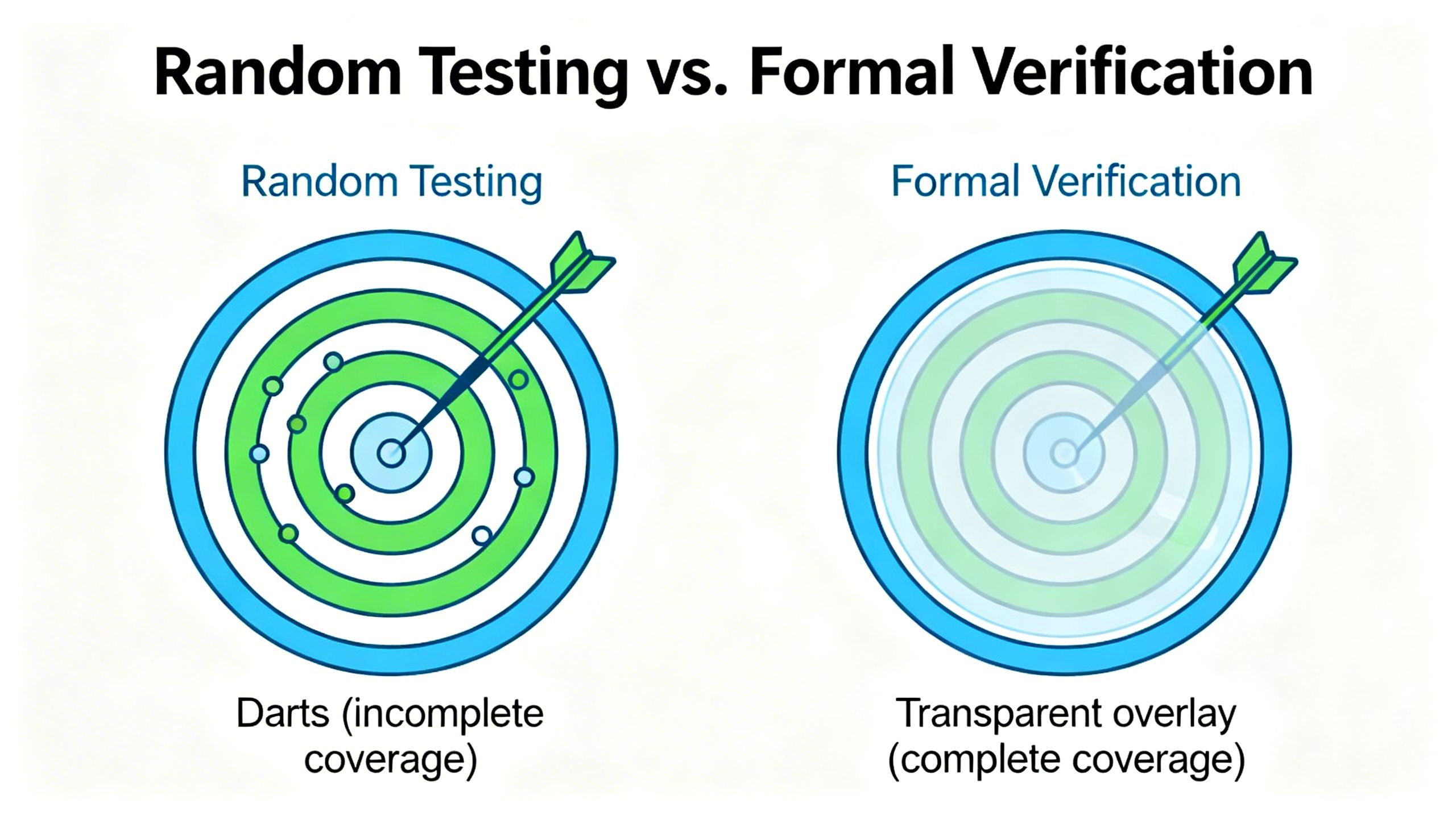
This is where a concept from the high-stakes worlds of aerospace and cryptography comes in: Formal Verification. It’s a radically different approach. Instead of just testing if the code works, it proves it mathematically. It’s the difference between a food taster sampling a few dishes and a chemist analyzing the molecular structure of the entire meal to certify it’s safe.
For eCommerce leaders, understanding formal verification isn't about learning to write proofs; it's about recognizing the gold standard of reliability and demanding it where it counts most.
What Exactly is Formal Verification? (And Why Isn't It Just 'Testing'?)
Let's ditch the jargon. Think of building a skyscraper.
Traditional Testing is like sending a team of inspectors after the building is complete. They'll check the plumbing in a few apartments, test some electrical outlets, and ride the elevator. They might find a leaky faucet or a faulty switch. But they can't possibly check every single wire and pipe in the entire structure.
Formal Verification is like having a mathematician and an engineer analyze the original architectural blueprints and prove, using the laws of physics, that the design is structurally sound before a single brick is laid. They prove that, under all specified conditions, the building cannot collapse.
In software terms, formal verification uses computer-based mathematical logic to prove that a piece of code adheres perfectly to its specification. It checks every possible input, every possible path, every edge case—things a human QA team could never dream of covering. It’s the reason the systems running airplane controls and nuclear reactors are so mind-bogglingly reliable.
Why This Super-Geeky Stuff Matters for Your Bottom Line
Okay, so it's robust. But why should an eCommerce brand care about a verification method used for spaceships? Because parts of your business are just as mission-critical.
Bulletproof Security and Unbreakable Trust
Your customers hand you their most sensitive data. Formal verification is the ultimate promise that you're protecting it. The encryption algorithms that protect data on Amazon Web Services, like AES-XTS, are now being formally verified. This means mathematicians have proven the code that scrambles and unscrambles data is flawless. It’s not just “probably” secure; it’s provably secure.

This level of certainty is how you build unbreakable customer trust. You aren't just using a generic security plugin; you're using systems with a mathematical seal of approval. When your AI tools handle customer data, you need to be sure they aren't just making things up or, worse, leaking information. The risk of AI hallucinations is real, and verified systems are the antidote.
Eliminating Catastrophic Financial and Inventory Bugs
What's the cost of a bug that miscalculates shipping for a month? Or one that tells your warehouse you have 1,000 units when you only have 10? These aren't minor glitches; they are margin-destroying, reputation-ruining disasters.
A famous example is the Ariane 5 rocket explosion in 1996. A single software bug, a data conversion error that went uncaught in testing, caused the $370 million rocket to self-destruct 40 seconds after launch. The error was in a piece of code that was considered reliable because it had worked perfectly on the previous, slower rocket model.
Formal verification is designed to catch exactly these kinds of “impossible” edge cases in your payment processing, inventory sync, and promotional engines. It ensures the logic is sound, preventing the kind of bugs that don't just crash a webpage but crash your quarterly earnings.
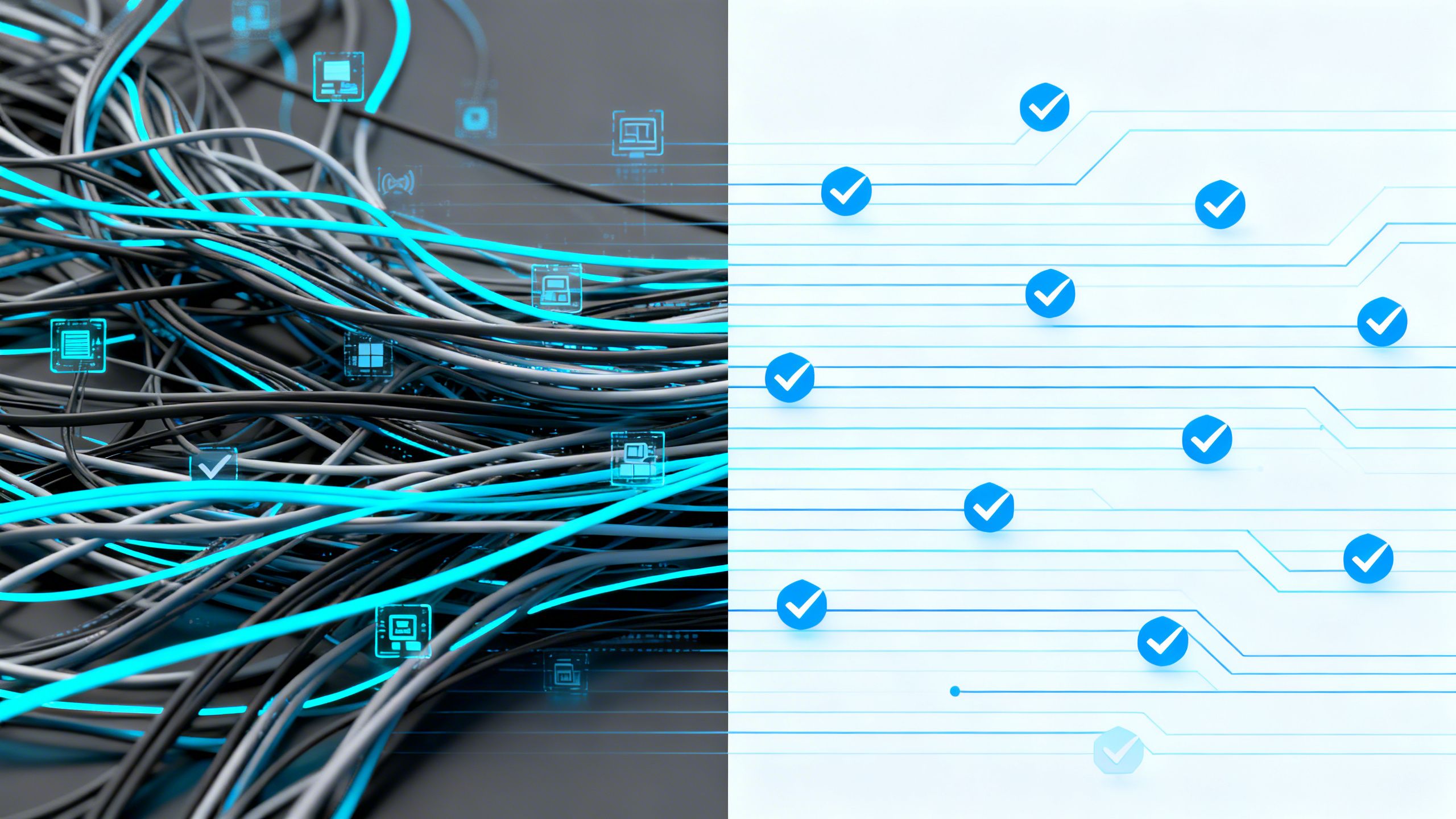
A Peek Under the Hood: How It Works in the Real World
So how do engineers actually do this? Let's simplify the process used to verify the cryptography algorithms mentioned earlier.
Step 1: The Specification — Defining 'Correct'
First, you write a precise, mathematical description of what the software is supposed to do. This is the “blueprint.” For an encryption algorithm, the spec might say: “Given a piece of text and a key, produce an unreadable output. That output, when given back with the same key, must produce the original text, bit for bit.”
Key Tip: This is the most critical step. If your definition of “correct” is wrong, you’ll just perfectly build the wrong thing. It’s like having flawless blueprints for a boat that’s designed to sink.
Step 2: The Implementation — Writing the Code
Next, developers write the actual software (often in low-level languages like Assembly for maximum performance). This is the “building” itself. The goal is to make it as fast and efficient as possible, which often means using complex tricks that are hard for humans to review.
Key Tip: This is where bugs creep in. A developer might make an assumption or miss an edge case to optimize the code, accidentally deviating from the blueprint.
Step 3: The Proof — The Mathematical Smackdown
This is the magic. Using a tool called an “interactive theorem prover” (like HOL Light, mentioned in the AWS research), the system mathematically connects the implementation (the code) to the specification (the blueprint). It proves, step-by-step, that the code’s behavior is logically identical to the spec for all possible inputs. If there is even one theoretical case where the code fails, the proof fails, and the bug is found.
Formal Verification in eCommerce: Where It's Mission-Critical
You don't need to formally verify your blog's CSS. But for the core pillars of your operation, it provides a level of assurance that testing can't match.
Best Practice: Payment Gateways & Financial Transactions
Every time a customer clicks “Buy Now,” a complex dance of authorization, capture, and recording happens. A bug here could mean charging customers twice, failing to capture funds, or creating reconciliation nightmares. The core logic of these systems is a prime candidate for formal verification to ensure every transaction is handled perfectly.
Best Practice: Customer Data Encryption & Privacy
This is a no-brainer. The code that encrypts, stores, and manages Personally Identifiable Information (PII) must be flawless. A bug that accidentally logs plaintext passwords or exposes customer data is an existential threat. Using formally verified cryptographic libraries is the highest standard of care you can demonstrate.
When 'Good Enough' Testing Goes Wrong: Cautionary Tales
The Phantom Inventory Glitch: Overselling to Oblivion
Challenge: A fast-growing apparel brand used a custom script to sync inventory between their warehouse and their Shopify store. It worked 99% of the time.
Solution (The Wrong One): The bug was a “race condition”—if two customers bought the last item at nearly the same time, the script would sometimes fail to update correctly, leaving the product in stock. This led to overselling popular items, followed by a wave of angry customers and operational chaos trying to cancel and refund orders.
Result: A formal verification of the logic would have identified the race condition as a possible state and forced the developers to fix it before it ever went live.
The Miscalculated Discount Disaster: A Promotion Gone Rogue
Challenge: A home goods store wanted to offer a complex “Buy 3, Get 15% Off” promotion. The code was tested with several scenarios and seemed to work.
Solution (The Wrong One): An edge case was missed. If a customer added 6 items to their cart, the discount was applied twice, giving them a 30% discount. A savvy user on a deals forum found the bug, and the store lost tens of thousands of dollars in a few hours before they could shut it down.
Result: This is a classic logic error. A formal specification would have defined the discount rule precisely, and the proof process would have flagged the “double-dipping” scenario as a violation of that spec.
Common Misconceptions About Software Reliability
The Pitfall: "But We Have a Great QA Team!"
Even the best human testers can only check a tiny fraction of the possible ways a user can interact with your software. They think like humans. They don't think about the bizarre, one-in-a-billion input sequence that could crash a system. Formal verification tools are built to find exactly those cases.
The Pitfall: "Isn't 99.9% Uptime Enough?"
Uptime doesn't mean correctness. Your site can be “up” but still be quietly losing you money or data. A payment gateway that is online 99.9% of the time is great, but not if it incorrectly processes 0.1% of your transactions. For a store doing $10M in revenue, that 0.1% could represent $10,000 in errors.
Why TrackIQ Matters: The Principle of Verified Data in Action
Formal verification is about ensuring the fundamental logic of your software is sound. This principle extends directly to how you should think about your business intelligence.
Your decisions are only as good as the data they're based on. If you're pulling reports from messy spreadsheets, dealing with conflicting data sources, or using a generic AI that doesn't understand your business, you're making high-stakes decisions on unverified information. It's the business equivalent of running on buggy code.
This is where the philosophy of correctness becomes a business strategy. A platform like TrackIQ is built to be your single source of truth. It doesn't just present data; it ensures the data is clean, reconciled, and reliable.

When you ask a question, you get a real answer based on your actual Amazon data—not a guess or a hallucination. It acts as your data refinery, turning raw, chaotic information into the pristine fuel required for effective decision-making. Just as formal verification provides a mathematical guarantee for your code, TrackIQ provides an operational guarantee for your data. You can finally stop questioning the numbers and start acting on them. Understanding how it works reveals a system designed for data integrity from the ground up.
Key Takeaways for eCommerce Leaders
- Demand Rigor Where It Counts: You don't need to formally verify everything, but for your payment, security, and core logistics software, ask your vendors about their reliability and verification processes. It’s a sign of maturity and quality.
- Embrace the 'Garbage In, Garbage Out' Principle: Flawed data leads to flawed strategy. If your AI is learning from bad data, you're just teaching it the wrong lessons. The integrity of your data foundation is paramount.
- Treat Your Business Intelligence Like Critical Infrastructure: Your analytics platform shouldn't be a generic tool; it should be a verified system you can trust implicitly. It's not an expense; it's the control panel for your entire business.
Conclusion
Formal verification might sound like an obscure topic for computer science PhDs, but its core principle is something every business owner understands: the need for absolute trust in your most critical systems. You wouldn't build your flagship store on a shaky foundation, and you shouldn't run your digital operations on unproven code or unreliable data.
By understanding the difference between “probably works” and “provably correct,” you can make smarter technology choices, mitigate catastrophic risks, and build a more resilient, trustworthy brand. The next time you evaluate a tool or a platform, ask yourself: is this built on a foundation I can bet my business on?
For your Amazon business, ensuring that foundation is solid starts with your data. Stop wrestling with spreadsheets and start making decisions with confidence. See how TrackIQ can become your verified source of truth.
—