Your Code's Bodyguard: A Plain-English Guide to Formal Verification for eCommerce

Quick Summary (TL;DR)
• Bulletproof Your Business: Formal verification isn't just another layer of testing; it's a mathematical proof that your critical software (like your checkout or pricing engine) is free from certain types of catastrophic bugs.
• Beyond Testing: While testing finds bugs you thought to look for, formal verification proves the absence of entire classes of errors, offering a level of certainty that testing can never achieve.
• Trust is Everything: For eCommerce, this means preventing costly failures, securing customer data, and building an unshakeable reputation for reliability.
• Garbage In, Garbage Out: A perfectly verified system is useless if it runs on messy, unreliable data. The same rigor you apply to your code must be applied to your business intelligence.
—
Picture this: It's Black Friday. Your traffic is surging. Sales are pouring in. You're about to crack open the champagne when the alerts start flooding your screen. A pricing bug has just sold your entire inventory of $500 headphones for $5.00. Your team scrambles, but the damage is done. You've lost hundreds of thousands in revenue, your customer service is a warzone, and your brand's reputation is in tatters.
This isn't a hypothetical horror story; it's the reality for businesses that rely solely on traditional testing. Testing is like spot-checking a ship for leaks. Formal verification is like having the original blueprint mathematically proven to be unsinkable. It’s a paradigm shift from hoping your code is right to proving it is.
In this guide, we'll demystify formal verification for eCommerce, breaking down what it is, why it's the ultimate insurance policy for your online store, and how you can start thinking about it—all in plain English. No PhD in computer science required.

What is Formal Verification? (Hint: It’s Not Just More Testing)
At its core, formal verification uses mathematical logic to prove or disprove the correctness of a system's design with respect to a formal specification. Think of it less like a QA tester and more like a ruthless logician.
Instead of running a few hundred or even a few million test cases, formal verification explores every possible state your system could ever enter. The process is often compared to building a ship in a bottle: every single piece must be assembled with painstaking precision within strict logical constraints. Tools like Isabelle/HOL, used by Amazon to secure its own cloud infrastructure, provide the framework to make this incredibly detailed process manageable.
The Key Difference: Testing finds the presence of bugs. Formal verification proves their absence.
This is a game-changer for eCommerce, where a single flaw in your payment gateway, inventory logic, or promotional engine can have devastating financial consequences.
Why This Is Your New Secret Weapon
Adopting a formal verification mindset isn't just about preventing bugs; it's about building a fundamentally stronger, more resilient business. Here’s why it matters for ambitious eCommerce brands.
Benefit 1: Eliminate Catastrophic (and Expensive) Bugs
Some bugs are minor annoyances. Others are business-killers. Formal verification focuses on the latter. By mathematically proving that your checkout process will always charge the correct amount or that your inventory will never be sold into the negative, you eliminate the risk of systemic failures.
For example, AWS used formal verification to secure its Nitro Isolation Engine, the core of its cloud services. They needed to guarantee that customer data could never leak between virtual machines. Only a formal proof could provide that level of certainty. The same principle applies to your store's most critical functions.

Benefit 2: Build Unbreakable Customer Trust
Trust is the currency of eCommerce. A customer needs to trust that their payment information is secure, that the price they see is the price they'll pay, and that the product they order is actually in stock. Every bug erodes that trust.
By formally verifying your core systems, you're not just improving your code; you're making a promise to your customers that your platform is reliable and secure. This isn't just a marketing claim—it's a verifiable fact. This level of reliability is what separates amateur sellers from 8-figure powerhouses.
A Simple 3-Step Guide to Thinking About Formal Verification
While a full-scale implementation requires specialized expertise, any eCommerce leader can start applying the principles of formal verification to de-risk their business. Here’s how to begin.
Step 1: Identify Your 'Crown Jewels'
You don't need to verify every line of code on your website. That would be overkill. Instead, identify the 2-3 systems where a failure would be catastrophic.
- Payment Gateway Integration: Does it handle all edge cases correctly?
- Pricing & Promotions Engine: Can complex discounts ever combine to create a negative balance?
- Inventory Management: Is it possible for a race condition to allow overselling during a flash sale?
Key Tip: Start with the one system that keeps you up at night. That's your first candidate for a deeper, more rigorous analysis.
Step 2: Create a 'Perfect World' Specification
Before you can prove your code is correct, you have to define what "correct" means. Write down the absolute, non-negotiable rules for your system in plain English.
- Example for a Promotions Engine:
- A customer can never use more than one percentage-based coupon per order.
- The "Free Shipping" promotion must only apply if the cart subtotal is over $50 after all other discounts.
- A coupon code can never result in a final price less than $0.01.
Key Tip: Be ruthlessly specific. This specification becomes the 'source of truth' that the system's logic will be proven against.
Step 3: Bridge the Gap Between Spec and Code
This is where the magic happens. Formal verification tools translate your code and your plain-English rules into a single mathematical language. Then, they attempt to prove that the code always adheres to the rules, no matter the input.
If the proof succeeds, you have a mathematical guarantee of correctness. If it fails, the tool will often provide a specific counterexample—the exact scenario that breaks your rules. This isn't a random bug report; it's a precise roadmap to a hidden, critical flaw.
Formal Verification in Practice: Where to Apply It
Let's move from theory to the real world. Where can formal verification for eCommerce deliver the most value?
Best Practice: Securing the Checkout Funnel
The checkout is the heart of your store. A bug here doesn't just cost you a sale; it can compromise user data and destroy trust. Formal verification can prove that your checkout logic correctly handles taxes, shipping calculations, and payment authorizations under all possible conditions, preventing costly errors and potential fraud.
Best Practice: Validating Complex Promotions and Pricing Rules
As your store grows, so does the complexity of your promotions. "Buy one, get one 50% off, plus free shipping on orders over $75, but not on Tuesdays." It's a recipe for disaster. Formal methods can model these complex rules and prove that they can't be exploited, ensuring your margins are always protected.
Real-World Titans Using Formal Verification
This isn't just academic theory. Some of the biggest names in tech rely on formal verification for their most critical systems.
Case Study: AWS Nitro & Graviton
As mentioned, Amazon Web Services formally verified its Nitro Isolation Engine to guarantee security in its cloud. They didn't stop there. AWS also used formal methods to verify cryptographic algorithms on their Graviton processors, boosting performance by up to 94% while ensuring the code was functionally perfect before deployment. When you're operating at that scale, you can't afford to be wrong.
Case Study: The seL4 Microkernel
The seL4 microkernel is an open-source operating system core that has been formally verified to be functionally correct. The result? It's considered one of the most secure operating systems in the world, forming the foundation for systems where security is paramount, from drones to autonomous vehicles. The developers have observed no bugs in the verified parts of the code since its creation.
Common Traps and How to Sidestep Them
Embarking on the path of formal verification is powerful, but it comes with its own set of pitfalls.
The 'Boil the Ocean' Approach
The most common mistake is trying to verify everything. Don't. The cost and effort are immense. Focus only on the small, hyper-critical components of your system. A formally verified pricing function is valuable; a formally verified CSS file is a waste of time.
Treating It as a Purely Technical Problem
Formal verification is a business strategy, not just a coding exercise. The decision of what to verify should be driven by business risk, not technical curiosity. Involve product managers, financial officers, and business leaders in identifying the 'crown jewels' that warrant this level of investment.
Why Your Data's Foundation Matters: The TrackIQ Connection
So, you've done it. You've built a fortress. Your code is mathematically proven, your checkout is flawless, and your systems are unbreakable. But what happens when you feed this perfect machine garbage data?
A flawless system that generates messy, unreliable data is just as dangerous as a buggy one. You need to trust the inputs just as much as you trust the code.
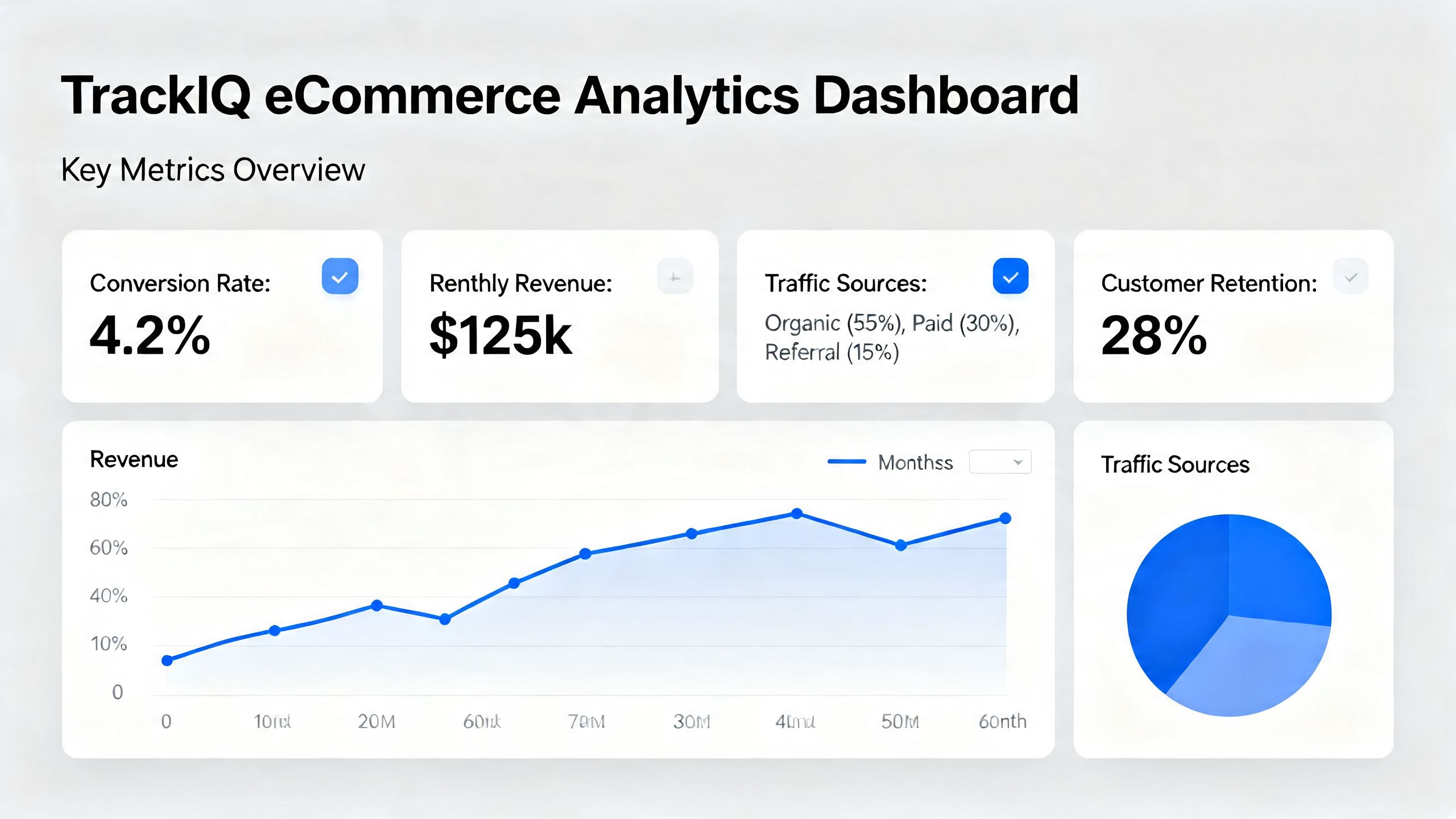
This is the other half of the reliability puzzle. While formal verification secures your code's logic, you still need a pristine, verified source of truth for your business data. This is where a platform like TrackIQ becomes essential. It was built to solve the data chaos problem for Amazon sellers.
Instead of spending hours wrestling with messy CSVs and pivot tables, TrackIQ provides a pristine, unified view of your business. It automates the painful process of data collection and reconciliation, giving you answers you can actually trust. You can ask plain-English questions and get real answers, powered by your actual, cleaned-up Amazon data.
Just as formal verification provides a solid foundation for your software, TrackIQ provides the solid foundation for your decisions. It ensures that the insights you use to run your business are as reliable as the code running your store.
Conclusion: From Fragile Code to an Unbreakable Business
Formal verification is more than just an academic exercise; it's a strategic advantage for serious eCommerce businesses. It represents a commitment to quality, security, and reliability that goes far beyond standard practice.
Here are your key takeaways:
- Prioritize Ruthlessly: You can't verify everything. Identify the 2-3 most critical parts of your business logic and start there.
- Think in Specifications: Start defining the non-negotiable rules for your critical systems. This clarity is valuable, even without a full formal proof.
- Don't Forget the Data: Your code's foundation is only as strong as your data's foundation. A perfect system running on bad data will lead to disastrous decisions.
Building a resilient eCommerce brand requires a dual focus: an unbreakable code foundation and an unshakeable data foundation. By embracing the principles of formal verification for your software and leveraging a tool like TrackIQ to ensure data integrity, you're not just preventing bugs—you're building a business that's engineered for long-term success.
—