The Robots Are Coming for Your P&L: A Seller's Guide to Agentic AI for eCommerce

Quick Summary (TL;DR)
• What is Agentic AI?: It's not just another chatbot. Agentic AI refers to autonomous systems that can understand goals, create plans, and execute complex, multi-step tasks across different software tools on your behalf.
• Why It Matters Now: Tech giants like Amazon are investing billions into agentic systems, signaling a fundamental shift in how online businesses will operate. This isn't a future trend; it's happening now.
• Your First Step: You don't need a team of data scientists. Sellers and agencies can start by leveraging conversational AI tools to automate analytics, get instant insights, and free up human capital for strategic growth.
—
It’s 11 PM on a Tuesday. You’re staring at a spreadsheet so complex it looks like abstract art. You're trying to figure out why your ACoS on that new product launch is through the roof, while simultaneously checking if you have enough inventory to survive the weekend sales spike. You feel less like a CEO and more like a human data-entry clerk who hasn't seen the sun in three days.
What if you had an employee who could do all of that for you? An employee who never sleeps, never complains, and can analyze a million data points before you’ve had your first sip of coffee. This isn't science fiction. This is the promise of agentic AI for eCommerce.
And if you think this is just another buzzword from Silicon Valley, consider this: Amazon is pouring massive resources into developing these systems. Their job postings aren't just for warehouse workers; they're for scientists building “next-generation agentic shopping experiences” and “breakthrough foundation models” for robotics. When the world's biggest marketplace makes a move this big, sellers need to pay attention. This article is your guide to understanding what agentic AI is, why it’s a game-changer, and how you can start using it to reclaim your time and sanity.

So, What Exactly is Agentic AI?
Let's cut through the jargon. For years, we've had AI that can react. You ask a question, it gives an answer. You run a command, it executes. Agentic AI is different. It can act.
An AI agent is a system that you give a high-level goal to, and it figures out the rest. Think of it like this:
- Old AI: "What was my revenue last Tuesday?"
- Agentic AI: "Figure out why my profit margins are down this month and suggest three ways to fix it."
To do this, the agent autonomously breaks the goal down into smaller tasks: pull sales data, analyze ad spend, check inventory costs, review competitor pricing, and then synthesize all that information into a concrete, actionable plan. It’s the difference between a calculator and a CFO. These AI agents are coming for your eCommerce stack, and the smartest sellers are preparing for their arrival.
Why Agentic AI is a Game-Changer for eCommerce
This shift from reactive tools to proactive partners will fundamentally rewire the business of selling online. Here’s how.
From Reactive Firefighting to Proactive Problem-Solving
Most sellers spend their days putting out fires. A sudden spike in ad costs, an unexpected shipping delay, a negative review tanking a listing. Agentic AI flips the script. It acts as a 24/7 sentinel for your business, identifying problems before they escalate.
Imagine an AI agent sending you this message: “Heads up: based on current sales velocity and a 3-day delay reported by your primary carrier, your top-selling yoga mat will stock out in 4 days. I’ve already drafted a purchase order for your supplier and suggest a small price increase of 5% to moderate demand until the new shipment arrives.”
This isn't just data; it's a complete solution. It turns chaos into a competitive advantage, allowing you to navigate crises like the Amazon shipping delay crisis with ease.

Unlocking True Data-Driven Decisions
Dashboards are great, but they still require you to find the insights. You have to know which questions to ask and where to look. A conversational AI agent removes that friction. The entire philosophy behind agentic AI is to free up human capital for strategic work.
Instead of spending hours exporting reports and wrestling with pivot tables, you can simply have a conversation with your data. This is the core of The Conversational AI Advantage, where complex analytics become as easy as sending a text message. You can ask things like:
- "Which of my PPC campaigns have the lowest conversion rate but the highest spend?"
- "Show me the products with a return rate over 10% in the last 30 days."
- "What was the impact on sales after we changed the main image on ASIN B07XYZ123?"
This accessibility means you're making smarter, faster decisions based on real-time information, not gut feelings.
Your Playbook: Preparing for the Agentic AI Revolution
This all sounds great, but how do you actually prepare for it? You don't need to go hire a team of PhDs from MIT. The path to adopting agentic AI is practical and starts with a few key steps.
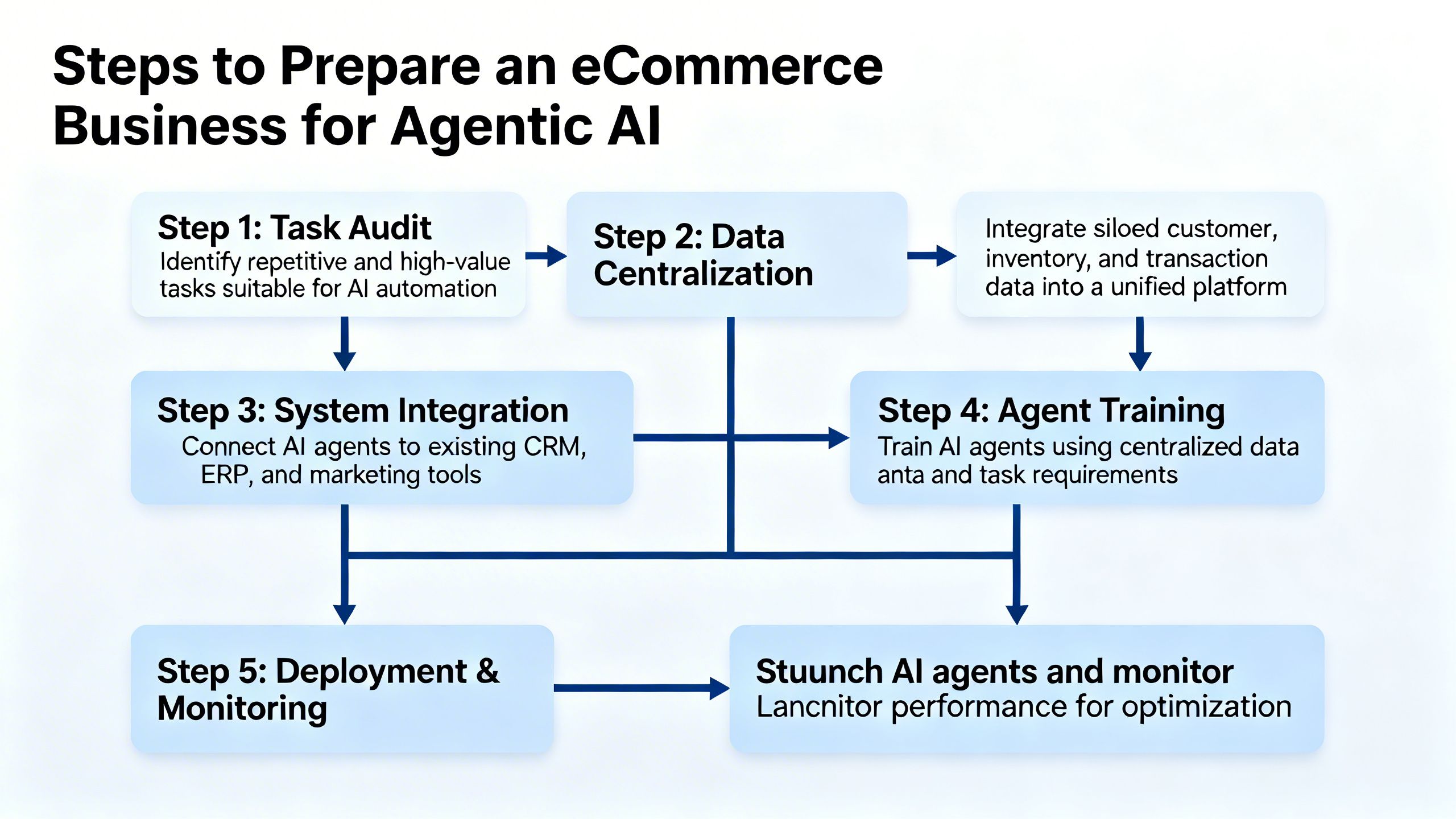
Step 1: Audit Your Repetitive, Rule-Based Tasks
Before you can automate, you need to know what to automate. Grab a pen or open a spreadsheet and list every repetitive task you or your team does weekly. This could include:
- Manually adjusting PPC bids.
- Compiling weekly sales and inventory reports.
- Checking competitor prices and stock levels.
- Answering the same customer service questions over and over.
These tasks are the prime candidates for an AI agent to take over. For example, many top sellers already use a structured approach for their ads, which is perfect for automation. A great place to start is by organizing your campaigns logically, like with a Single Keyword Campaign (SKC) structure.
Key Tip: If a task can be described in a simple “if this, then that” flowchart, it’s ripe for automation. The goal is to delegate the tedious work to machines so you can focus on strategy.
Step 2: Get Your Data House in Order
Agentic AI is powerful, but it feeds on data. If your data is siloed across a dozen different platforms that don't talk to each other (Shopify, Amazon Seller Central, Google Ads, an inventory management system), your AI agent will be flying blind.
Start working towards a single source of truth. This doesn't have to be a massive, expensive data warehouse. It can be as simple as ensuring your tools integrate properly or using a platform that consolidates your data for you. Clean, centralized data is the fuel for the entire AI engine.
Key Tip: Focus on connecting your core operational data first: sales, advertising, and inventory. This trifecta is where you'll find the biggest initial wins.
Step 3: Start Small with Conversational AI Tools
You don't need to build a custom, all-powerful AI agent from day one. The best way to start is with a tool that offers a conversational interface on top of your existing data. This is the training ground for thinking in an agentic way.
Platforms like TrackIQ are designed for this. They connect to your Amazon data and provide an AI analyst you can talk to. This is your entry point. By using a tool to answer questions and set up alerts, you begin to understand the power of delegating analytical tasks to an AI.
Agentic AI in Action: Real-World eCommerce Scenarios
Let's move from theory to practice. Here’s how AI agents could function in your business today.
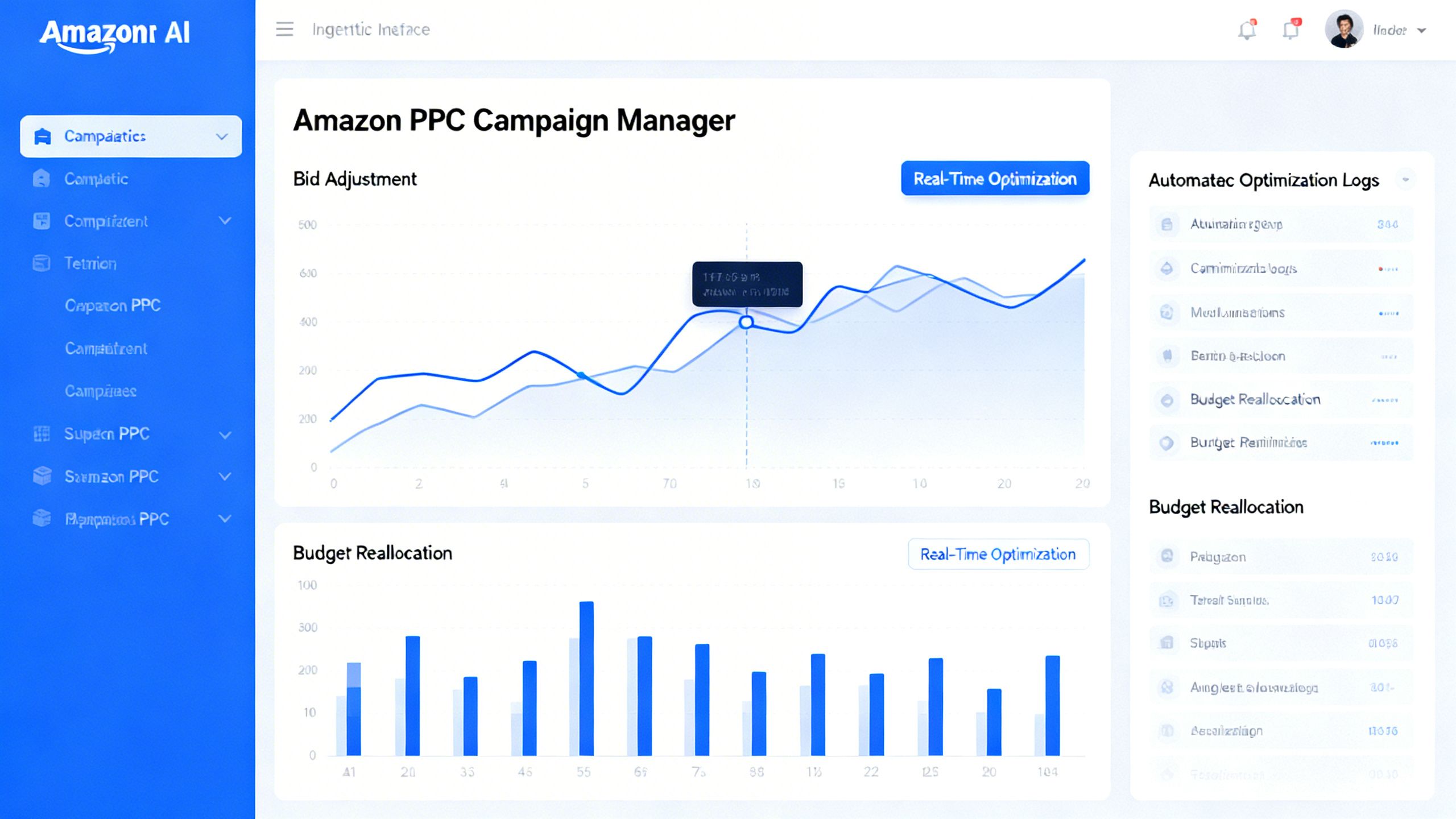
The Autonomous PPC Manager
Challenge: Manually managing dozens or hundreds of PPC campaigns is a full-time job. It's impossible for a human to monitor every keyword, every bid, and every competitor's move in real-time.
Agentic Solution: You set a goal: "Achieve a target ACoS of 25% for my new product line while maximizing sales." The AI agent gets to work. It monitors performance 24/7, identifies keywords that are wasting money, shifts budget from underperforming campaigns to profitable ones, and even A/B tests new ad copy. It sends you a summary report each morning with the actions taken and the results.
The Supply Chain Sentinel
Challenge: Stockouts kill momentum and tank your rankings. Overstocking ties up cash. Managing this balance requires constant forecasting and vigilance.
Agentic Solution: You tell the agent: "Maintain a 30-day supply of all my top 20 SKUs and minimize holding costs." The agent connects to your sales data, supplier lead times, and even external data like shipping lane congestion. It automatically places purchase orders, alerts you to potential delays, and suggests when to run a flash sale to clear out slow-moving inventory before long-term storage fees kick in.
Common Pitfalls on the Path to AI Adoption
As with any powerful new technology, there are traps for the unwary. Here are two big ones to avoid.
The "Garbage In, Garbage Out" Trap
An AI agent is only as good as the data it receives. If your sales data is inaccurate, your inventory counts are off, or your cost of goods is outdated, the AI will make flawed decisions. It might cut spending on a campaign that's actually profitable or fail to reorder a product that's about to sell out.
How to Avoid It: Prioritize data hygiene. Before you even think about advanced AI, make sure the data you're collecting is accurate and reliable. This is the foundational work that makes everything else possible.
Expecting an Overnight Miracle
Implementing AI is not like flipping a switch. You can't just plug in an agent and expect your business to run itself by tomorrow. It's a process of starting with a single, well-defined problem and gradually expanding the AI's responsibilities as you build trust in its capabilities.
How to Avoid It: Start with a low-risk, high-impact task. Automating your weekly sales report is a great first step. Once you see that working reliably, move on to something more complex, like setting up automated alerts for budget overruns in your ad campaigns.
Why TrackIQ Matters: Your First AI Employee
Building a true, end-to-end agentic system is still a complex endeavor. But you don't have to wait. The bridge to this future is conversational AI, and that's where a platform like TrackIQ comes in. It’s designed to be your first AI analyst, an invaluable team member that gives you an immediate edge.
As one 8-figure Amazon seller put it, TrackIQ "replaced hours of manual work every week and surfaces insights I didn’t even know to look for. I feel more in control of my business than ever."
Instead of you having to learn how to navigate complex dashboards, TrackIQ lets you ask questions and get real answers using your actual Amazon data. It's the embodiment of the first practical step into the world of agentic AI. You can ask:
"Alert me when any of my campaigns' ACoS goes above 30% for three consecutive days.""Which of my child ASINs for the 'running shoe' parent has the best conversion rate?""Compare my sales this month to the same period last year."
This isn't just about saving time on reporting. It's about changing the way you interact with your business intelligence. It's about having a strategic partner on call 24/7, ready to give you the insights you need to grow.
Conclusion
The age of agentic AI for eCommerce is not on the horizon; it's at your doorstep. The tools and platforms are evolving at a dizzying pace, and the sellers who adapt will build faster, smarter, and more resilient businesses. Ignoring this shift is like insisting on using a horse and buggy after the invention of the car.
Here are your three key takeaways:
- Audit Your Drudgery: Identify the repetitive, manual tasks that consume your time. These are your first targets for automation.
- Centralize Your Data: Your AI is only as smart as the data it can access. Make data hygiene and integration a priority.
- Start with Conversation: You don't need to build a robot from scratch. Experiment with a conversational AI tool to start delegating your analytics and reporting.
The future of eCommerce isn't about outworking the competition; it's about out-thinking them. And soon, it will be about empowering your AI agents to do the thinking for you. Whether you're an agency managing dozens of brands or a seller ready to scale, now is the time to explore how AI can transform your operations. Let's talk about your eCommerce growth.
—