Beyond ChatGPT: How Scientific Foundation Models Are Revolutionizing eCommerce Forecasting

Quick Summary (TL;DR)
• Not Just For Words: Foundation models, the tech behind ChatGPT, are now being trained on numbers and time-series data, creating powerful new tools for scientific and business forecasting.
• Hyper-Accurate Predictions: Models like Amazon's Chronos can predict future demand with uncanny accuracy by mimicking past data patterns, outperforming traditional methods, especially for chaotic or volatile products.
• Accessible Power: You don't need a Ph.D. in data science to benefit. Platforms like TrackIQ are making this power accessible, allowing sellers to ask plain-English questions and get AI-driven insights from their own data.
—
You’ve seen the headlines. You’ve probably asked ChatGPT to write an email or explain a concept like you’re five. Large Language Models (LLMs) are everywhere. But what if I told you the real revolution, the one that’s about to fundamentally change how you run your eCommerce business, is happening quietly in the background?
We're talking about the next evolution: scientific foundation models. These aren't just for writing poetry or code; they're built to understand the language of numbers, time, and space. For an Amazon seller juggling unpredictable demand, razor-thin margins, and a supply chain that feels more chaotic than a toddler’s birthday party, this isn't just cool tech. It's a lifeline.
This article breaks down what these powerful new AI models are, why they matter more than you think, and how you can start preparing your business to ride this wave instead of being swept away by it. Forget the hype—let's talk about the practical application that will put money back in your pocket.
What Exactly Are Foundation Models (And Why Aren't They Just LLMs)?
Think of a foundation model as a massive, pre-trained brain. An LLM like ChatGPT was trained on a huge chunk of the internet to understand text. A scientific foundation model, however, is trained on a different diet. Instead of text, it consumes vast datasets of time-series data (like sales history), spatiotemporal data (like weather patterns or supply chain movements), and other numerical information.
As Amazon's own research on foundation models in science points out, the goal is to create a generalized model that can be applied to specific tasks with minimal fine-tuning. The key difference? These models can be built to respect the laws of physics—or in our case, the laws of business. They understand constraints, cause-and-effect, and complex dynamics in a way a pure language model can't.
Why Foundation Models are a Game-Changer for Sellers
So, who cares about a model that can predict fluid dynamics? You should. The same principles that predict airflow over a car can be used to predict the flow of your inventory. Here’s how.
Unlocking Hyper-Accurate Demand Forecasting
Traditional forecasting methods often smooth out the data, regressing to the mean. They're good at predicting the steady sellers but fall apart with volatile or seasonal products. Scientific foundation models like Chronos do something different: they parrot or mimic past history, including the chaotic spikes and dips. This makes them incredibly good at predicting the unpredictable, which is where most sellers lose money.

A surprising lesson from Amazon's research was that the original LLM-based Chronos had the strongest performance on chaotic and dynamical system datasets... This owes to the intrinsic capability of Chronos to parrot or mimic past history without regressing to the mean.
For an eCommerce brand, this means a more accurate picture of future demand, allowing you to order the right amount of stock instead of guessing.
Slashing Waste and Boosting Profits Through Efficiency
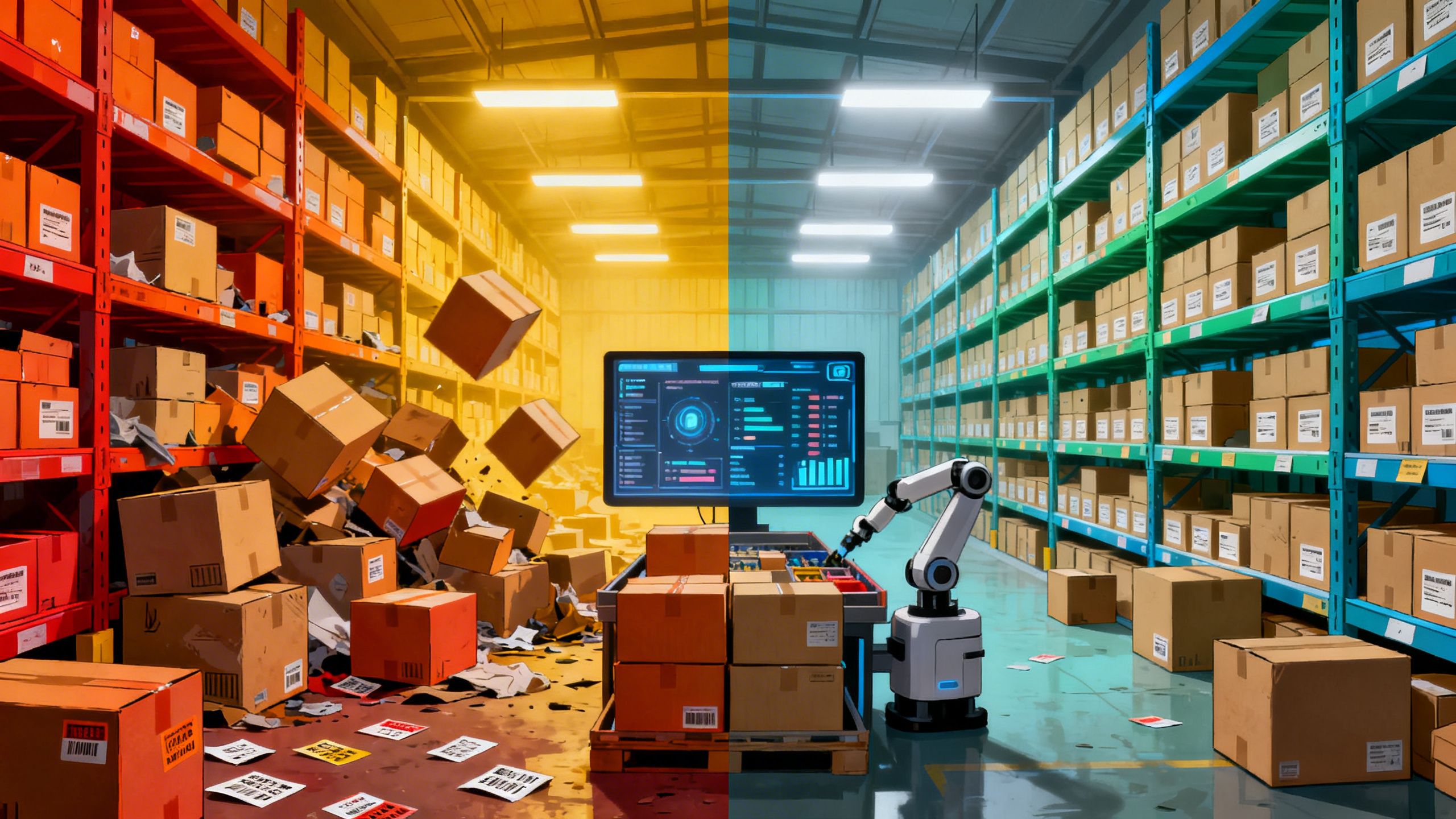
Better forecasting isn't an academic exercise; it has a direct impact on your bottom line. Every unit of unsold inventory is tied-up capital. Every stockout is a lost sale and a hit to your Best Seller Rank (BSR). By improving forecast accuracy, you can optimize your inventory levels, reduce carrying costs, and minimize lost revenue. It turns your supply chain from a cost center into a competitive advantage. This is a core tenet of how top Amazon sellers dominate—they master their numbers.
How to Prepare Your eCommerce Stack for the Foundation Model Wave
This technology is powerful, but it's not magic. You can't just plug a foundation model into a messy business and expect miracles. Here’s how to get ready.
Step 1: Get Your Data House in Order
Foundation models are hungry for data. The better the data you feed them, the better the insights you'll get back. This means consolidating your sales data, advertising metrics, inventory levels, and supply chain information. The goal is to have a clean, accessible, and unified source of truth. If your data is scattered across a dozen spreadsheets, your first step is a data audit. The rise of AI agents for your eCommerce stack makes this more critical than ever.
Key Tip: Start by mapping out all your data sources. Where do you track sales, PPC, inventory, and shipping? The goal is to see where the information lives and how it can be connected.
Step 2: Identify High-Impact, Repetitive Tasks
You don't need to automate your entire business overnight. The key is to start small and focus on tasks that are repetitive and rule-based. Think weekly sales reporting, inventory level checks, or monitoring ad spend against performance. These are the perfect candidates for automation, freeing up your time for more strategic work. As experts suggest, the goal is to free up human capital for strategy.
Key Tip: Ask yourself: "What report do I dread pulling every week?" That's probably the first process you should look at automating.
Step 3: Embrace Conversational AI Tools
The good news is you don't need to build your own foundation model. A new generation of conversational AI tools is emerging to serve as the user-friendly interface for these powerful systems. These tools allow you to ask complex questions in plain English and get back data-driven answers in seconds. This is the core idea behind the conversational AI advantage, which turns complex analytics into a simple conversation.
Foundation Models in Action: From Weather Forecasts to Your Warehouse
Specific Practice: Learning from Weather Prediction Models
The rss_content highlights how deep learning weather prediction (DLWP) models are now rivaling traditional methods. These models process immense spatiotemporal data to predict future weather. Your supply chain is a similar, albeit less complex, system. It has inputs (manufacturing), nodes (warehouses, distribution centers), and paths (shipping lanes) that all exist in time and space. The same AI logic that predicts a hurricane's path can help you predict the path of your inventory and identify potential bottlenecks before they happen.
Specific Practice: The 'Chronos' Effect for Volatile Products
Let's go back to the Chronos model. Its ability to "parrot" history is a superpower for eCommerce. Imagine you sell a product that spikes every time a certain influencer posts about it. A traditional forecasting model would see that spike as an anomaly and ignore it. A Chronos-like model would learn to recognize the pattern's signature. When it sees the early signs of that pattern again (a sudden uptick in social mentions, a rise in direct traffic), it can predict the impending sales spike, giving you a crucial heads-up to prepare your inventory and ad campaigns.
Why TrackIQ Matters: Bridging the Gap Between Lab and Ledger
This all sounds great, but how does a busy seller actually use this stuff? This is where a platform like TrackIQ comes in. We're obsessed with taking these cutting-edge AI concepts and making them practical and profitable for eCommerce brands.
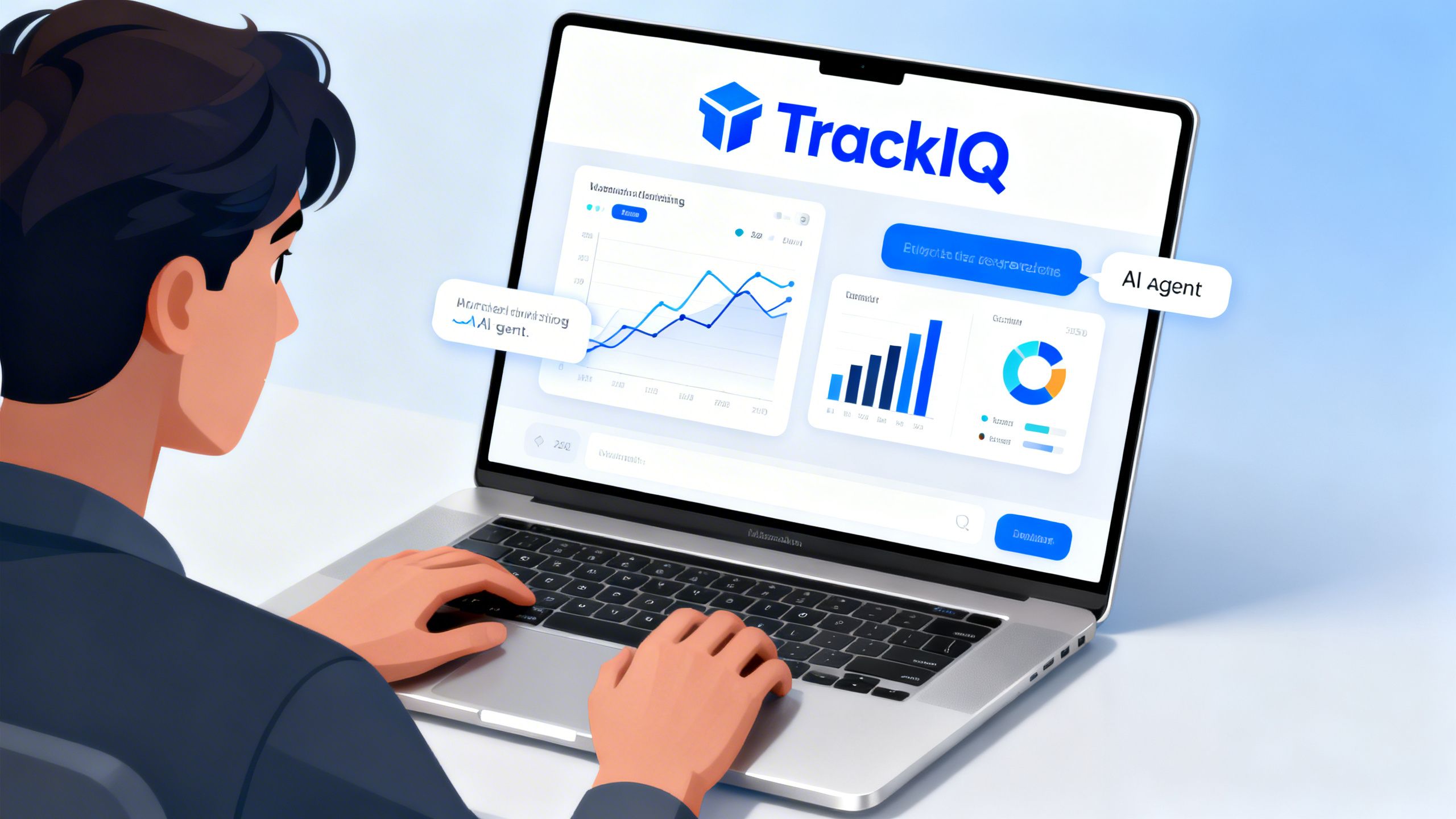
While the underlying technology is complex, the user experience is simple. TrackIQ acts as your AI-powered analyst, constantly observing your data. Instead of digging through dashboards, you can just ask questions like:
- "What was my total profit on my top 10 ASINs last month after ad spend and fees?"
- "Forecast my sales for the next 30 days for Product X."
- "Alert me if my ACoS for the 'blue widget' campaign goes above 25%."
TrackIQ connects to your Amazon data and uses advanced models to give you real answers, in real-time. It’s about turning massive datasets into a simple conversation that drives better decisions. You can see exactly how it works and how it replaces hours of manual work.
Common Pitfalls to Avoid When Adopting AI Foundation Models
Mistake #1: The 'Garbage In, Garbage Out' Trap
The rss_content repeatedly mentions the problem of "data scarcity" in scientific domains. While you have plenty of sales data, is it clean? Is it accurate? An AI model trained on messy, incomplete, or incorrect data will produce messy, incorrect insights. Before you invest in any AI tool, invest time in ensuring your core business data is reliable.
Mistake #2: Ignoring Business & Physical Constraints
Scientific models are powerful because they can be forced to obey physical laws, like conservation of mass. Your business has laws, too. An AI model might forecast a 500% sales increase, but if your supplier can only produce 200% more units and your warehouse is full, that forecast is useless. A good AI system must understand your real-world constraints—supplier lead times, warehouse capacity, and cash flow—to provide actionable recommendations, especially during events like the Amazon shipping delay crisis.
Advanced Tactics: Using Uncertainty for Smarter Bets
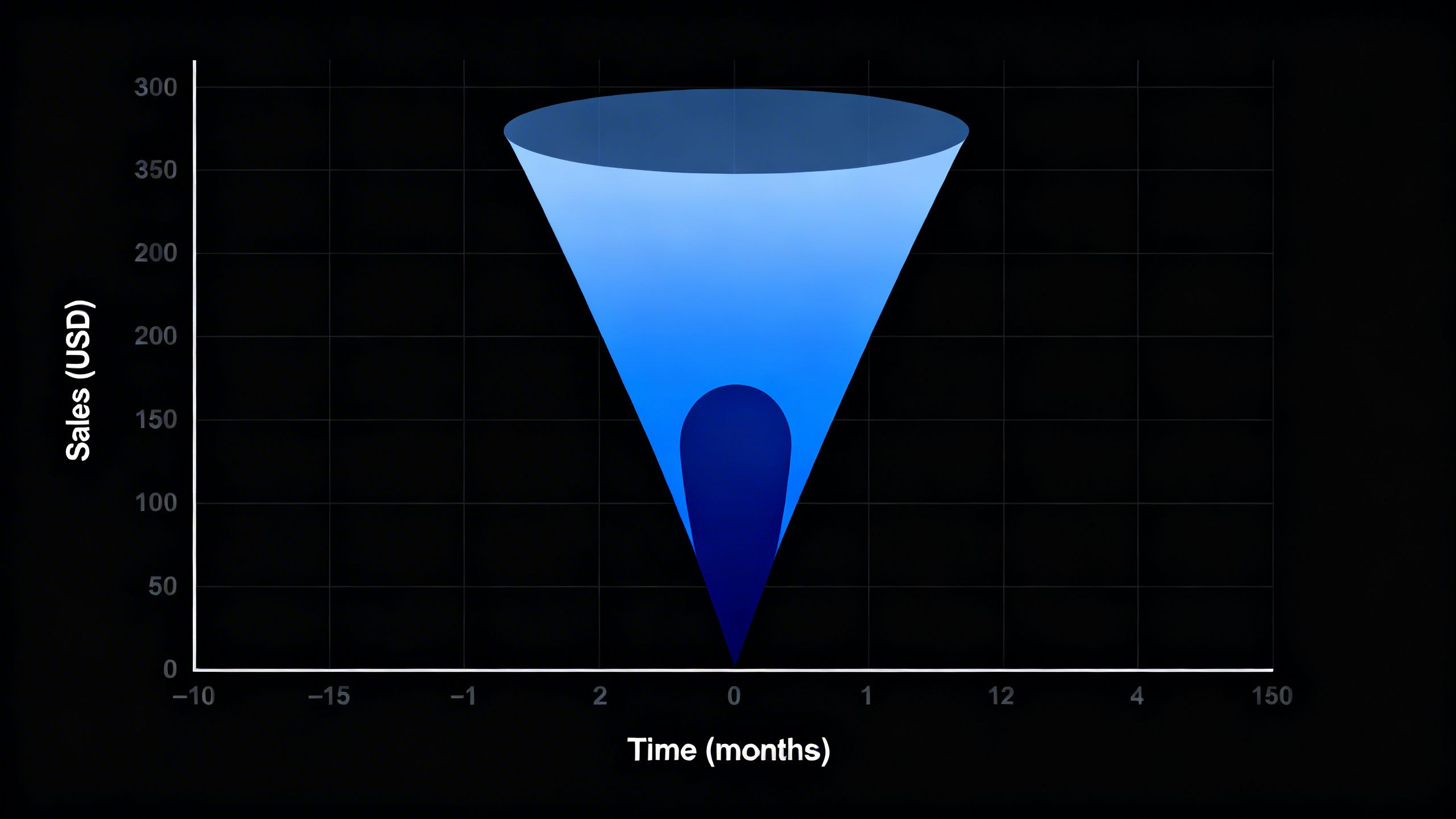
One of the most powerful features mentioned in the research is uncertainty quantification (UQ). A great forecast doesn't just give you a single number; it gives you a probable range. For example, instead of saying "You will sell 1,000 units," it might say, "There's a 90% chance you'll sell between 850 and 1,150 units."
This is a game-changer for risk management. You can use this uncertainty range to make smarter decisions about safety stock. For a high-margin, reliable product, you might order closer to the low end of the forecast. For a volatile, high-risk product, you might order closer to the high end to avoid a stockout. It turns forecasting from a deterministic guess into a strategic, probabilistic decision.
Key Takeaways for the Forward-Thinking Seller
- The AI Revolution is Bigger Than Chatbots: The real value for eCommerce lies in foundation models trained on numerical and time-series data for tasks like forecasting and optimization.
- Your Data is Your Most Valuable Asset: The performance of any AI model is directly tied to the quality of the data it's trained on. Start cleaning and consolidating your data now.
- Embrace Accessible AI Tools: You don't need to be a data scientist. Platforms like TrackIQ are designed to put the power of these advanced models into your hands through a simple, conversational interface.
Conclusion
The age of scientific foundation models is here, and it's moving from the lab to the warehouse at lightning speed. This technology represents a fundamental shift from reactive analysis to proactive, predictive operations. For eCommerce sellers, this isn't just another trend; it's the future of competitive advantage.
By understanding what these models are, preparing your data, and leveraging accessible tools, you can stop guessing and start making data-driven decisions with confidence. You can finally feel more in control of your business than ever before. The tools to build a more efficient, profitable, and resilient eCommerce operation are no longer science fiction—they're ready to be deployed.
—