Your New Data Scientist is an AI Agent: A No-Nonsense Guide for eCommerce

Quick Summary (TL;DR)
• AI as a Colleague, Not a Calculator: The biggest leap in AI isn't just automation; it's collaboration. An AI agent for data science acts like a brilliant partner, turning your plain-English questions into powerful predictive models.
• No PhD Required: eCommerce brands can now leverage sophisticated data science for tasks like sales forecasting, customer churn prediction, and inventory optimization—without hiring a dedicated data science team.
• From Complex to Conversational: Tools like Amazon's Q Developer are pioneering this space, but platforms like TrackIQ are making this power accessible and purpose-built for Amazon sellers, translating raw data into strategic decisions.
—
Remember that scene in Minority Report where Tom Cruise is swiping through data streams like a futuristic orchestra conductor? For years, that felt like pure sci-fi. For eCommerce sellers, the reality has been less glamorous—more like drowning in a sea of spreadsheets, trying to guess which products will sell, when to reorder, and which customers are about to ghost you.
You have all this data, but turning it into a crystal ball to predict the future? That required a team of expensive data scientists with PhDs. Until now.
The game has fundamentally changed. We're entering the era of the AI agent for data science—a proactive, intelligent partner that you can talk to. It’s less like a calculator and more like your new superpowered intern who never sleeps. This guide will break down what these agents are, why they’re a massive opportunity for your business, and how you can start leveraging them today.

What Exactly is an AI Agent for Data Science?
Let's get one thing straight: this isn't just another chatbot. An AI agent for data science is an autonomous system designed to understand a goal, break it down into steps, and execute those steps on your behalf. Think of it as a brilliant translator who speaks both Human and Data.
You describe a business problem in plain English, like, “I want to predict which of my customers are likely to stop buying from me in the next 90 days.”
The agent then:
- Understands the goal (predicting customer churn).
- Identifies the data needed (purchase history, customer engagement, etc.).
- Cleans and prepares the data (handling missing values, formatting issues).
- Selects and trains the right machine learning models.
- Presents the results back to you with an explanation.
It's a multi-step, proactive process. This is the core of what makes agentic AI so powerful—it knows when to help and when to get out of the way.
Why This Is a Game-Changer for eCommerce Brands
For years, only giants like Amazon had the resources to build these kinds of predictive engines. Now, this power is being democratized. Here’s why that matters for you.
Predict the Future (Without a Crystal Ball)
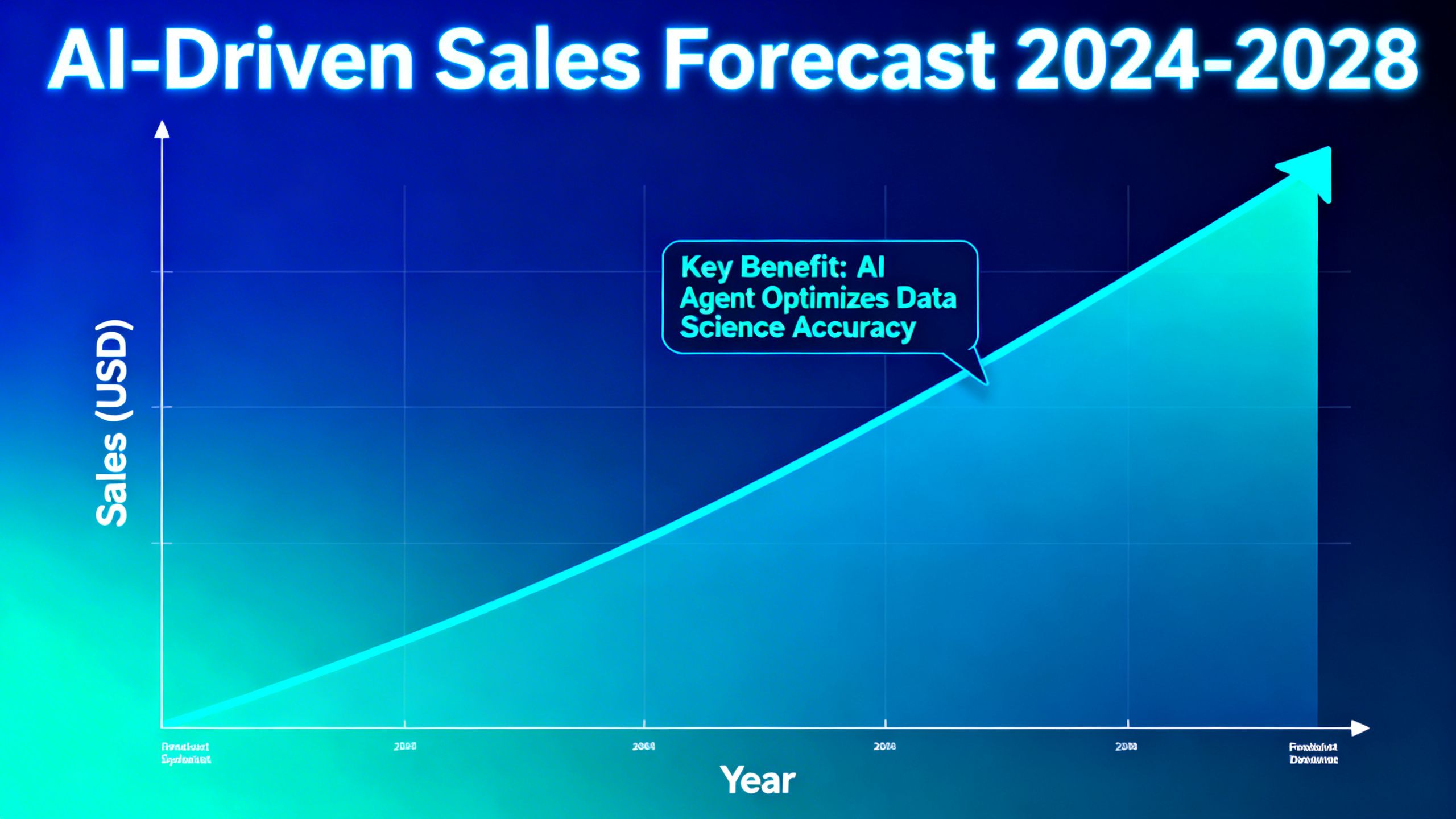
Inventory is a constant balancing act. Order too much, and you’re stuck with dead stock and capital tied up. Order too little, and you stock out, losing sales and search ranking. An AI agent can analyze your historical sales data, seasonality, market trends, and even ad spend to create startlingly accurate demand forecasts.
Problem: Guessing how much inventory to order for the holiday season. Solution: An AI agent builds a time-series forecasting model, predicting demand for each SKU and recommending precise reorder quantities and dates.
Understand Your Customers on a Whole New Level
Who are your best customers? Not just the ones who spend the most, but the ones who will continue to spend the most. An AI agent can build a model to predict Customer Lifetime Value (CLV) or identify customers at high risk of churning.
This allows you to move from generic marketing to surgical precision:
- For high-CLV customers: Roll out the red carpet with exclusive offers and VIP treatment.
- For at-risk customers: Launch a targeted retention campaign to win them back before they’re gone.
This is the difference between shouting into the void and having a meaningful conversation with your customers.
How an AI Agent Builds a Model: The 'No-Code' Revolution
So how does this magic happen? Let's peek under the hood, using the new Amazon Q Developer as an example. It’s a fascinating look at how accessible this technology has become. The process is less about coding and more about conversation.
Step 1: The Conversation Begins (Just Talk to It)
It all starts with a prompt. You don't write code; you describe your business problem in a chatbot interface. For example:
“I run an online supplement store and I want to predict which products will be bestsellers next quarter based on past sales and current ad campaigns.”
The agent parses this, identifies the problem type (a regression or forecasting task), and asks clarifying questions to make sure it understands the goal. This collaborative approach is a key lesson we can learn from how AI is being used in complex mathematical research.
Key Tip: Be specific. Instead of “What should I sell?” try “Given my sales data from the last 12 months, which 5 products have the highest potential for 20% growth next quarter?”
Step 2: The Data Deep-Dive (Automated Cleanup)
Once you provide the dataset (e.g., a CSV of your sales history), the agent gets to work. This is where hours of manual labor are automated in minutes. The agent automatically performs data preprocessing:
- Data Cleaning: Finds and intelligently fills in missing values.
- Outlier Handling: Identifies and deals with weird anomalies that could skew the results.
- Feature Engineering: Creates new data points from existing ones to improve model accuracy.
This is the unglamorous but critical work that ensures your model is built on a solid foundation.
Key Tip: The quality of your AI's output is directly tied to the quality of your input data. Ensure your data is as clean and comprehensive as possible before you begin.
Step 3: The Grand Finale (Building & Explaining the Model)
This is where the agent truly shines. Instead of just picking one machine learning algorithm, it uses an AutoML (Automated Machine Learning) approach. It trains an ensemble of different models (like XGBoost, CatBoost, and neural networks) and has them compete to find the best possible predictive accuracy.
Finally, it doesn’t just give you a number. It provides an explainability report, showing you why it made its predictions. You can see which factors were most important—was it a recent ad campaign, the time of year, or a specific customer demographic? This turns the AI from a black box into a transparent, strategic partner.
AI Agents in Action: Real-World eCommerce Scenarios
This all sounds great in theory, but what does it look like in practice?
The Overstocking Nightmare: Solved
- Challenge: A fashion brand is planning its summer collection. Last year, they guessed wrong on a particular style of sunglasses and were left with thousands of units, tying up cash and warehouse space.
- AI Agent Solution: The brand feeds the last three years of sales data, social media trend reports, and competitor pricing into an AI agent. The agent builds a forecasting model that predicts, with 85% accuracy, that while sunglasses will be popular, the real winner will be bucket hats. The brand adjusts its inventory order accordingly.
- Result: The brand sells out of bucket hats and has minimal leftover sunglasses. Cash flow improves, and storage costs decrease.
Identifying Hidden VIPs: Unlocked
- Challenge: A coffee subscription company wants to reduce churn. Their current strategy is to email a 10% off coupon to anyone who cancels, with little success.
- AI Agent Solution: They use an AI agent to analyze customer behavior. The agent builds a classification model and identifies a segment of customers who are at high risk of churning but also have a high predicted lifetime value. These aren't just random users; they're valuable customers who are slipping away.
- Result: Instead of a generic coupon, the company sends this specific segment a personalized offer: a free bag of a new, premium roast. The retention rate for this high-value segment jumps by 30%.
Why TrackIQ Matters: Bringing AI Data Science to Your Amazon Store
Tools like Amazon's Q Developer are incredible, but they are general-purpose platforms. For an Amazon seller, the real power comes from an AI agent for data science that is purpose-built for the Amazon ecosystem. This is where TrackIQ comes in.
TrackIQ is designed to be your on-call data scientist, speaking the language of FBA, ACoS, and Best Seller Rank. It connects directly to your Amazon data, turning a powerful but complex tool into a simple, conversational partner.
From Raw Data to Actionable Answers
Instead of you needing to find, clean, and upload data, TrackIQ’s agentic AI is already connected to it. This means you can skip the setup and go straight to asking the important questions:
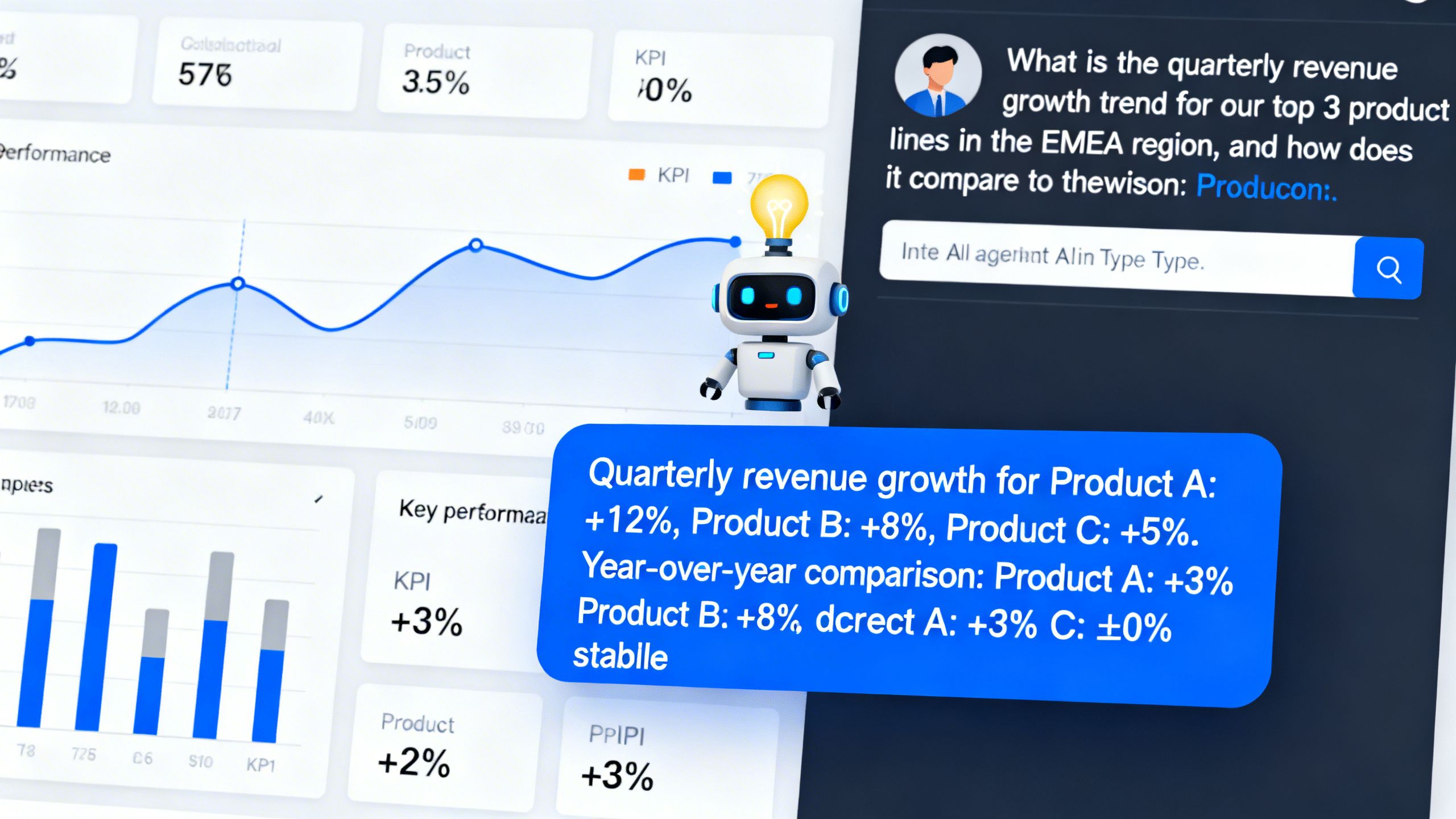
- “Which of my products are seeing a drop in organic search rank this week?”
- “Forecast my sales for my top 3 ASINs for the next 30 days.”
- “Show me which ad campaigns are driving the most profitable growth, not just revenue.”
TrackIQ’s agent doesn’t just give you a chart; it gives you an answer, surfacing insights you didn't even know to look for.
Your 24/7 Strategic Partner
An AI agent should be more than a tool; it should be a partner. TrackIQ proactively monitors your account for anomalies and opportunities. It’s the co-pilot that alerts you to a sudden spike in negative reviews on a key product or flags a competitor who is running out of stock, creating an opening for you.
This is the promise of agentic AI: not just answering your questions, but anticipating them. It’s about having a team member who is constantly analyzing your business, 24/7, to help you make smarter, faster decisions.
Common Pitfalls: Where AI Agents Can Go Wrong
This technology is powerful, but it's not magic. There are two key traps to be aware of.
Garbage In, Garbage Out
An AI model is only as good as the data it's trained on. If your sales data is messy, incomplete, or just plain wrong, the agent's predictions will be useless. Before diving in, it's crucial to have a solid foundation of clean, reliable data. This is a core principle of AI alignment—ensuring your AI is learning the right lessons.
Misinterpreting the 'Why' (AI Hallucinations)
AI agents, especially those based on Large Language Models, can sometimes confidently make things up. This is known as “hallucination.” The model might invent a correlation that doesn't exist or misinterpret the context of your question. It's critical to treat the AI's output as a highly informed suggestion, not infallible gospel. Always use your own business intuition to sanity-check the results. If you're worried about this, it's worth doing a deep dive into AI hallucinations to understand the risks.
Level Up: Advanced Plays with Your AI Data Agent
Once you've mastered the basics, you can start getting creative.
- Multi-Source Fusion: Combine your Amazon sales data with external data sources. For example, connect your Google Trends data to spot rising interest in a product category before it hits Amazon. Or, feed in social media sentiment data to correlate marketing buzz with sales spikes.
- Create a Team of Agents: As seen in more advanced applications, you can create a team of specialized agents. One agent could be the “Market Researcher,” monitoring competitor pricing and reviews. Another could be the “Inventory Analyst,” focused solely on demand forecasting. They can then collaborate to provide a holistic recommendation.
The Takeaway: Your Business is Now a Data Science Powerhouse
Here’s what to remember:
- An AI agent for data science is an accessible tool that turns your business questions into predictive models.
- eCommerce brands can now use this for sophisticated tasks like demand forecasting and customer analysis without a dedicated data team.
- Platforms like TrackIQ are purpose-built to apply this power directly to your Amazon business, making it conversational and actionable.
Conclusion
The barrier to entry for data-driven decision-making has crumbled. You no longer need to be a statistician or a Python coder to build a predictive model. You just need to be an expert in your own business and know what questions to ask.
The shift from reactive analysis (looking at what happened last month) to proactive prediction (modeling what will happen next month) is the single biggest competitive advantage you can build today. Start thinking about the questions you’ve always wanted to ask your data. Now, you finally have a partner who can answer them.
Ready to see how an AI agent can transform your Amazon analytics? Explore how TrackIQ works or get in touch with our team to unlock your growth.
—