From 'Uhh' to 'Aha!': How AI-Powered Search is Redefining eCommerce Discovery

Quick Summary (TL;DR)
• Search is Now Visual: The game has changed from simple text autocomplete to rich, visual suggestions that show customers the product before they even click. This is the core of modern AI-powered search.
• Intent is Everything: Advanced AI models can now predict what a customer wants from just a few keystrokes, distinguishing between a vague query like "mystery books" and a specific title search.
• Friction is the Enemy: By leading customers directly to product pages and personalizing recommendations (like audiobook vs. paperback), AI-powered search eliminates steps, reduces friction, and dramatically speeds up the path to purchase.
—
Ever felt that soul-crushing moment on a website? You type “ergonomic office chair” into the search bar, hold your breath, and get back… a stapler, three desk lamps, and a novelty mug. It’s a digital dead end. For years, eCommerce search has been a clumsy, keyword-dependent guessing game. But that era is officially over.
Giants like Amazon and Audible are rolling out a new weapon: AI-powered search with visual autocomplete. This isn't your grandpa's autofill. It's a sophisticated system that understands user intent, personalizes results in real-time, and shows you the product cover before you've even finished typing. It’s the difference between giving a customer a map and teleporting them to their destination. For eCommerce sellers, understanding this shift isn't just important—it's the key to survival and growth in the coming years.
What Exactly is AI-Powered Visual Search?
Think of traditional search as a librarian who needs you to know the exact Dewey Decimal code. You have to be precise. AI-powered search, on the other hand, is like a mind-reading concierge. It doesn't just match keywords; it predicts intent. When a user starts typing, the AI analyzes those partial keystrokes against a massive dataset of historical searches, user behavior, and product information. It then serves up a ranked list of visual suggestions—complete with product images—that lead directly to a product, author, or series page, often bypassing the standard search results page entirely.
Why This Isn't Just 'Cool Tech'—It's Your Next Competitive Edge
This technology is more than a flashy feature; it's a fundamental improvement to the customer experience with direct bottom-line impact.
Crushing Purchase Friction: The Fastest Path from Search to Cart
Every extra click, every unnecessary page load, is a chance for a customer to get distracted and leave. Traditional search is full of these friction points: type query -> hit enter -> scan results page -> click product -> land on product page. That's a four-step process, minimum.
Visual autocomplete reduces this to a two-step dance: start typing -> click the visual suggestion. Boom. The customer is on the product page, ready to buy.
Amazon's implementation proves this by reducing the steps needed to find and purchase a book, creating a smoother, faster, and more satisfying journey. This isn't just convenience; it's conversion rate optimization at its finest.

Hyper-Personalization at Scale: Giving Every Customer a Bespoke Experience
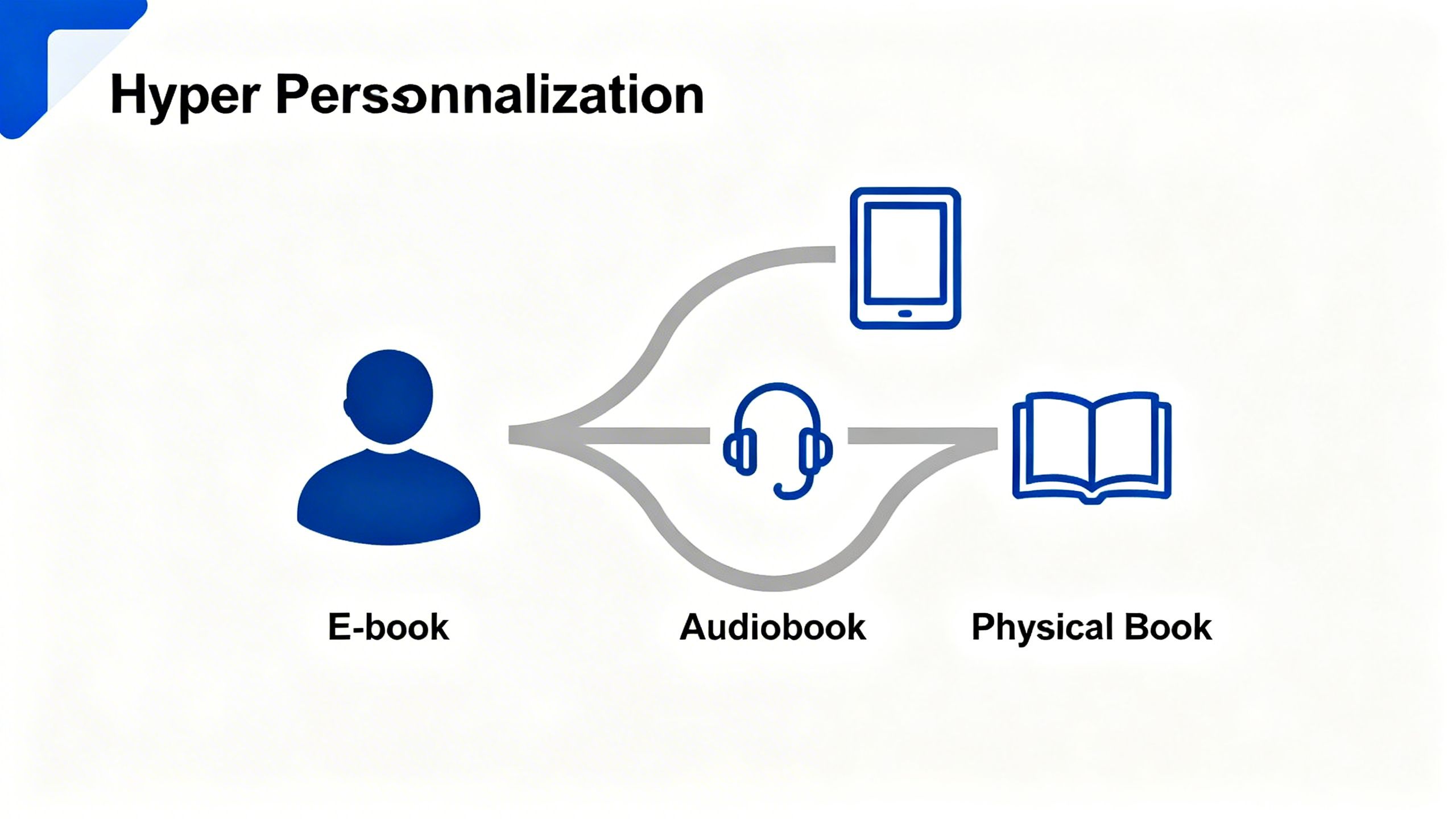
AI-powered search doesn't just find a product; it finds your product. By factoring in a user's past behavior, preferences, and even the context of their current search, the system can personalize everything in real-time.
For example, the rss_content explains that Amazon's model can personalize the format of a book recommendation. If you're a loyal Audible user, it's more likely to suggest the audiobook version. If you're a Kindle reader, it will surface the e-book. This level of personalization, applied across millions of users simultaneously, was once a fantasy. Now, it's table stakes for market leaders.
Under the Hood: How Amazon & Audible Built Their AI Search Engine
So how does this magic actually work? Amazon and Audible took two distinct but related approaches to solve the same problem: understanding user intent instantly.
Step 1: Decoding User Intent from Just a Few Keystrokes
It all starts with data. The system ingests historical search data to map partial inputs to final purchases. When a user types "dungeon craw," the AI doesn't just see a string of letters. It sees a pattern that has, thousands of times before, led to the book Dungeon Crawler Carl. It uses confidence-based filtering to know when a query is specific (like a title) versus general (like a genre), ensuring the suggestions are always relevant.
Key Tip: The system even applies time-decay functions, meaning it gives more weight to recent trends and interests. It knows what's hot right now.
Step 2: The Two-Model Tango: Deep Learning vs. Probabilistic Retrieval
This isn't a one-size-fits-all solution. Audible and Amazon used different models tailored to their needs:
- Audible's DeepPLTR Model: They use a sophisticated deep learning model that considers pairs of books and learns to rank which one is a better match for a query. It has three parts: one for search context, one for keyword engagement, and one for the user's personal tastes. It's a powerhouse of personalization.
- Amazon's Two-Stage Model: For the massive scale of Amazon.com, they use a two-stage approach. First, a fast retrieval model finds the most likely book titles. Then, a second model personalizes the format (audiobook, e-book, etc.). This dual strategy keeps latency incredibly low while still delivering a personalized touch.
Key Tip: The goal is always a balance between speed and accuracy. The system has to return hyper-relevant results in milliseconds to feel instantaneous to the user.
Step 3: Personalizing the Final Mile: From Title to Format
Once the AI has high confidence in what the user is looking for, it makes its final move. For a title search, it displays the visual widget for the book. For an author search, it might show a link to their author page. As seen with Amazon, it even personalizes the landing page itself, directing the customer to the product detail page for the format they are most likely to buy. This is the last-mile optimization that closes the sale.
AI-Powered Search: Real-World Scenarios
The 'Dungeon Crawler Carl' Effect: From Vague Search to Direct Hit
A customer vaguely remembers a book title. They type "dungeon craw" into the search bar. Instantly, a visual of the Dungeon Crawler Carl book cover appears. They click it. They are not taken to a messy page of 200 search results; they land directly on the product detail page for the book. This single interaction showcases the system's power: it understood intent, bypassed friction, and delivered the customer exactly where they wanted to go.
Beyond the Book: Discovering Authors and Series
Great search doesn't just fulfill a known need; it drives discovery. When a user searches for a book in a series, the AI doesn't just show the book. It also provides a link to the entire series page. If they search for a popular author, it links to their complete works. This enriches the experience, turning a simple search into a journey of discovery that leads to larger carts and higher lifetime value.
Why TrackIQ Matters: Connecting Search Insights to Business Growth
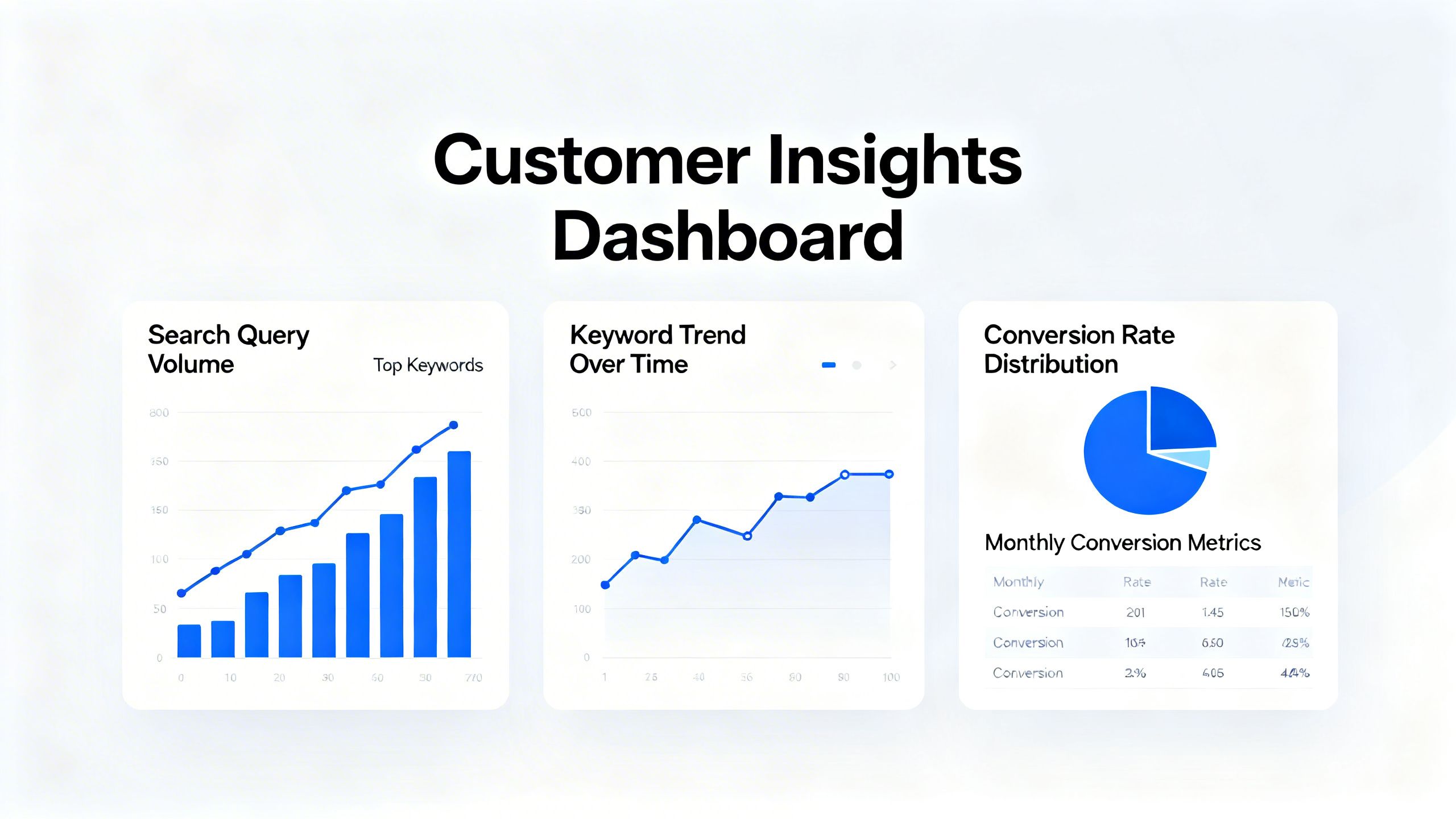
Okay, so you're probably not going to build a multi-million dollar deep-learning search model tomorrow. But you don't have to. The revolution for most sellers isn't in building the AI, but in using AI to understand the data that systems like this generate.
This is where an AI co-pilot becomes essential. While Amazon's AI is optimizing the front-end customer experience, a tool like TrackIQ acts as your back-end brain, analyzing the results and telling you what to do next. It's about connecting the dots between what customers are searching for and how you should run your business.
From Search Data to Inventory Strategy: Predicting the Next Big Thing
An AI agent can monitor rising search trends on and off Amazon. Is a new author suddenly getting a lot of search volume? Is a specific product category heating up? By analyzing this data, an AI co-pilot can alert you to stock up on a potential bestseller before it stocks out, turning search insights into a massive competitive advantage.
Optimizing PPC Based on Real-Time Intent: Stop Wasting Ad Spend
Understanding the nuances of customer search is a goldmine for advertising. Are customers searching for your product using long-tail, high-intent keywords? An AI agent can identify these and suggest creating hyper-specific Single Keyword Campaigns to dominate that niche. This is the kind of proactive, data-driven decision-making that separates the top 1% of sellers. You can learn more about how this works in our guide to agentic AI.
Common Missteps: Where Sellers Go Wrong with Search Data
The 'Why' Behind the 'What': Drowning in Keywords, Starving for Insight
Many sellers get obsessed with keyword volume. They see that "mystery book" gets 100,000 searches and pour money into it. But they ignore the intent. This is a low-intent, discovery-phase query. A seller who understands the data knows that a long-tail keyword like "police procedural set in Stockholm" has a fraction of the volume but an exponentially higher conversion rate. Don't just look at the keyword; understand the customer behind it.
Treating All Search Traffic the Same: The Sin of Averages
Failing to segment your search traffic is a critical error. A user searching for a broad category is browsing. A user searching for a specific product name is ready to buy. A user searching for a comparison ("Product A vs. Product B") is in the final decision stage. Each of these users requires a different strategy, from the ad copy they see to the landing page they hit. Lumping them all together means you're effectively optimizing for no one.
The Future is Agentic: Your Next-Level Playbook

The next evolution is moving from passive data analysis to proactive, automated action. This is the world of agentic AI. Instead of you logging in to check a dashboard, an AI agent is on call 24/7, observing your data, identifying opportunities, and even taking action on your behalf.
Imagine an AI agent that does the following:
- Observes: It notices a spike in search traffic for a competing product.
- Analyzes: It cross-references this with your sales data and sees your conversion rate for related keywords is dropping.
- Alerts & Suggests: It sends you a notification: "Warning: Competitor X is gaining traction. We recommend launching a defensive PPC campaign targeting these 5 keywords and increasing the budget by 15% for the next 48 hours."
This isn't science fiction. AI agents are coming for your eCommerce stack, and they will create a new divide between sellers who leverage them and those who get left behind.
Key Takeaways for the Modern Seller
- Search is a visual, predictive experience now. If your strategy is still just about text keywords, you're already falling behind.
- You don't need Amazon's budget to be smart. The opportunity for most sellers is in using AI tools to analyze the vast amount of data available and turn it into actionable business intelligence.
- The future is proactive, not reactive. Embrace agentic AI to have a co-pilot that doesn't just give you reports, but helps you make decisions and take action faster than your competition.
Conclusion
The shift to AI-powered search is more than just a technical upgrade; it's a philosophical one. It marks the transition from a product-centric to a customer-centric model of discovery. The battle for the modern customer is won or lost in the search bar, and the winners will be those who provide the fastest, most intuitive, and most personalized path to purchase.
While the underlying technology is complex, the takeaway for sellers is simple: pay attention to your data. Understand the intent behind every search. And leverage the next generation of AI tools to turn those insights into your greatest competitive advantage. Systems like TrackIQ are designed to be that AI co-pilot, helping you navigate this new landscape and stay ahead of the curve.
—