Amazon & CMU Bet Big on Agentic AI: What It Means for Your eCommerce Stack

Quick Summary (TL;DR)
• The Titans Are Investing: Amazon and Carnegie Mellon University just launched a massive AI Innovation Hub, signaling that agentic AI—AI that does things, not just analyzes them—is the future.
• Your Job Is Changing (For the Better): This technology is moving beyond simple chatbots to create autonomous AI agents that can manage inventory, optimize ad spend, and handle customer service, acting like a 24/7 digital employee.
• Get Ready or Get Left Behind: The first step isn't hiring a robot; it's cleaning up your data and embracing introductory tools. Platforms like TrackIQ are the bridge, turning complex data into simple conversations and automated actions.
—
It’s not every day that two giants like Amazon and Carnegie Mellon University team up to pour a boatload of cash into something that sounds like it’s straight out of Blade Runner. Their new AI Innovation Hub is focused on generative AI, robotics, and natural-language processing. But the real headline for anyone selling products online is the focus on Agentic AI. If you're an eCommerce seller or agency owner, this isn't just another piece of tech news; it's a starting pistol for the next evolution of online retail.
For years, we've been told to be "data-driven," which usually meant staring at a dozen different dashboards, trying to piece together a story from a mountain of CSVs. It’s exhausting. Agentic AI flips the script. Imagine an employee who not only reads every report but also understands it, flags opportunities, and then actually takes action on your behalf—all while you sleep. That’s the promise of agentic AI for eCommerce, and this new partnership is a massive signal that it's arriving sooner than you think. This guide breaks down what this shift means for you, how to prepare, and why your biggest competitor might soon be an algorithm.

First Off, What Exactly is Agentic AI?
Let's cut through the jargon. Think of standard AI (like ChatGPT) as a brilliant research assistant. You ask it a question, it gives you a well-written answer. It's reactive.
Agentic AI is the manager you hire after getting the research. It's an autonomous system that can perceive its environment, make decisions, and take actions to achieve specific goals. It doesn't just answer your question, "How are my Q4 sales pacing?" It goes further:
"Your Q4 sales are pacing 15% below forecast, mainly due to underperformance in the 'Holiday Sweaters' category. I've analyzed the top-performing ad creatives from last year and noticed we aren't using the 'Ugly Sweater Party' angle. I've drafted three new ad variations with this angle and reallocated 10% of the budget from underperforming campaigns to test them. Would you like me to proceed?"
This is the core difference: it's a proactive, goal-oriented system. It’s less of a tool and more of a teammate. For a deeper dive into how AI is reshaping online business, check out this ultimate guide to AI for eCommerce.
Why This Amazon-CMU Partnership Should Be on Every Seller's Radar
The collaboration between a retail behemoth and a robotics powerhouse isn't just for academic papers. It’s a clear indicator of where the market is headed, and the implications for eCommerce are massive.
Beyond Dashboards: The Shift to Autonomous Operations
For too long, analytics has been a passive activity. You get a report, you find an insight (if you have time), and then you manually implement a change. Agentic AI automates this entire workflow. It connects your data directly to action.
This means an AI agent could:
- Monitor inventory levels and automatically place purchase orders with suppliers when stock is low, even factoring in lead times and seasonal demand spikes.
- Adjust pricing dynamically based on competitor pricing, inventory age, and conversion rates to maximize profit margins.
- Identify and pause money-wasting ad campaigns in real-time, long before you see the damage in your weekly report.
This isn't about replacing human oversight; it's about eliminating the tedious, time-consuming manual work that prevents you from focusing on high-level strategy.
The Future of Personalization and Customer Experience
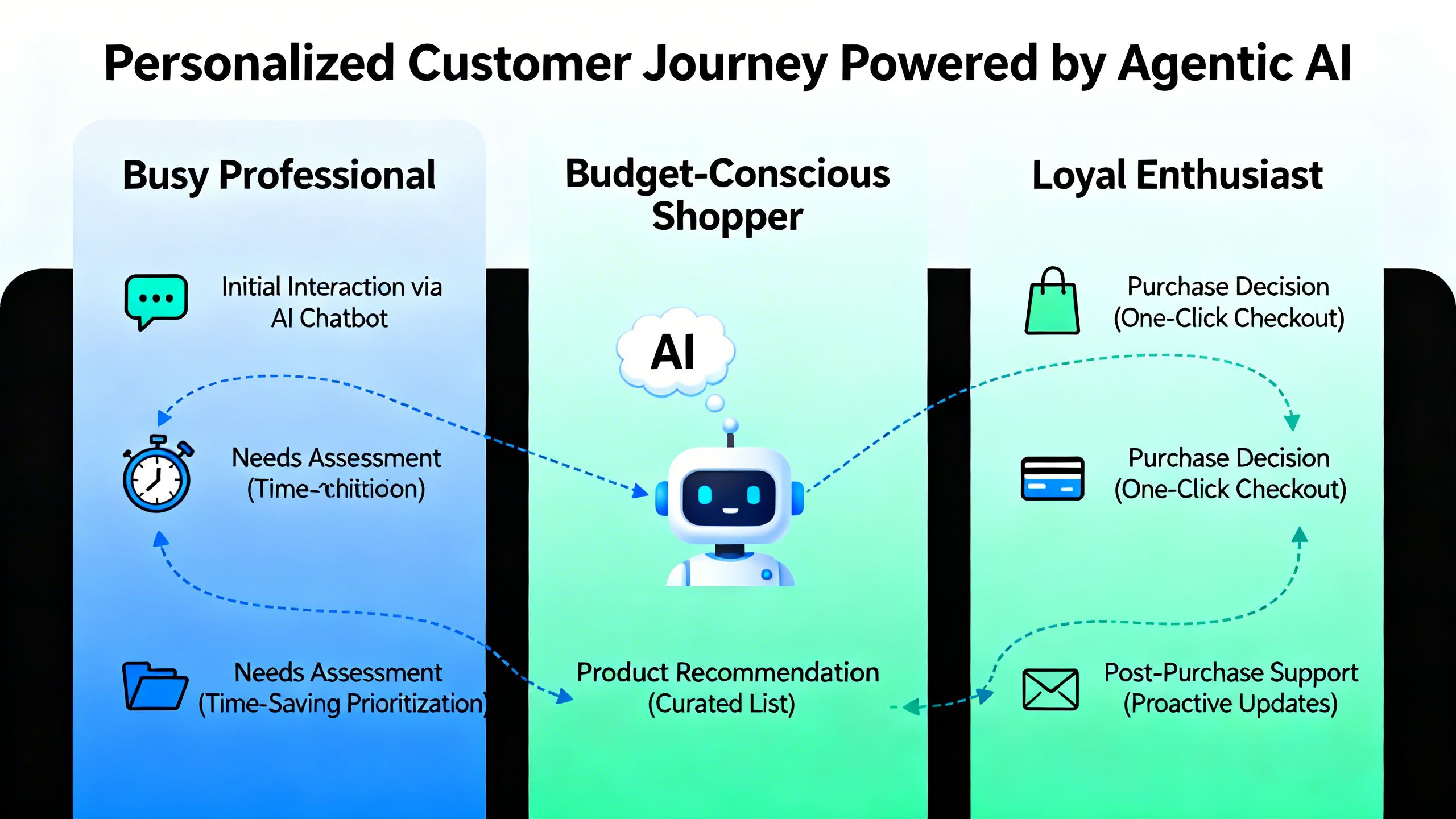
Personalization today is often basic, like adding a customer's first name to an email. Agentic AI enables a level of personalization that was previously unimaginable. An AI agent can analyze a customer's entire browsing history, past purchases, and even on-site behavior to create a completely unique shopping experience.
Imagine an AI that can:
- Proactively send a customer a discount for an accessory that pairs with a product they bought three months ago.
- Re-engage a cart abandoner with a message addressing their specific hesitation, perhaps by highlighting a return policy or offering a targeted discount.
- Power a customer service bot that doesn't just follow a script but can access order history, understand context, and solve complex problems on the spot.
This is the kind of experience that builds loyalty and turns one-time buyers into lifelong fans.
How to Prepare Your eCommerce Business for the Agentic AI Wave
The idea of autonomous AI running parts of your business can be intimidating. But preparing for this future doesn't require a degree in robotics. It starts with practical steps you can take today.
Step 1: Audit Your Data Infrastructure
Agentic AI runs on data. If your data is a mess—siloed in different platforms, inconsistent, or inaccurate—your AI agent will be ineffective. The "garbage in, garbage out" principle is more critical than ever.
Key Tip: Start by consolidating your key data sources. Whether it's sales data from Amazon, ad spend from Google, or inventory data from your 3PL, you need a single source of truth. This is the foundation upon which all future AI capabilities will be built.
Step 2: Identify High-Impact Automation Opportunities
Don't try to automate everything at once. Look for the most repetitive, time-consuming tasks in your daily workflow. These are the perfect candidates for your first foray into AI-driven automation.
Common starting points include:
- Weekly/Monthly Reporting: What data do you pull every single week? An AI agent can do that.
- Bid Management: Are you manually adjusting bids on your ad platforms? That's a prime task for an algorithm.
- Inventory Forecasting: Do you spend hours in spreadsheets trying to predict stock needs? Let an AI handle the number-crunching.
Key Tip: The goal is to free up human capital for strategic work. If a task is repetitive and rule-based, it's ripe for automation.
Step 3: Start Small with Conversational AI Tools
You don't need to build a custom AI from scratch. The best way to get started is by using existing tools that incorporate agentic AI principles. Conversational analytics platforms are the perfect entry point. These tools allow you to interact with your data by simply asking questions in plain English. As you get comfortable with this, you'll see just how powerful it is when AI agents are coming for your eCommerce stack.
Agentic AI in Action: Practical eCommerce Use Cases
This all sounds great in theory, but what does it look like in practice? Here are a few real-world scenarios where agentic AI is already making an impact.
Dynamic Inventory and Supply Chain Management
A clothing brand uses an AI agent to manage its inventory. The agent monitors sales velocity on Shopify and Amazon, tracks inbound shipments from its factory in Vietnam, and even keeps an eye on social media trends. When it detects a spike in demand for a particular style after an influencer posts about it, it automatically alerts the owner and suggests placing an expedited purchase order, providing a clear forecast of when they'll run out of stock at the current burn rate.
Autonomous Advertising Campaign Optimization
An agency managing 20 different brands uses an agentic AI platform to oversee its Google and Amazon ad spend. The agent runs 24/7, monitoring performance against target ACoS/ROAS goals. If a campaign's performance dips for more than three hours, the agent automatically reduces its budget and reallocates the funds to a better-performing campaign. It then sends a summary of its actions to the account manager each morning. The manager goes from manually checking campaigns to simply reviewing the AI's work.
Why TrackIQ Matters: Your First Agentic AI Teammate
The shift to agentic AI can feel like a giant leap, but platforms like TrackIQ are designed to be the bridge. It's built on the core principles of agentic AI, helping you transition from drowning in data to making confident, automated decisions.
From Data Overload to Actionable Insights
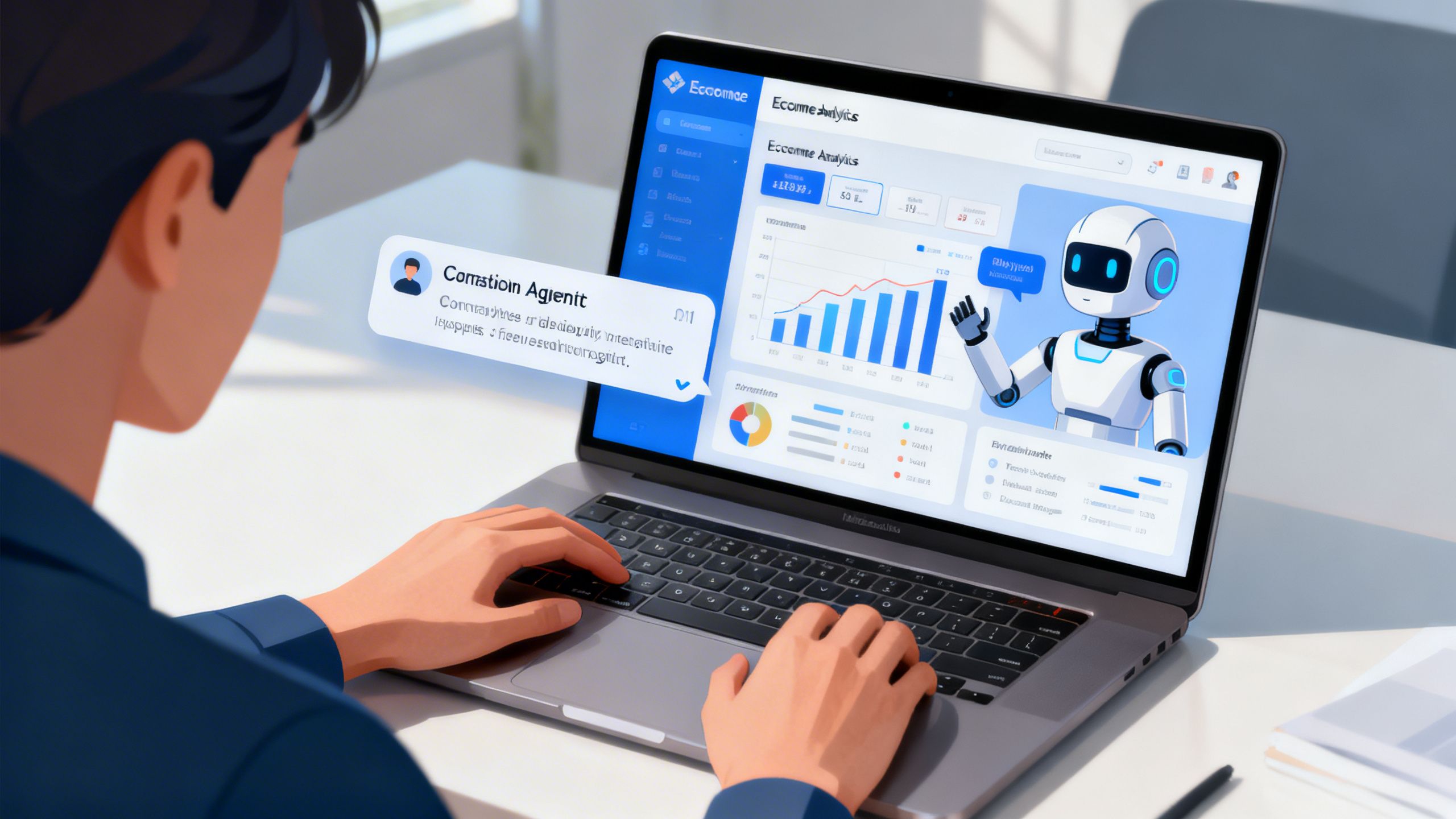
Instead of complex dashboards, TrackIQ offers a conversational interface. You can simply ask questions and get real answers, using your actual business data. For example:
"Which of my products have seen the biggest drop in profit margin this month?""What was my total ad spend on Brand X last week, and what was the return?""Alert me if any of my top 10 ASINs go out of stock."
This is the first step toward an agentic workflow. The AI doesn't just give you a chart; it gives you a direct answer, saving you hours of digging.
Replacing Manual Reporting with 24/7 Monitoring
The real power comes from proactive monitoring. You can set goals and instruct the TrackIQ agent to watch your data for you. It's designed to help you stop burning 2–3 hours every week piecing together reports. The agent becomes your analyst, working around the clock to surface insights you didn't even know to look for. It will alert you to sudden sales spikes, inventory shortages, or unusual ad spend, allowing you to act fast.
Common Pitfalls to Avoid on Your AI Journey
As with any powerful new technology, there are traps for the unwary. Here are two of the biggest mistakes to avoid.
Ignoring the 'Garbage In, Garbage Out' Principle
An AI agent is a powerful decision-making engine, but it's only as good as the data it's fed. If your inventory data is inaccurate or your sales data is incomplete, the AI will make poor decisions. Before you invest in any AI tool, your top priority should be ensuring your data is clean, accurate, and centralized. This foundational work is not glamorous, but it's non-negotiable.
Expecting a 'Set It and Forget It' Magic Bullet
Agentic AI is not a magic wand you wave over your business. It's a powerful teammate that requires direction, goals, and oversight. You still need to set the strategy. You define what "good" looks like (e.g., target profit margin, desired inventory levels), and the AI executes against those goals. Think of it as a highly skilled employee: you need to train it, give it clear objectives, and review its performance.
Advanced Moves: Building a Fully Integrated AI Ecosystem
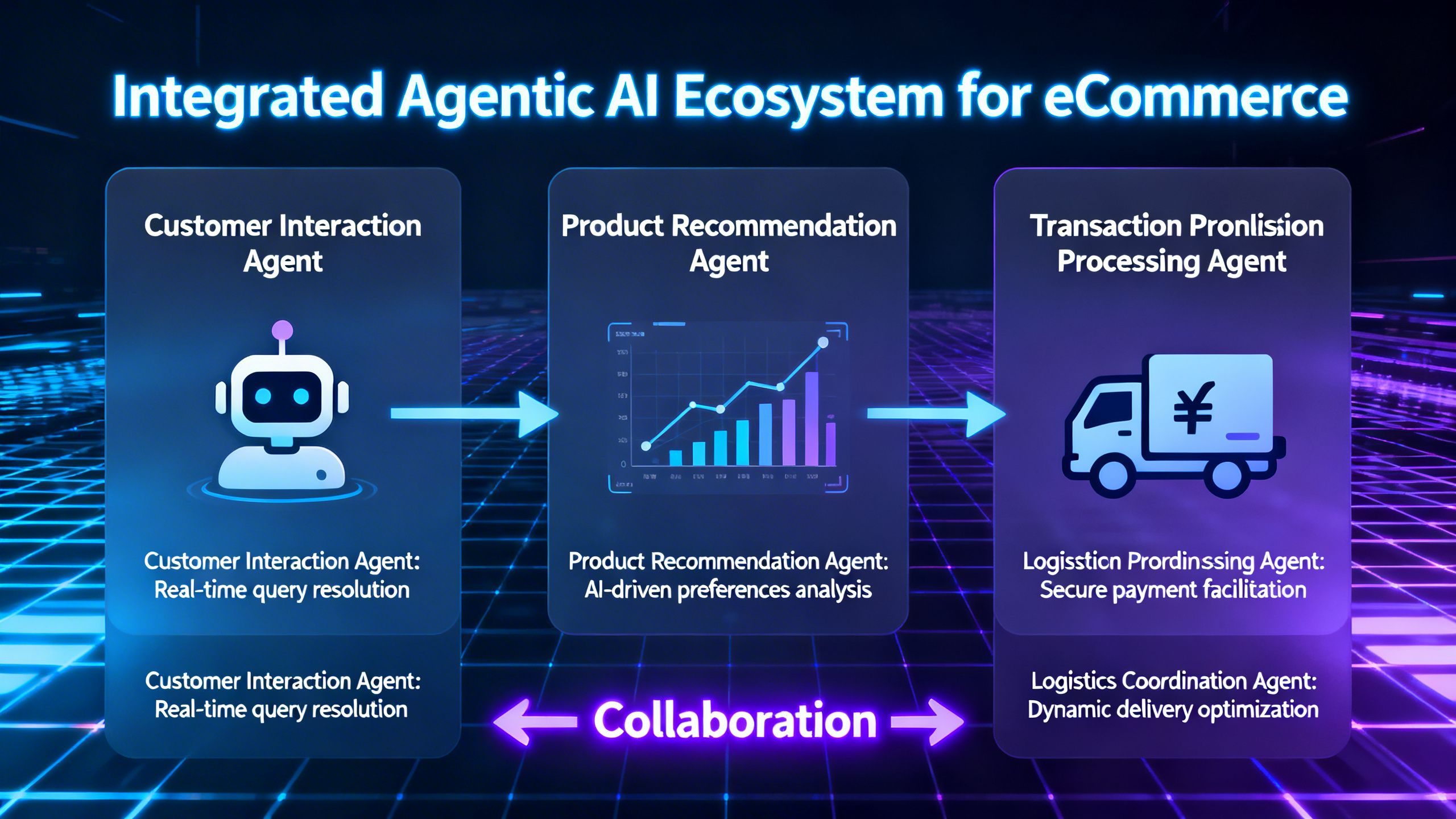
Once you're comfortable with a tool like TrackIQ, you can start thinking bigger. The future envisioned by the Amazon-CMU hub is one of an interconnected ecosystem of AI agents. Imagine:
- Your Marketing Agent identifies a new, high-converting audience segment.
- It communicates this to your Inventory Agent, which checks stock levels and forecasts future demand from this new segment.
- The Inventory Agent then tasks the Supply Chain Agent to coordinate with suppliers to ensure you have enough product.
- Meanwhile, a Finance Agent models the impact on cash flow and profitability.
This is the holy grail of agentic AI: a self-optimizing business where different AI systems collaborate to drive growth. It's a few years away for most, but the journey starts with the steps outlined above.
Key Takeaways for the Future-Focused Seller
The Shift is Happening: Agentic AI isn't sci-fi; it's the next operational paradigm, validated by giants like Amazon. Ignoring it is not an option.
Start with Your Data: A clean, organized data foundation is the non-negotiable first step to leveraging any form of AI.
Embrace Conversational AI Now: Tools like TrackIQ are your entry point. They let you get comfortable with AI-driven workflows and start automating the most painful parts of your job today.
Conclusion
The announcement of the CMU-Amazon AI Innovation Hub is more than just a press release. It's a declaration that the era of autonomous, intelligent business operations is here. For eCommerce sellers and agencies, this represents both a threat and a monumental opportunity. The businesses that thrive will be those that stop seeing AI as a novelty and start treating it as a core part of their team.
The future isn't about being replaced by robots. It's about augmenting your intelligence, intuition, and strategy with AI agents that can execute with speed and precision you could never achieve alone. Start by cleaning your data, identifying automation opportunities, and exploring how a conversational AI platform like TrackIQ can become your first AI teammate. The robots are coming—it's time to put them to work for you.
—