Your Warehouse is Leaking Money: A Seller's Guide to Warehouse Automation

Quick Summary (TL;DR)
• Automation is More Than Robots: Modern warehouse automation is about creating a smart, data-driven ecosystem of sensors, software, and processes to eliminate inefficiency, not just adding hardware.
• Simulate Before You Spend: Industry giants like Amazon are using advanced simulation to design and test warehouse layouts virtually, saving millions and months of physical prototyping. This data-first approach is the new gold standard.
• Start with Your Data: You don't need a massive budget to begin. The journey to automation starts with understanding your current operational bottlenecks—something you can do right now with the right analytics tools.
—
It’s 2 AM. You’re staring at a spreadsheet, trying to figure out why your pick-and-pack times are tanking and your customer complaint rate for wrong items is climbing. You feel less like a CEO and more like a firefighter in a warehouse that’s constantly sparking new blazes. This operational drag isn't just frustrating; it's a silent killer of your profit margins. What if there was a better way? A way to make your fulfillment operations a source of competitive advantage, not a constant headache?
Welcome to the world of warehouse automation. Forget clunky, dumb robots from 90s sci-fi movies. We're talking about a sleek, intelligent system that can diagnose problems before they happen, streamline every process from inbound to outbound, and give you back your most valuable asset: time. This guide is your map to navigating the landscape of modern warehouse automation, showing you how to start smart, avoid costly pitfalls, and build a fulfillment engine that scales with your ambition.
What Exactly Is Modern Warehouse Automation?
When most people hear warehouse automation, they picture massive, multi-million dollar robotic arms zipping around a cavernous space. That’s part of it, but it’s like describing an iPhone as just a glass screen. True warehouse automation is the integration of software, sensors, and machinery to create a self-optimizing system. It’s about using data to make intelligent decisions that reduce manual labor, minimize human error, and maximize throughput. Think of it as your warehouse's central nervous system, connecting everything from barcode scanners and conveyor belts to your inventory management software.
Why You Can't Afford to Ignore This Evolution
In today's eCommerce landscape, speed and accuracy aren't just nice-to-haves; they're table stakes. Warehouse automation is the engine that powers both.
Slashing Errors and Boosting Accuracy to Near Perfection
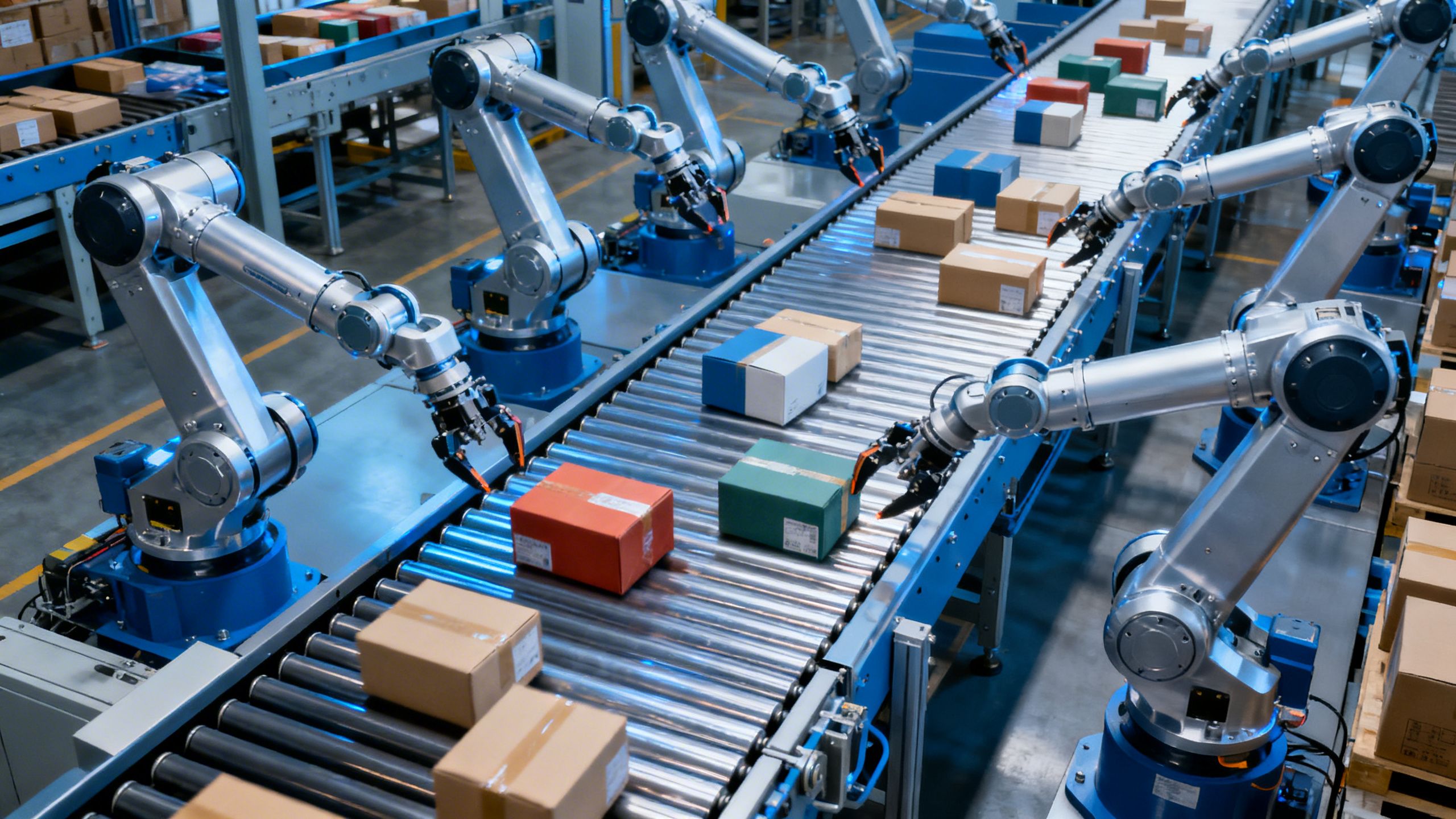
Every wrong item picked is a cascade of costs: return shipping, restocking labor, and a disappointed customer who might never buy from you again. Automation tackles this head-on. Automated systems using barcode and RFID scanners don't get tired or distracted. They ensure the right product goes into the right box, every single time.
A study by the Warehousing Education and Research Council (WERC) found that best-in-class warehouses have an order picking accuracy of 99.9%. Automation is how they get there.
Supercharging Your Fulfillment Speed
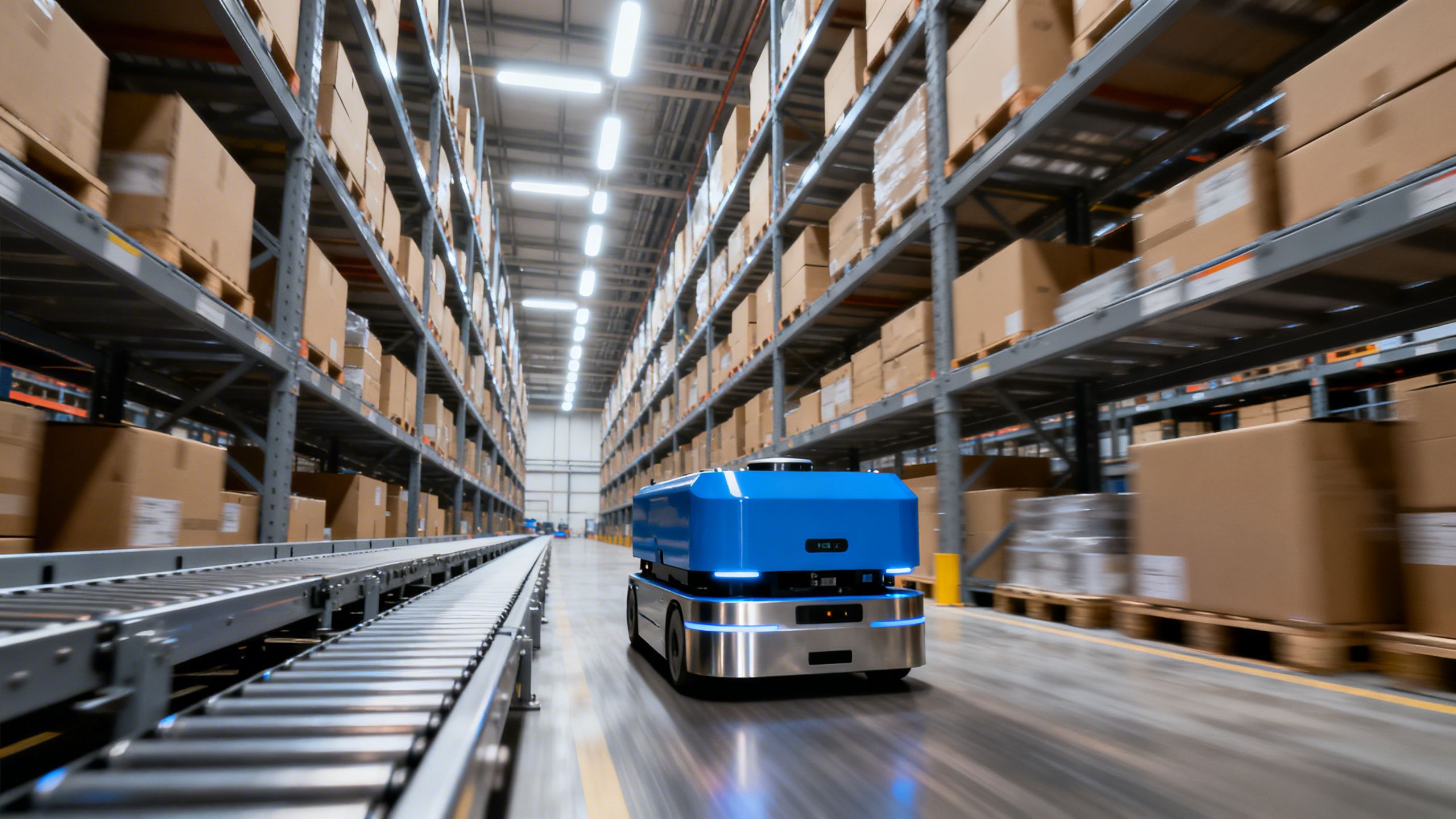
Amazon Prime has fundamentally rewired customer expectations. Two-day shipping is the baseline, and same-day is the new frontier. Manual-only warehouses simply can't compete. Autonomous Mobile Robots (AMRs) can bring shelves to pickers, cutting down travel time by over 70%. Automated sorting systems can process thousands of packages per hour, 24/7, without a coffee break. This isn't just about moving faster; it's about creating a scalable capacity that grows with your sales, not your headcount.
Your Playbook for Implementing Warehouse Automation
Getting started doesn't mean you need to bulldoze your current facility. The smartest sellers take a phased, data-driven approach.
Step 1: Audit Your Current Operations (The Brutal Truth)
Before you buy a single piece of tech, you need to become a detective in your own warehouse. Where is time being wasted? Where do the most errors occur? You need to map out your entire process, from the moment inventory arrives to the second a package leaves.
Key Tip: Identify your biggest bottleneck. Is it travel time for pickers? The packing station? The sorting process? Focus your initial efforts on the one area that will deliver the biggest impact. This is where a powerful analytics tool is invaluable.
Step 2: Start Small with Data & Simulation
You don't need to build a multi-million dollar facility to leverage the principles of the pros. Amazon's secret weapon, as revealed by their own science division, is a simulation platform called Sensor Workbench. Before they ever build a physical station, they run hundreds of virtual tests to optimize sensor placement, lighting, and workflow for tasks like barcode scanning. They use data to perfect the design before spending a dime on hardware.
Key Tip: You can apply this principle by using your own sales and operational data to model changes. What would happen if you rearranged your most popular SKUs? What's the impact of a new packing process? Answering these questions with data de-risks your decisions.
Step 3: Choose Your Tech & Integrate
Once you know your problem, you can find the right tool. This could be:
- Software: A robust Warehouse Management System (WMS) is the brain of your operation.
- Data Capture: Upgrading from manual entry to high-speed barcode or RFID scanners.
- Goods-to-Person Tech: Implementing conveyor belts or even starting with a few AMRs to reduce picker travel time.
The key is integration. Your new tech must talk to your existing systems to create a seamless flow of information.
Warehouse Automation in Action: Lessons from the Titans
Amazon's Secret Weapon: Simulation Over Speculation
Amazon's challenge was immense: how do you optimize barcode scanning when you have millions of different products in constantly changing environments? Physical testing was a massive bottleneck, taking weeks to test a single new layout. Their solution was to build a "digital twin" of their warehouse, allowing them to test everything from camera angles to LED lighting in a virtual space. The result? They can now explore hundreds of configurations in the time it used to take to test one, dramatically accelerating innovation.
From Barcodes to Bots: The Power of a Unified System
The real magic of modern automation isn't one specific robot; it's the unified system. The data from a barcode scan instantly updates the WMS, which then directs the next available AMR to the correct location, while simultaneously telling the packing station what size box to prepare. It's a symphony of efficiency, where every component is perfectly in sync, orchestrated by data.
Why TrackIQ Matters: Connecting Data to Your Warehouse Floor
So, how does a growing eCommerce seller start this data-driven journey without a team of Amazon-level engineers? This is where the right tools become a game-changer. The core principle of warehouse automation is making decisions based on data, not guesswork. Before you can optimize, you must measure.
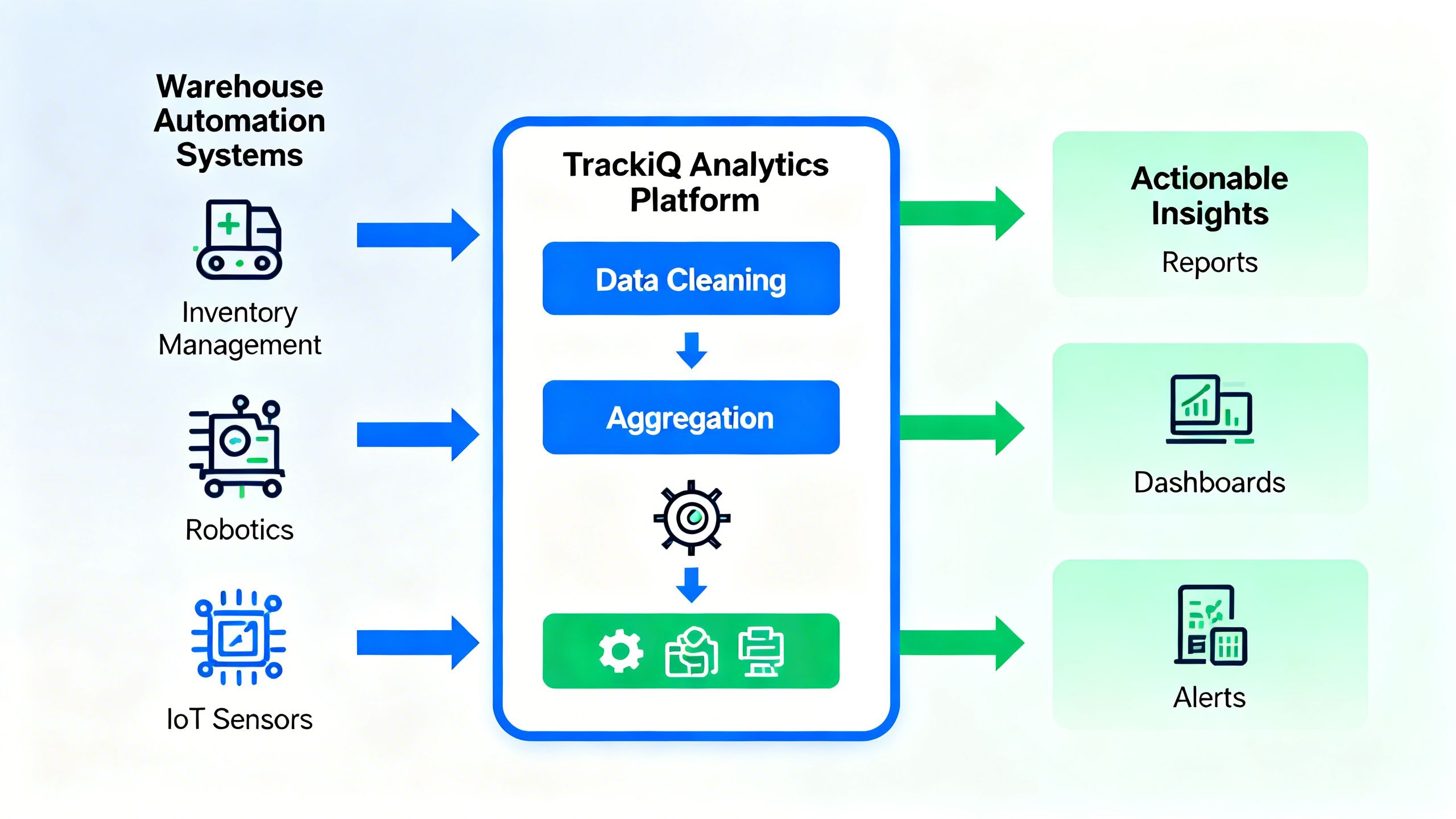
An AI-powered analytics platform acts as your initial command center. By analyzing your sales data, inventory velocity, and fulfillment metrics, it helps you answer the critical questions from Step 1:
- Which products should be stored closest to the packing stations?
- Where are your recurring fulfillment delays coming from?
- Are you losing money on inefficient storage or stockouts?
TrackIQ surfaces these insights automatically, turning your complex Amazon data into a clear roadmap for optimization. It helps you identify the costliest problems that automation can solve, ensuring your investment in new technology will have the highest possible ROI. It provides the why before you invest in the how.
Common Warehouse Automation Traps and How to Dodge Them
The "Shiny Object" Syndrome: Buying Tech Before Understanding the Problem
The biggest mistake sellers make is falling in love with a cool robot and trying to force it into their workflow. This is backward. Your operational data should dictate the solution. If your data shows that 80% of your pickers' time is spent walking, then a Goods-to-Person solution like AMRs is a logical investment. If your problem is inaccurate shipping, better scanners and verification software are the answer. Data first, hardware second.
Ignoring the Human Element: Forgetting Your Team
Automation isn't about replacing people; it's about augmenting them. A new system is useless if your team doesn't know how to use it or feels threatened by it. Invest in training, communicate the benefits (less walking, fewer errors, easier work), and involve your warehouse staff in the selection and implementation process. They are on the front lines and often have the best insights.
Level Up: Advanced Warehouse Automation Strategies
Once you've mastered the basics, you can explore the cutting edge. The future of warehouse automation is predictive and proactive. This involves using AI to not just report on what happened, but to predict what will happen next.
This is where Agentic AI comes into play. Instead of just showing you a dashboard, an AI agent can actively monitor your operations and suggest optimizations in real-time. For example, it could analyze incoming orders and suggest re-slotting fast-moving inventory before a bottleneck occurs. Amazon is already working on AI that suggests optimal sensor placements for new station designs. This level of proactive, AI-driven optimization is the next frontier for eCommerce operations.
Key Takeaways for Your Automated Future
If you remember nothing else, remember these three things:
- Start with Data, Not Hardware: Your first step into automation isn't a purchase order; it's a deep dive into your operational data to find your most expensive problem.
- Think Like Amazon (On a Budget): Embrace the principle of simulation. Model the impact of changes using your data before you commit time and money to physical changes.
- Automation is a Journey: Don't try to do everything at once. Start with your biggest bottleneck, prove the ROI, and build from there. Each step makes the next one easier.
Conclusion
The gap between the top 1% of sellers and everyone else is widening, and operational efficiency is a major reason why. Warehouse automation is no longer a luxury for corporate giants; it's an essential tool for any seller who wants to scale profitably. By taking a strategic, data-first approach, you can build a fulfillment operation that not only keeps up with customer demand but becomes a powerful engine for growth.
Ready to find the hidden inefficiencies in your operations? Start by understanding your data. Tools like TrackIQ can help you pinpoint exactly where to begin your automation journey, turning complex operational metrics into a clear, actionable plan.
—