Your Product Photos Are a Goldmine: The eCommerce Guide to Scalable Image Segmentation

Quick Summary (TL;DR)
• What is Image Segmentation?: It's an AI process that goes beyond simple tags, teaching computers to identify and understand individual objects within your product photos, like distinguishing a dress from the belt worn with it.
• Why Scalability Matters: A truly effective AI for image segmentation must get smarter as you feed it more data and new tasks (like identifying necklines and patterns). Generic models can't keep up with your unique catalog.
• The eCommerce Payoff: Implementing scalable image segmentation leads to hyper-accurate product discovery, automated visual merchandising, and recommendation engines that actually understand style, boosting conversion and AOV.
—
Ever felt that soul-crushing feeling when you search for a “long-sleeve blue striped shirt” on a retail site, only to be shown a sea of tank tops, checkered patterns, and every shade of blue except the one you wanted? Your customers feel this every day. The culprit? An outdated search engine that thinks a product photo is just a single, dumb block of pixels. It relies on manual tags that are often incomplete, inconsistent, or just plain wrong.
But what if your store could see products the way a human does? What if it could understand not just that an image contains a shirt, but that it’s a v-neck, cotton, long-sleeve shirt with a specific floral pattern? This isn't science fiction; it's the power of scalable image segmentation, and it's poised to become the most significant competitive advantage in eCommerce since one-click checkout. This guide breaks down what it is, why the “scalable” part is a game-changer, and how you can leverage it to stop leaving money on the table.
What Exactly is Image Segmentation? (And Why Isn't It Just Fancy Cropping?)
At its core, image segmentation is a computer vision task where an AI model partitions an image into multiple segments or pixel-level masks. Think of it like giving your computer a set of digital crayons and teaching it to color within the lines. Instead of seeing a single image of a model on a beach, it sees distinct objects: ‘person,’ ‘sunglasses,’ ‘blue dress,’ ‘sand,’ and ‘ocean.’
This is lightyears ahead of simple object detection, which just draws a box around an object. Segmentation outlines the object precisely. This precision allows an AI to analyze the specific attributes of the dress itself, separate from the model wearing it or the background. It’s the difference between knowing a car is in a photo and knowing the exact make, model, color, and even the trim level.
Why Scalable Segmentation is an eCommerce Game-Changer
Here’s where it gets interesting. Anyone can download a generic AI model. The magic happens with scalability—the model's ability to get exponentially better as it processes more of your unique data and handles more diverse tasks. A scalable model trained on your fashion catalog won't just identify ‘shirts’; it will learn the nuances between a ‘camp collar’ and a ‘spread collar’ because it has seen thousands of your products.
Enhanced Product Discovery: From Keywords to Visual Conversations
Traditional search is broken because it’s based on words. But style is visual. Scalable image segmentation allows for a new kind of search where users can find products based on visual attributes. Imagine a customer uploading a photo of a pattern they like and your site instantly showing all products with a similar aesthetic. This transforms your search bar from a rigid text field into a flexible, visual conversation.
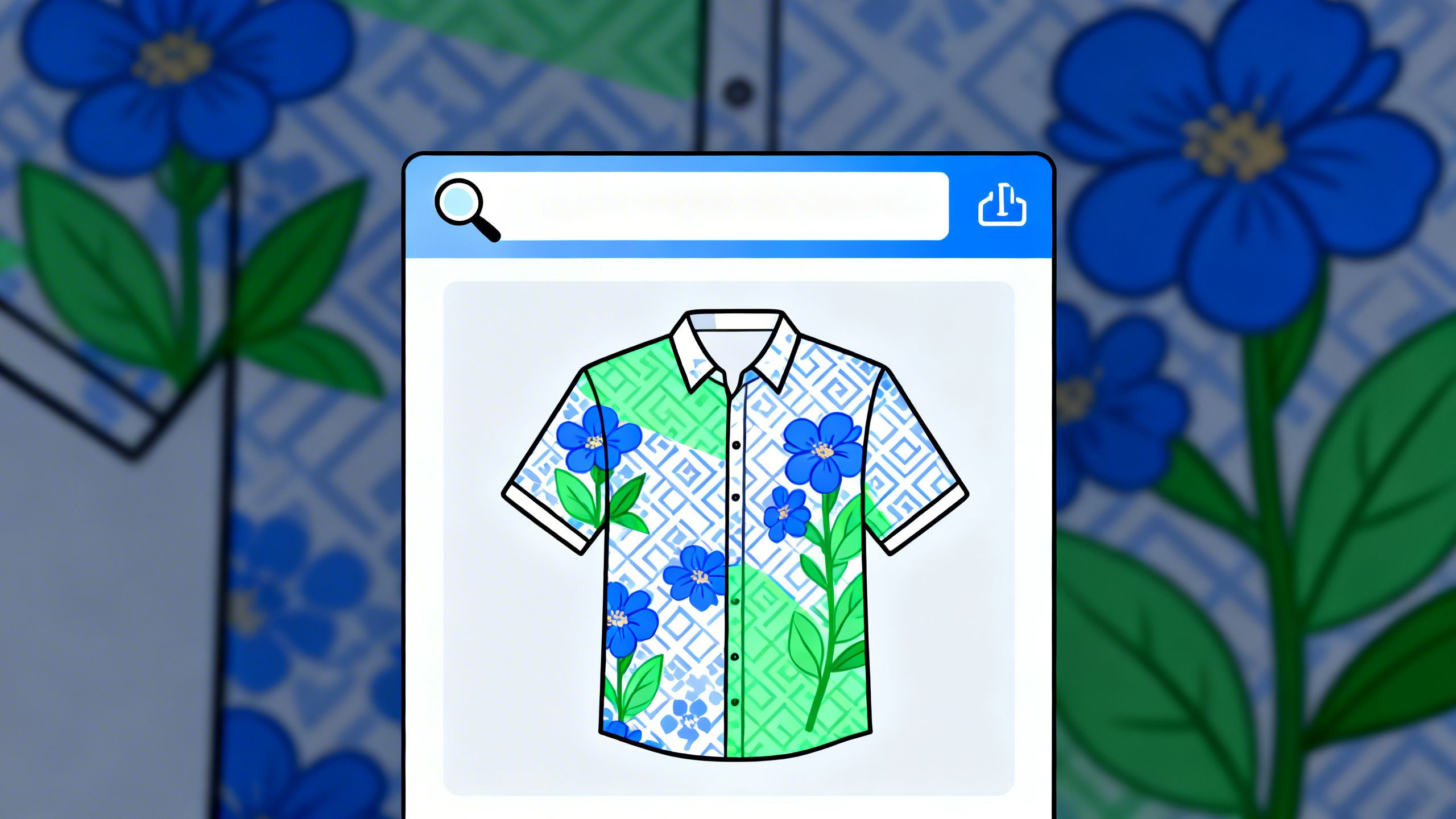
According to a study by ViSenze, 62% of Millennial and Gen Z consumers want visual search capabilities more than any other new technology. By not offering it, you're essentially telling the majority of your future customers, “We don’t speak your language.”
Automated Merchandising: Your Catalog, Now on Autopilot
How many hours does your team spend manually tagging products with attributes like ‘sleeve length,’ ‘neckline,’ ‘material,’ and ‘style’? It’s a tedious, error-prone nightmare. A scalable segmentation model automates this entire process. It can analyze your entire product feed, generate hyper-detailed tags, and even create new product collections automatically (“Shop our new ‘Puff-Sleeve Dresses’ collection!”) without a single human click.
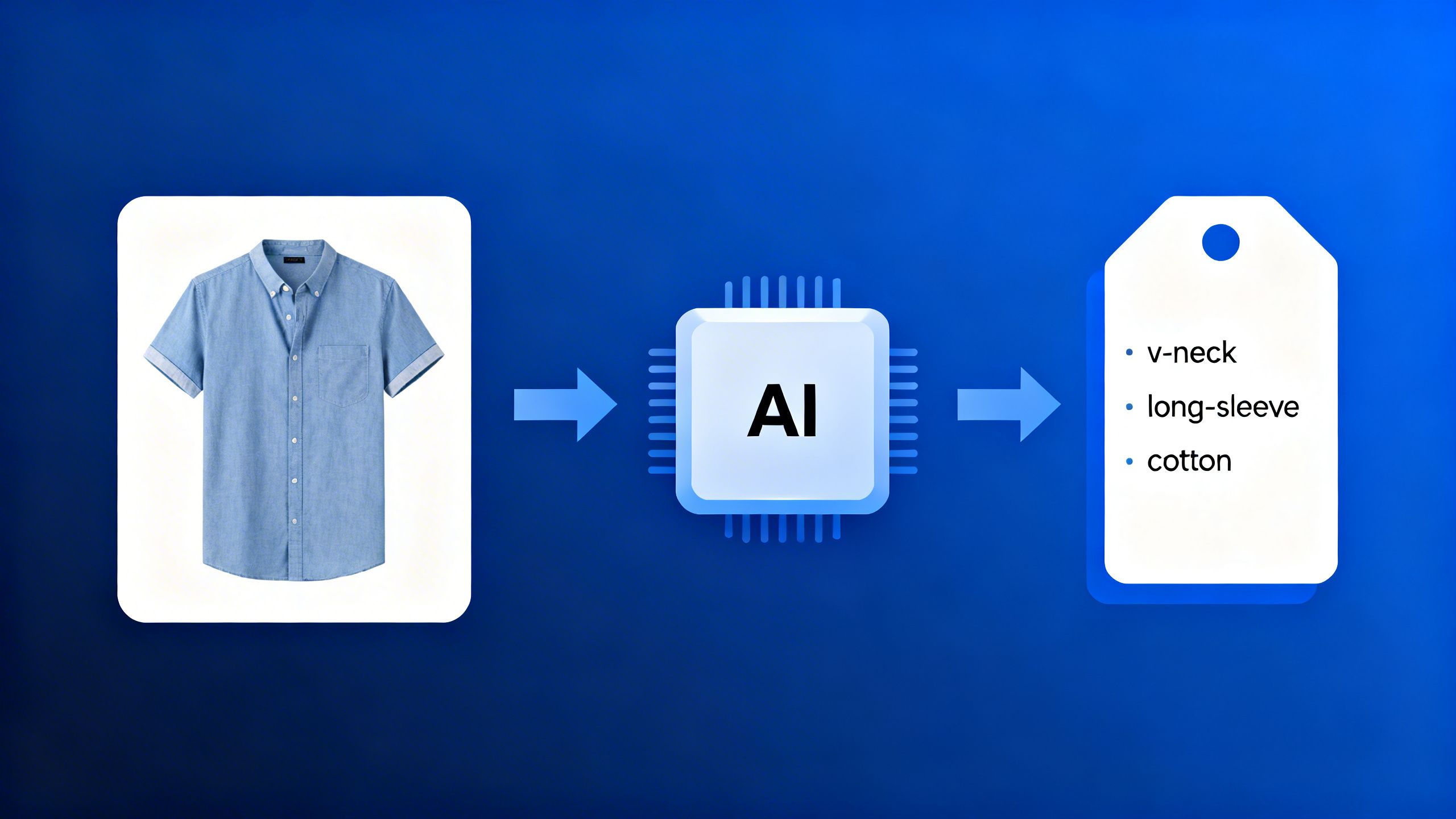
This frees up your team to focus on creative strategy instead of mind-numbing data entry. Furthermore, it ensures consistency across your entire catalog, eliminating the “blue shirt” problem for good.
The Secret Sauce: How Modern Image Segmentation Actually Works
So how does an AI learn to see with such detail? Recent breakthroughs, like those detailed in a paper from AI researchers, point to a new approach that tackles scalability head-on. It’s all about teaching the AI to ask better questions.
Step 1: The 'Query' Problem: Teaching AI to Ask the Right Questions
Older AI models used one of two main ways to find objects. Think of it like two types of detectives:
- The Generalist (Learnable Queries): This detective enters a crime scene with a general checklist, looking for broad categories like ‘person,’ ‘weapon,’ or ‘vehicle.’ It’s good at getting the big picture (e.g., this is a clothing store) but can miss specific details.
- The Specialist (Conditional Queries): This detective is given a specific lead— “find the red scarf”—and is hyper-focused on that one task. It’s great at finding what it’s told to look for but is useless if you ask it to find something else.
Key Tip: Relying on just one type of model is inefficient. A generalist model won't understand your niche products, while a specialist model can't adapt to new inventory without being completely retrained.
Step 2: The Breakthrough: Mixing Queries for Maximum Smarts
The new hotness, dubbed a “mixed-query transformer” (MQ-Former), is like having both detectives work the case together, constantly sharing notes. The generalist points out areas of interest, and the specialist dives in for a closer look. This hybrid approach allows the AI to be both a master of all trades and an expert in one. It can learn the general concept of ‘shirt’ while also becoming an expert on the specific ‘gingham patterns’ in your catalog. This is the key to making the model scalable across different tasks.
Key Tip: This mixed-query approach means the AI can learn to identify both broad categories (semantic segmentation) and specific items (instance segmentation) at the same time, making it incredibly efficient for complex eCommerce catalogs.
Step 3: Feeding the Beast: The Power of Synthetic Data
The biggest bottleneck in training AI is the lack of high-quality, human-annotated data. It takes forever to manually outline every object in millions of images. The clever solution? Synthetic data. Researchers found they could use weaker AI models to do a “first pass” on massive, loosely-labeled datasets (like those with simple bounding boxes). This AI-generated data is then used to train a much stronger, more sophisticated model. It’s like having an army of interns prepare rough drafts for a senior editor to perfect, allowing you to scale your training data from 100,000 images to 600,000 and beyond.
Image Segmentation in Action: Real-World eCommerce Scenarios
From 'Blue Shirt' to 'Cerulean V-Neck Cotton Tee'
Let's get practical. A customer searches for a “blue shirt.” A basic search engine shows them everything tagged ‘blue.’ But a system powered by image segmentation understands the visual nuances. It can instantly offer filters for:
- Shade: Sky Blue, Navy, Royal Blue, Cerulean
- Neckline: Crewneck, V-Neck, Scoop Neck
- Sleeve Length: Short, Long, ¾ Sleeve
- Fit: Slim, Relaxed, Oversized
This level of detail was previously impossible to maintain manually but is effortless for a trained AI. It’s the difference between a cluttered flea market and a curated boutique experience.
Visual Recommendations That Actually Convert
“Customers who bought this also bought…” is a relic of the past. It’s a popularity contest, not a style recommendation. Image segmentation powers the next generation of recommendation engines. By understanding the visual DNA of a product a customer is viewing—its color palette, pattern, and silhouette—the engine can suggest other items that are truly stylistically compatible, even if no one has ever bought them together before. This is how you introduce customers to new products they’ll love and dramatically increase average order value (AOV).
Case Studies: From Messy Catalogs to Money-Making Machines
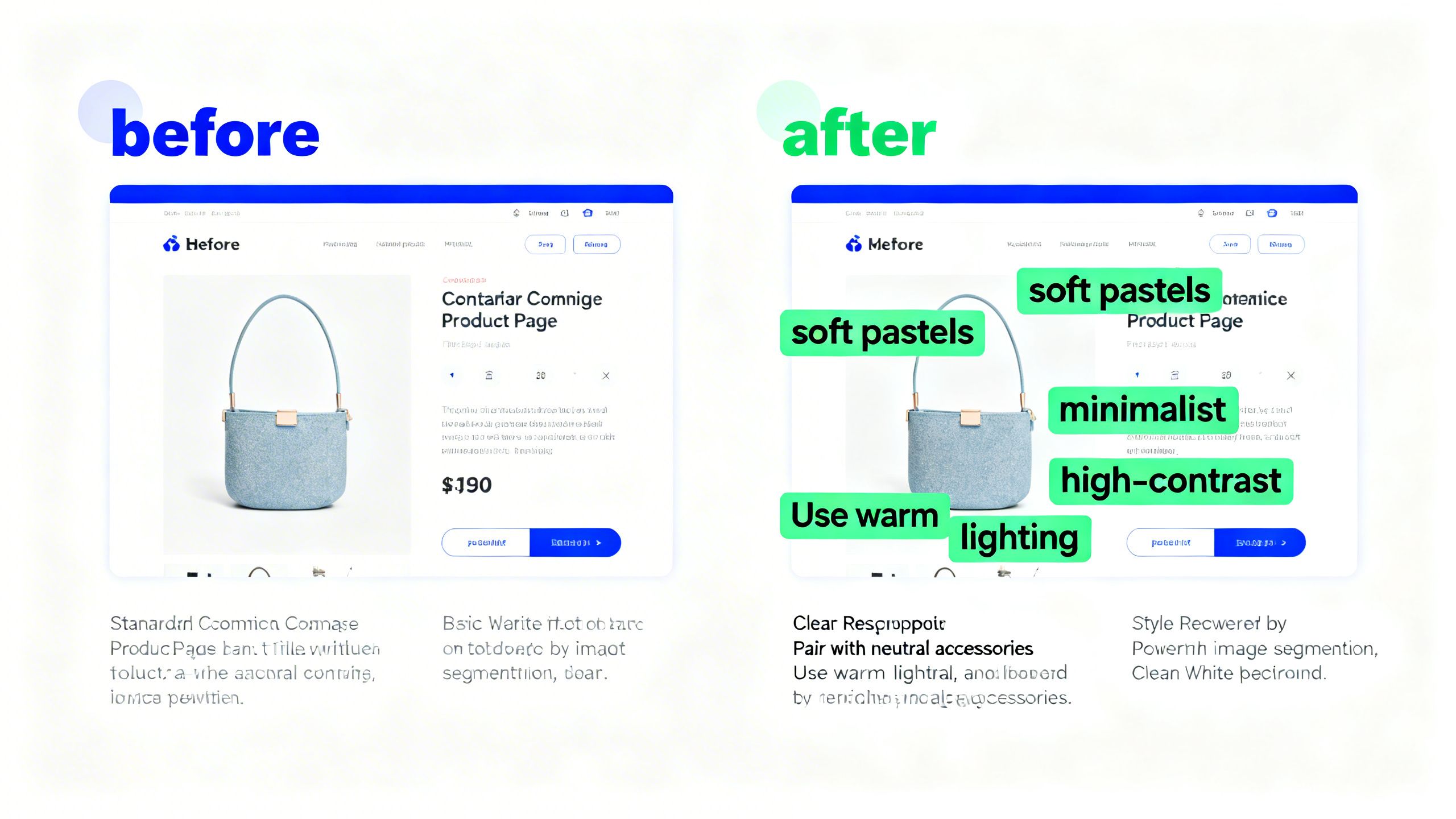
A Fashion Retailer Cuts Manual Tagging by 95%
A fast-fashion brand with thousands of new SKUs per month was drowning in manual data entry. Their product tags were inconsistent, leading to poor search results and frustrated customers. By implementing a scalable image segmentation model, they automated 95% of their product attribute tagging. Not only did this save thousands of man-hours, but search-led conversions increased by 18% because customers could finally find exactly what they were looking for.
A Home Goods Store Boosts AOV with Style-Based Upsells
A home decor retailer used image segmentation to analyze user-submitted photos of their living rooms. When a customer viewed a specific sofa, the AI would segment the photo of the room it was in, identify the room's style (e.g., ‘Mid-Century Modern’), and recommend other products from their catalog that fit the aesthetic—like a specific lamp, rug, or coffee table. This contextual upselling strategy led to a 12% increase in AOV.
Common Traps: Where eCommerce Brands Go Wrong with Image AI
The 'One-Size-Fits-All' Model Fallacy
Many brands are tempted to use off-the-shelf AI vision APIs. This is a mistake. A generic model trained on random internet images doesn't understand the specific nuances of your products. It might know what a ‘shoe’ is, but it can’t tell the difference between a ‘stiletto’ and a ‘wedge heel.’ True value comes from a model that scales and learns from your data.
Ignoring the Data Pipeline
AI is not magic. It's a system that relies on data. If your product images are low-quality, poorly lit, or inconsistent, the AI's performance will suffer. The principle of “garbage in, garbage out” is brutally true. Before diving into advanced AI, ensure you have a solid process for capturing and managing high-quality visual assets. Even the best AI can't fix a blurry photo.
Why TrackIQ Matters: Connecting Pixels to Profits
Implementing a cutting-edge AI system for image segmentation is a massive undertaking. The principles behind it, however, are universal: to win in modern eCommerce, you need specialized AI that understands the unique context of your business. Generic tools provide generic insights. This is the core philosophy behind TrackIQ.
While image segmentation deciphers your visual data, TrackIQ’s AI-powered analytics platform does the same for your business data. It doesn't just show you dashboards; it provides a conversational interface to an AI that has already studied your sales cycles, inventory turns, and advertising patterns. You can ask complex questions like, “Which of my products are seeing a drop in profitability despite high ad spend?” and get immediate, actionable answers.
Just as generative AI is reinventing product discovery, specialized models are changing every aspect of operations. You don't need to build your own large language model from scratch. You need an expert co-pilot that already knows the territory. That's TrackIQ.

Key Takeaways: Your Next Steps in Visual Commerce
- Start thinking of your images as your most valuable untapped dataset. They contain a wealth of information that keywords alone can't capture.
- Prioritize scalability in any AI solution. A model that doesn't learn and adapt to your specific catalog and business needs is a dead end.
- Focus on the 'so what?'. The goal isn't just to tag images; it's to create a better customer experience, automate tedious work, and drive revenue. Connect every AI initiative to a clear business outcome.
Conclusion
The shift from text-based search to visual-first discovery is already underway. Brands that treat their product photography as a strategic asset, ready to be analyzed by intelligent systems, will build an insurmountable moat. Scalable image segmentation is the engine that will power this new era of eCommerce, turning your visual catalog from a simple gallery into an interactive, intelligent, and highly profitable sales tool.
Ready to stop guessing and start leveraging your data with an AI that understands your business? See how TrackIQ turns complex Amazon data into clear, actionable growth strategies.
—