Your eCommerce Business on Autopilot: The No-BS Guide to AI for eCommerce
Quick Summary (TL;DR)
• Stop Guessing, Start Knowing: AI for eCommerce isn't magic; it's a data-crunching machine that turns your store's chaos into clear, actionable insights for everything from ad spend to inventory.
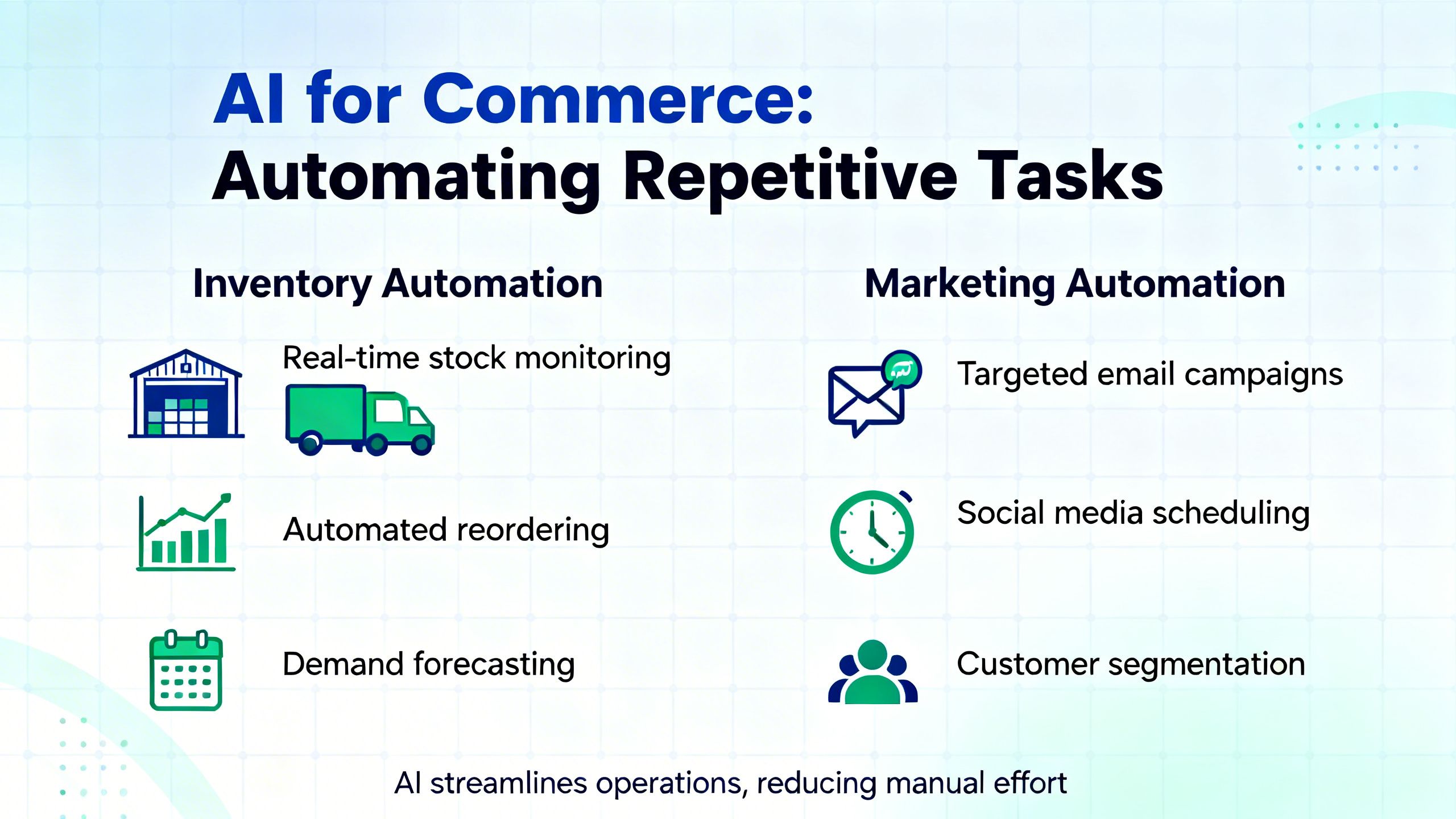
• Automate the Annoying Stuff: Repetitive tasks like bid adjustments, inventory forecasting, and customer segmentation are prime candidates for AI takeover, freeing you up to actually build your brand.
• It's Your Co-Pilot, Not a Replacement: The best AI tools act as a partner. They surface opportunities and handle the grunt work, but your strategic oversight is what makes it all work. Think Iron Man's J.A.R.V.I.S., but for your P&L.
—
Ever feel like you're running your eCommerce business with a blindfold on, juggling a dozen flaming torches? You're drowning in spreadsheets, second-guessing ad campaigns, and praying you don't stock out of your bestseller during a flash sale. It's a chaotic, caffeine-fueled grind that leaves little time for big-picture strategy. What if you could trade that chaos for clarity? That's the promise of AI for eCommerce.
Forget the sci-fi hype about sentient robots. We're talking about practical, powerful tools that act like a brilliant analyst, a tireless assistant, and a seasoned strategist, all rolled into one. This isn't about replacing you; it's about augmenting you. It's about automating the soul-crushing tasks and uncovering the gold buried in your data, so you can make smarter, faster, and more profitable decisions. This guide will cut through the noise and show you how to actually use AI to grow your business, without needing a PhD in data science.
What Exactly Is AI for eCommerce (And What It's Not)
Let's clear the air. When we talk about AI for eCommerce, we're not talking about a single, magical piece of software. It's an umbrella term for a set of technologies that can learn from data, identify patterns, and make decisions with minimal human intervention. Think of it less as a single tool and more as a new layer of intelligence for your entire operation.
It's the engine behind:
- Predictive Analytics: Forecasting future sales trends based on past performance, seasonality, and market signals.
- Personalization Engines: Showing customer A a different homepage than customer B, based on their browsing history.
- Automated Ad Bidding: Adjusting your PPC bids in real-time to maximize ROI.
- Intelligent Search: Understanding that when a user types “summer party shirt,” they’re looking for linen, short sleeves, and bright colors.
It's not a set-it-and-forget-it solution that prints money. It requires good data and smart strategy to be effective.
Why You Should Care: The Game-Changing Benefits of AI
Adopting AI isn't just about keeping up with the trends; it's about gaining a massive competitive advantage. Here’s how it fundamentally changes the game for eCommerce sellers.
Automation That Frees Your Brain: Reclaim Your Time
The average eCommerce owner spends countless hours on manual, repetitive tasks. Adjusting ad bids, monitoring inventory levels, pulling reports—it's a grind. AI automates this grunt work with ruthless efficiency.
An AI agent can monitor your ad campaigns 24/7, shifting budget from underperforming keywords to winners while you sleep. It can analyze sales velocity and supply chain lead times to tell you exactly when to reorder stock, preventing costly stockouts or overstocking.
This isn't just about saving time; it's about reallocating your most valuable resource—your brainpower—to tasks that actually grow the business: product development, brand building, and customer relationships.
Superhuman Insights: Turn Data into Dollars
Your business generates a mountain of data every single day. Sales data, customer behavior, ad performance, market trends. For a human, finding meaningful patterns in this mess is nearly impossible. For an AI, it's Tuesday.
Artificial intelligence for eCommerce can identify subtle correlations you'd never spot. For example, it might discover that customers who buy product X on a Tuesday are 70% more likely to buy product Y within three weeks. That's not just a fun fact; it's a roadmap for a hyper-targeted email campaign that can dramatically increase customer lifetime value.

Putting AI to Work: A 3-Step Playbook for eCommerce Sellers
Getting started with AI doesn't have to be an overwhelming, budget-draining nightmare. Here’s a simple framework to integrate AI into your operations intelligently.
Step 1: Identify Your Biggest Time Sinks and Profit Leaks
Before you even look at a single tool, audit your own business. Where are you bleeding time and money? Make a list. Is it:
- Manually adjusting hundreds of PPC bids every week?
- Guessing how much inventory to order and frequently getting it wrong?
- Spending hours trying to figure out which marketing channels are actually profitable?
- Struggling to answer basic questions about your business performance without pulling three different reports?
Your goal is to find the most painful, repetitive, and data-heavy problems. These are the perfect first targets for AI automation.
Key Tip: Start with a problem that has a clear financial impact. Automating ad management or inventory forecasting often delivers the fastest and most measurable ROI.
Step 2: Choose the Right AI Tools (Without the Hype)
The market is flooded with tools claiming to be “AI-powered.” To cut through the noise, focus on platforms that solve the specific problems you identified in Step 1. Look for solutions that are built for eCommerce and can integrate directly with your data sources, like your Amazon Seller Central account.
Avoid generic, all-in-one platforms that promise the world. Instead, look for specialized tools or unified platforms designed for sellers. For instance, instead of a generic chatbot, look for an AI system that can answer complex questions about your own business data, like “What was my best-selling SKU in Q2, and what was its top traffic source?”
Key Tip: Look for tools that offer a conversational interface. The ability to ask plain-English questions and get immediate, data-backed answers is a game-changer. Platforms like TrackIQ are pioneering this approach, turning complex analysis into a simple conversation.
Step 3: Start Small, Scale Smart
Don't try to automate your entire business overnight. Pick one area from your list—let's say PPC management. Implement an AI tool for that specific function. Monitor the results closely. Is it saving you time? Is your ACoS improving?
Once you've validated the tool and seen a positive impact, you've built a case for further investment. You can then move on to the next problem on your list, like inventory management. This phased approach minimizes risk, makes it easier to measure ROI, and prevents you from getting overwhelmed.
AI for eCommerce: Best Practices from the Trenches
Implementing AI isn't just about plugging in a tool. It's about adopting a new way of operating. Here are two non-negotiable rules for success.
Best Practice: Feed the Beast with Clean Data
An AI is only as smart as the data it learns from. If your data is a mess—inconsistent naming conventions, missing information, siloed systems—your AI's output will be unreliable. It's the classic principle of “garbage in, garbage out.”
Before you implement any AI tool, take the time to clean and structure your data. Ensure your product catalogs are consistent, your tracking is accurate, and your data sources can talk to each other. This upfront work is tedious, but it's the foundation for everything else.
Best Practice: Keep a Human in the Loop
AI is a powerful co-pilot, but it shouldn't be flying the plane solo. The most successful eCommerce operators use AI to augment their own expertise, not replace it. Let the AI handle the data-crunching and execution, but you provide the strategic direction and common-sense oversight.
Review the AI's recommendations. Question its assumptions. Use its insights to inform your creativity and intuition. The combination of machine intelligence and human ingenuity is where the real magic happens.
AI in Action: Real-World eCommerce Wins
Theory is great, but results are better. Here’s how sellers are using AI to drive real, measurable growth.
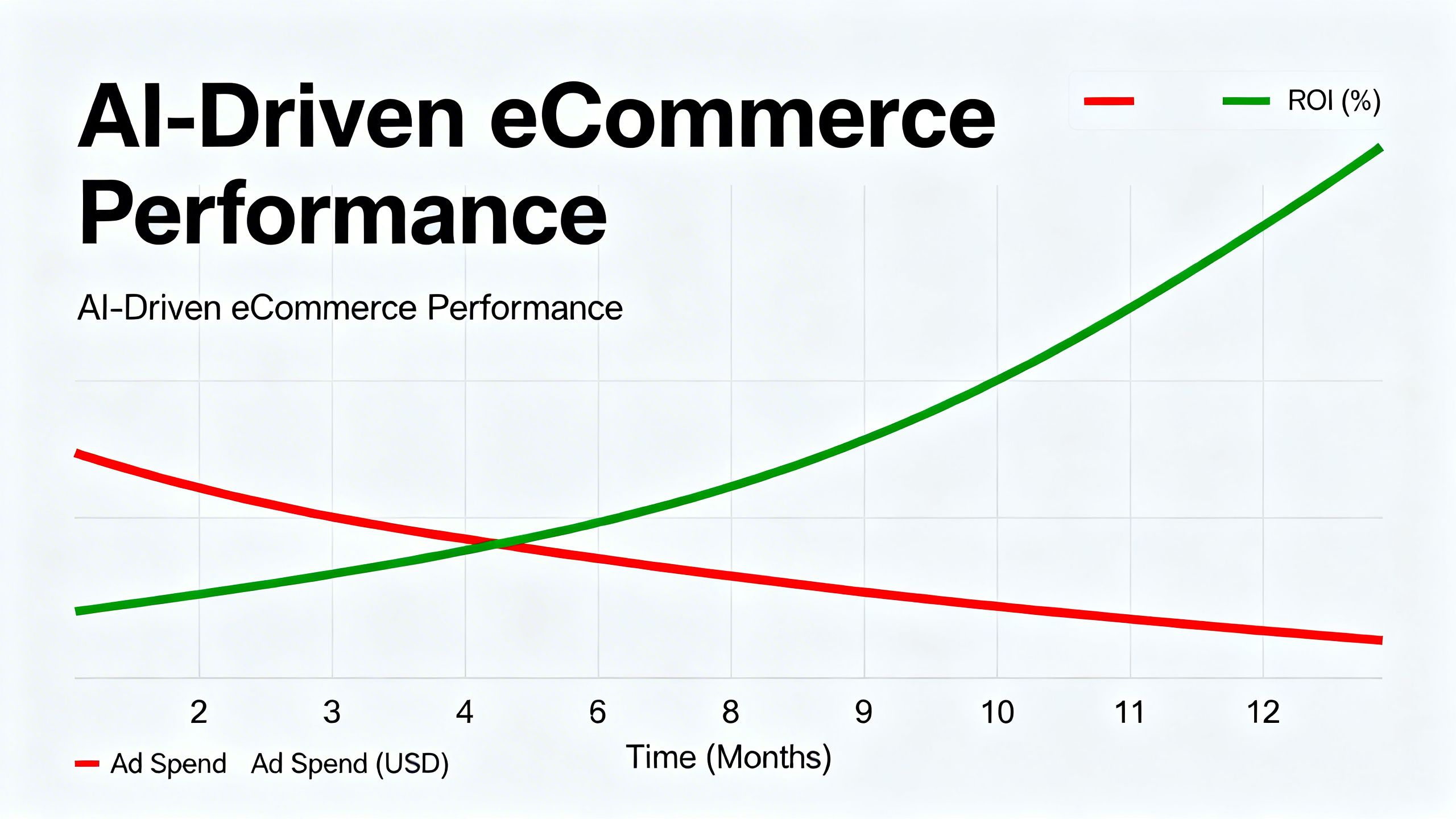
Case Study: Slashing Ad Spend by 30% with AI-Powered Bidding
A 7-figure seller was managing over 500 keywords for their top products on Amazon. They spent 10-15 hours a week manually adjusting bids, often based on gut feelings. After implementing an AI bidding tool, the system began making micro-adjustments 24/7 based on real-time conversion data.
The Result: Within 60 days, their Advertising Cost of Sale (ACoS) dropped from 45% to 31%, while sales remained consistent. The AI identified wasted spend on low-converting, high-cost keywords and reallocated the budget to emerging, profitable search terms the seller hadn't even considered.
Case Study: Predicting Sell-Outs and Preventing a $50k Stockout
A fashion brand was constantly struggling with inventory. They'd either order too much and be stuck with dead stock, or order too little and miss out on sales. They adopted an AI-powered inventory forecasting platform that analyzed historical sales data, seasonality, and even upcoming holidays.
The Result: The system alerted them that their best-selling dress was projected to sell out three weeks before their next shipment was due to arrive—a potential loss of over $50,000 in revenue. Armed with this data, they expedited a partial shipment, avoiding the stockout and capturing the demand.
Common AI Traps and How to Dodge Them
Venturing into AI can be tricky. Here are two common pitfalls and how to steer clear of them.
The 'Shiny Object' Syndrome: Buying Tech You Don't Need
It's easy to get mesmerized by flashy AI demos and buzzwords like “machine learning” and “neural networks.” Many sellers buy expensive, complex software they don't understand and can't properly implement.
How to Avoid It: Go back to Step 1. Always start with a real, painful business problem. Don't buy a tool looking for a problem to solve. Your purchase decision should be driven by a clear need and a measurable outcome, not by hype.
Garbage In, Garbage Out: Underestimating Data Quality
Many sellers plug in a new AI tool, connect it to their messy data, and are then shocked when the results are nonsensical. They blame the tool, but the root cause is the poor quality of the input data.
How to Avoid It: Treat data hygiene as an ongoing process. Before implementing any AI system, conduct a data audit. Standardize your processes for data entry and management. A platform that can automatically ingest and clean data from sources like Amazon is a huge advantage.
Why TrackIQ Matters: Your eCommerce Co-Pilot
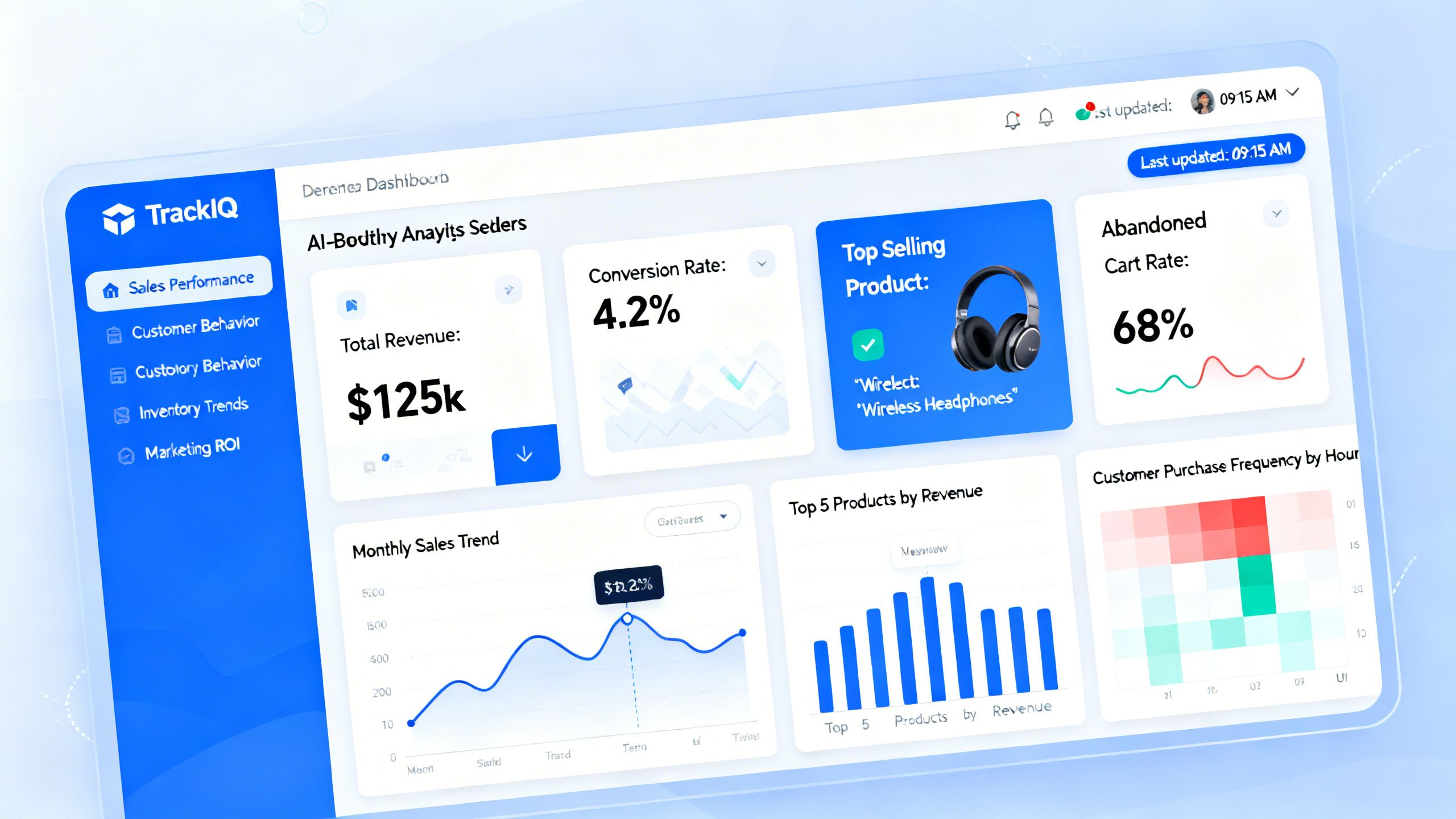
This is where a platform like TrackIQ changes the equation. Instead of patching together a dozen different tools, TrackIQ provides a unified, AI-powered operating system for your eCommerce business. It's designed to tackle the very challenges we've discussed.
- It Connects the Dots: TrackIQ integrates directly with your Amazon data, pulling in sales, advertising, and inventory information into one place. This eliminates data silos and ensures the AI has a complete picture of your business.
- It Speaks Your Language: You don't need to be a data scientist. You can ask complex questions in plain English, like, “Which of my products have seen a drop in conversion rate over the last 30 days?” and get an instant, easy-to-understand answer.
- It's Proactive, Not Just Reactive: TrackIQ doesn't just present data; its agentic AI acts as a co-pilot, surfacing opportunities and alerting you to problems before they become disasters. It's the analyst you wish you could afford, working for you 24/7.
By turning complex analytics into a simple conversation, TrackIQ makes the power of AI for eCommerce accessible to every seller, not just the mega-brands with teams of developers.
The Future is Automated: Your Next Steps
We've covered a lot of ground, from what AI for eCommerce actually is to how you can strategically implement it. The key is to stop thinking of AI as some far-off, futuristic concept and start seeing it as a practical set of tools you can use today to run a smarter, more efficient, and more profitable business.
Here are your key takeaways:
- Start with the Pain: Identify the most time-consuming, repetitive, and costly parts of your business. This is where AI will have the biggest immediate impact.
- Data is Everything: Your AI is only as good as your data. Prioritize data hygiene and choose tools that can make sense of your existing information.
- Augment, Don't Abdicate: Use AI as a co-pilot. Let it handle the number-crunching and automation, but you remain the captain, providing strategy, creativity, and oversight.
Conclusion
The era of running an eCommerce business on spreadsheets and gut feelings is over. The sellers who thrive in the next decade will be those who effectively leverage data and automation. AI for eCommerce is no longer a luxury; it's a fundamental component of a modern, scalable operation.
By automating the mundane and illuminating the complex, AI frees you to do what you do best: build a brand that customers love. The robots aren't coming for your job; they're coming to do the parts of your job you hate, so you can focus on the parts you love. The only question is whether you'll let them.
—