What AI in Mathematical Research Teaches Us About Winning on Amazon

Quick Summary (TL;DR)
• AI as a Colleague, Not a Calculator: The biggest leap in AI isn't just automation; it's collaboration. We'll show you how to treat AI like a brilliant (but sometimes flawed) partner to brainstorm, strategize, and execute.
• The 'AI Slop' Problem is Real: Just like in science, generic AI can produce polished-looking nonsense. Learning to spot and correct these errors is the most valuable skill an eCommerce operator can have in the next decade.
• Your Expertise is the Secret Sauce: AI tools are becoming commodities. Your unique business knowledge and intuition are what turn a powerful tool into a profit-generating machine. We'll explore how to combine your expertise with AI's raw power.
—
Ever heard of a 50-page, highly technical academic paper being written in just three weeks? A few scientists recently did just that, using an AI collaborator to turn high-level ideas into rigorous mathematical proofs. It's a wild story that sounds like it belongs in a sci-fi novel. But here’s the kicker: the lessons from their experiment with AI in mathematical research are a goldmine for anyone trying to grow an eCommerce business.
If you're an Amazon seller or agency owner, you're not trying to solve graph theory problems. You're trying to solve inventory, pricing, and advertising puzzles that are just as complex. The same AI principles that are revolutionizing science can revolutionize your bottom line. This article will break down the key takeaways from the cutting edge of AI research and translate them into a practical playbook for using AI to make smarter, faster, and more profitable decisions for your eCommerce brand.
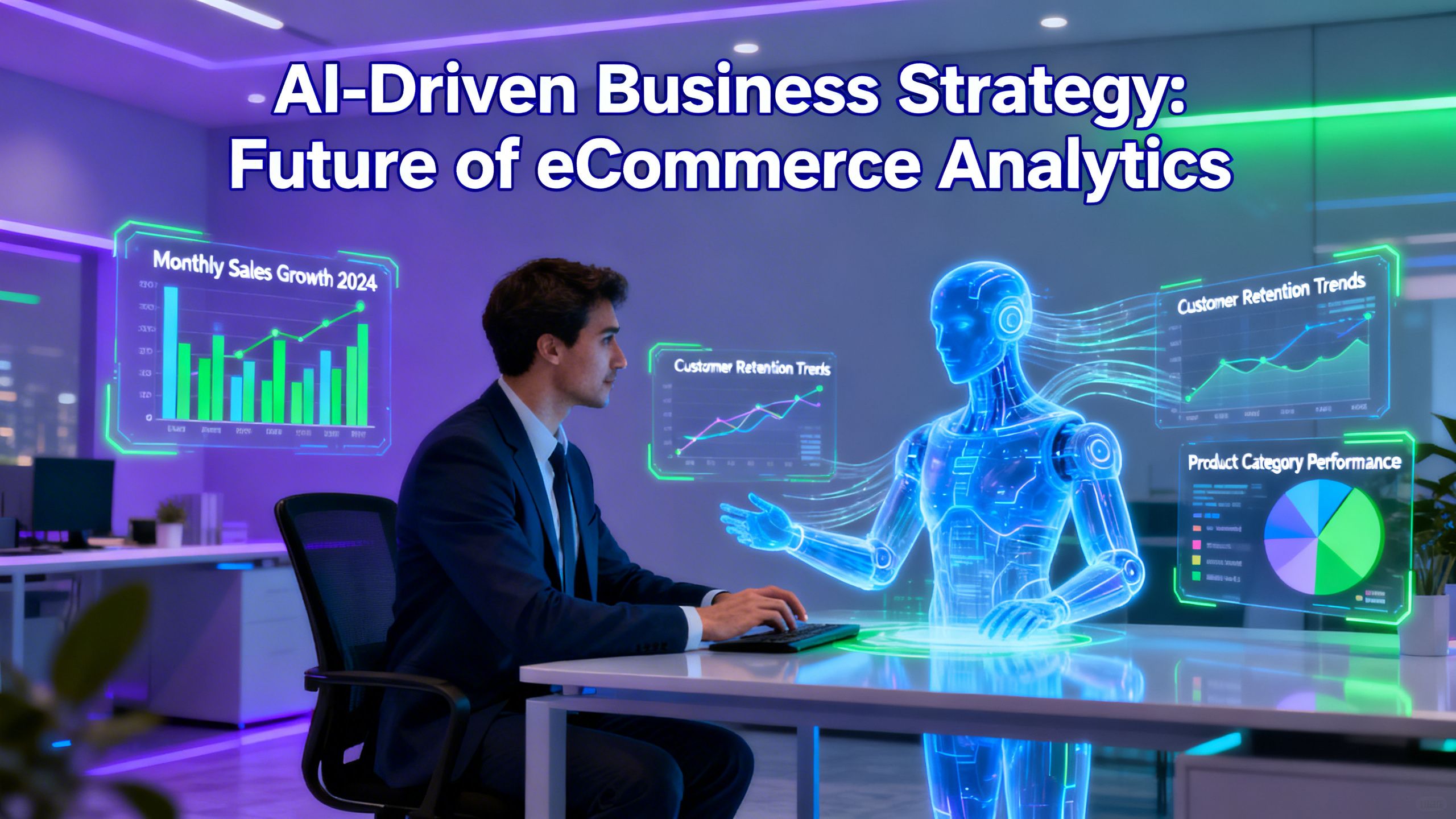
What is 'Agentic AI' and Why Should an eCommerce Seller Care?
Forget the old idea of AI as a simple command-and-response tool. The new frontier is agentic AI. Think of it less like a calculator and more like a junior analyst you can have a conversation with. You give it a high-level goal—a “proof sketch” in the scientists' words—and it attempts to fill in the details, run the numbers, and present a solution.
For an eCommerce seller, this means you can move beyond simple questions like "What were my sales yesterday?" to strategic prompts like:
"Analyze my top 10 ASINs' performance over the last 30 days. Identify which ones are losing Buy Box share to new competitors and suggest three potential pricing adjustments to test for regaining momentum without sacrificing more than 5% margin."
That's not a simple query; it's a strategic conversation. That's the power of agentic AI.
The eCommerce Gold Rush: Lessons from AI in Science
So, how does this academic breakthrough actually help you sell more products? It provides a blueprint for leveraging AI in three critical areas.
Benefit #1: Supercharge Your Strategic Thinking
Just as AI helped scientists automate the tedious process of writing proofs, it can help you automate the grunt work of data analysis. This frees you up to think strategically. Instead of spending hours buried in spreadsheets trying to connect ad spend to organic rank, you can have an AI do the heavy lifting and present you with the core insights.
This is about moving from being a data mechanic to a business architect. The AI handles the nuts and bolts; you design the blueprint for growth.
This shift is monumental. It means a solo seller can access the analytical power that was once reserved for massive corporations with teams of data scientists. It's the ultimate democratization of business intelligence.
Benefit #2: Uncover Insights You Didn't Know to Look For
The scientists in the study noted that their AI collaborator spontaneously proved a useful lemma they weren't even looking for. This is one of the most exciting aspects of advanced AI: its capacity for serendipitous discovery. A well-trained AI, constantly analyzing your business data, might uncover patterns you'd never think to search for.
- Example: It might find that a specific search term you're not bidding on drives a high number of 'add-to-carts' for a competitor's product, signaling a massive opportunity.
- Example: It could discover that sales of your winter gloves spike whenever your best-selling beanie goes out of stock, suggesting a bundling or cross-promotional strategy.
These aren't just reports; they are proactive, strategic suggestions that can open up entirely new revenue streams.

How to Collaborate With Your New AI Colleague: A 3-Step Guide
Alright, theory is great, but how do you actually do this? Working with a powerful AI is a skill. Here’s how to develop it.
Step 1: Frame the Right Questions (Your 'Proof Sketch')
The scientists didn't just tell the AI, "Write a paper." They gave it a detailed sketch, a framework of their argument. You need to do the same. Vague questions get vague answers.
- Bad Question: "How can I increase sales?"
- Good Question: "My ACoS for Product X has increased by 20% in the last 14 days despite stable conversion rates. What are the top 3 contributing factors? Is it rising CPCs on specific keywords, or a drop in click-through rate?"
Key Tip: The more context and specific data points you provide the AI, the more precise and actionable its response will be. Start with a clear hypothesis you want to test.
Step 2: Iterate and Correct (Avoiding 'AI Slop')
The researchers found their AI's proofs were correct only about 75% of the time. The other 25% was 'AI research slop'—work that looked polished but was fundamentally flawed. The same is true for eCommerce AI. It can and will make mistakes. Your job is to be the expert reviewer.
An AI might suggest a drastic price cut without understanding your brand's premium positioning, or recommend a massive inventory order without considering upcoming storage fee increases. You need to be the human filter. This is why building a foundation of trust with your AI tools is paramount. You have to know when and how your AI might be lying to you to effectively use its outputs.
Key Tip: Treat every AI recommendation as a strong hypothesis, not a proven fact. Use your business intuition and a second data source to validate it before betting the farm.
Step 3: Know When to Ignore the Rabbit Holes
The article mentioned the AI getting stuck on trivial tasks or obsessing over a completed sub-project. This happens in eCommerce, too. An AI might get fixated on optimizing a keyword that only gets 10 impressions a month, ignoring the bigger picture.
Your role is to be the project manager, keeping the AI focused on the highest-impact tasks. If it's giving you generic or unhelpful advice, you need to be able to redirect it with a more specific prompt or simply move on to a more pressing issue.
AI in Mathematical Research: Real-World eCommerce Parallels
The connection between abstract research and running an Amazon store is surprisingly direct when you look at the core problems being solved.
From Theorem Proofs to Profit Maximization
Building a mathematical proof is a logical, step-by-step process where each step builds on the last. Optimizing an eCommerce business follows the same logic. You can't fix your conversion rate (Step 3) if your product isn't discoverable (Step 1) and your listing doesn't get clicks (Step 2). A good AI can help you diagnose the entire funnel, from impression to conversion, and identify the weakest link in the chain.
From Spontaneous Lemmas to Serendipitous Sales
Just as the AI found a new mathematical shortcut, an eCommerce AI can find unexpected business shortcuts. It might notice that your product's sales velocity has a strong inverse correlation with a specific competitor's stock level. This insight—that their stockout is your sales opportunity—allows you to proactively increase ad spend and capture market share at the perfect moment.

AI in Action: eCommerce Scenarios
Let's move from the abstract to the concrete. Here’s how this collaborative AI approach plays out in day-to-day eCommerce operations.
Scenario 1: Winning the Buy Box with Dynamic Pricing
- Challenge: Manually tracking and adjusting prices across dozens of ASINs to compete for the Buy Box is a full-time job that humans are bad at.
- AI Collaboration: You set the strategic boundaries:
"For ASIN B0XYZ123, maintain Buy Box ownership as long as the price stays between $24.99 and $29.99 and the estimated margin is above 15%. De-prioritize if Competitor ABC is the seller." - Result: The AI acts as your tireless pricing agent, making micro-adjustments 24/7 to maximize your time in the Buy Box within your strategic guardrails, freeing you to focus on sourcing or marketing.
Scenario 2: Eliminating Stockouts with Intelligent Forecasting
- Challenge: You're constantly either running out of stock on your best-sellers (losing sales and rank) or getting hit with massive long-term storage fees on slow-movers.
- AI Collaboration: You ask the AI:
"Analyze the last 180 days of sales data for my top 5 products, factoring in seasonality and my planned Q4 ad spend increase. Generate a 90-day inventory forecast and recommend reorder dates and quantities to maintain a 45-day cover." - Result: The AI provides a data-driven forecast that's far more accurate than a simple moving average. You reduce stockouts, cut storage fees, and improve your IPI score.
The Dark Side of AI: Common Pitfalls for Sellers
With great power comes great responsibility. Using these tools without understanding the risks is a recipe for disaster.
The 'Black Box' Problem: Trusting Blindly
Many AI tools are a "black box." They spit out an answer, but you have no idea how they got there. If an AI tells you to triple the price of your best-seller, you need to know why. Is it because of a sudden drop in competition, or is it misreading the data? Without transparency, you're just gambling.
Garbage In, Garbage Out: The Data Dilemma
An AI is only as good as the data it's trained on. If you're feeding it incomplete or inaccurate data, you're going to get flawed recommendations. This is why it's crucial to use tools that integrate directly and cleanly with your source of truth—like your actual Amazon seller data. A generic AI trained on the whole internet doesn't understand the unique context of your business. To get real answers, the AI needs to be working with your actual Amazon data.
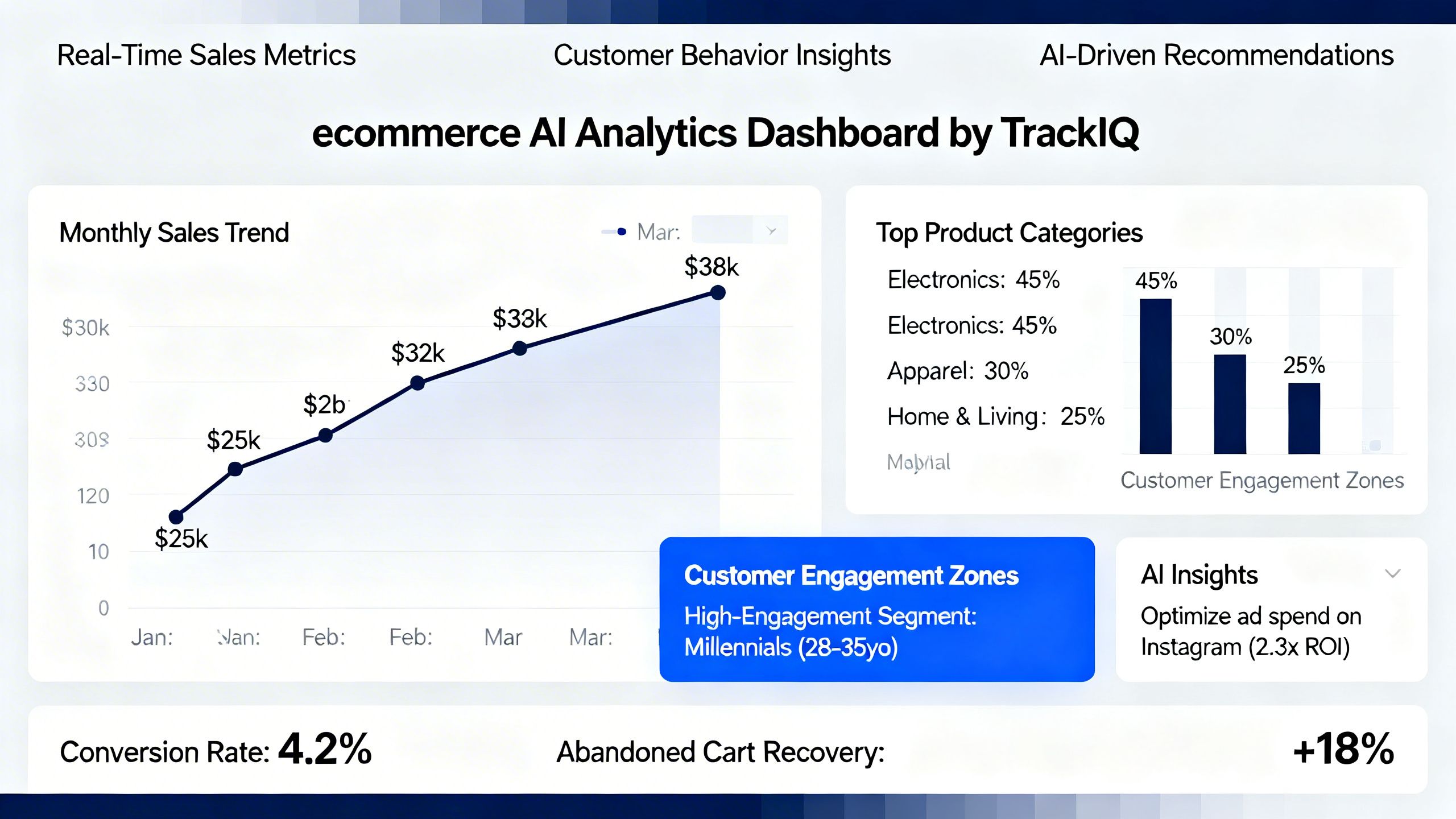
Why TrackIQ Matters: Your Co-Pilot for Trusted AI
This is where the rubber meets the road. The principles of collaborative, trusted AI aren't just theoretical—they're the foundation of how we built TrackIQ. We didn't create another black-box tool that gives you questionable commands.
TrackIQ is designed to be your trusted co-pilot, the expert analyst you can have a real conversation with. It combines the power of a large language model with a deep, secure integration into your specific Amazon data. This means:
- No 'AI Slop': The answers are grounded in your real-time sales, inventory, and advertising metrics. It's not guessing; it's analyzing.
- Full Transparency: You can ask TrackIQ why it's making a recommendation, and it will show you the data and the logic behind it.
- Collaborative by Design: You're not just asking questions into a void. You're having a conversation with an expert who already understands the context of your business and is ready to help you make your next move.
It’s the difference between using a generic map and having a personal guide who knows the terrain.
The Future is Collaborative: Your Next Steps with AI
So, what are the key takeaways from this journey from mathematical research to your Seller Central account?
- Takeaway 1: Stop thinking of AI as a tool and start treating it as a collaborator. Your job is to be the strategist who asks the right questions.
- Takeaway 2: Your expertise is more valuable than ever. It's the critical filter that separates good AI insights from dangerous 'AI slop'.
- Takeaway 3: The best results come from starting with specific, well-defined business problems, not vague, open-ended questions.
Conclusion
The revolution in AI isn't about replacing human intelligence; it's about amplifying it. The lessons from the frontiers of science show a clear path forward: a future where the most successful eCommerce operators are those who master the art of collaborating with AI. By asking the right questions, critically evaluating the answers, and using specialized tools that are built on a foundation of trust, you can turn your business data into your most powerful asset.
Ready to get a trusted AI co-pilot for your Amazon business? See how TrackIQ turns your data into a conversation about growth.
—