The Single Keyword Campaign Playbook: How Top Amazon Sellers Dominate PPC
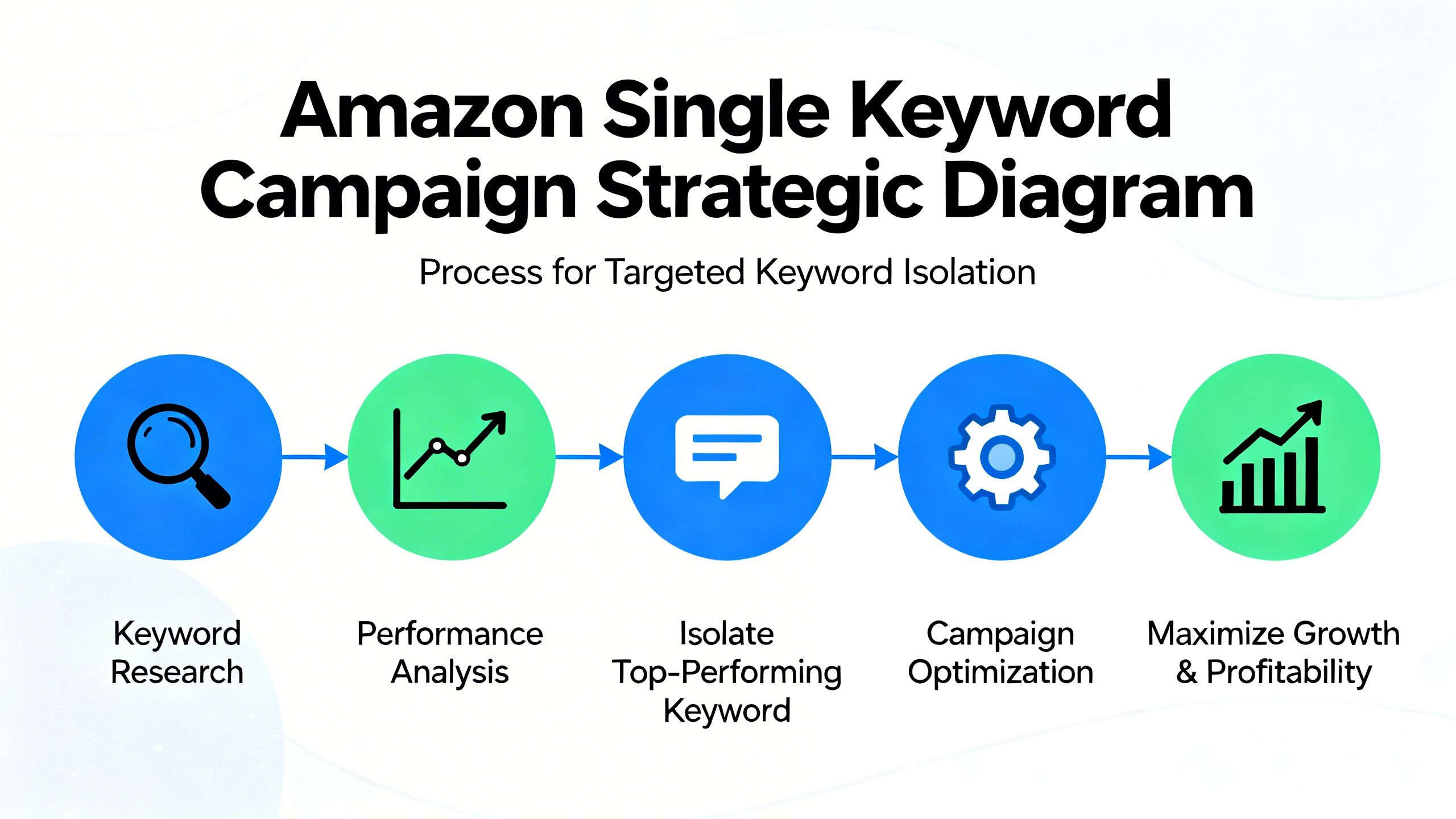
Quick Summary (TL;DR)
• Precision Over Chaos: A Single Keyword Campaign (SKC) dedicates one campaign, one budget, and one set of bids to a single, high-performing keyword. It's the sniper rifle to the shotgun of multi-keyword campaigns.
• For Scaling, Not Discovery: SKCs are not for finding new keywords. They are a precision instrument used to scale keywords you've already proven to be profitable and high-converting in broader campaigns.
• Control Your Winners: Isolate your best keywords to give them a dedicated budget, fine-tune bids by placement (Top of Search vs. Product Pages), and get crystal-clear performance data without other terms muddying the waters.
• Beware Campaign Sprawl: The biggest drawback is operational overload. Without automation, managing hundreds of SKCs is a recipe for disaster. This is where AI tools become essential.
—
Ever felt like your Amazon Ads account is a chaotic mess? You've got campaigns with dozens of keywords, and your budget seems to vanish into thin air. One keyword, “eco-friendly yoga mat,” is a cash cow, but it’s stuck in a campaign where “yoga mat for beginners” eats 80% of the daily spend before 10 a.m. You’re flying blind, and it’s costing you money.
This is the reality for most sellers. But the top 1% don't play that game. They use a strategy that feels like a cheat code: the Single Keyword Campaign Amazon (SKC). It’s a method that trades chaos for clarity, giving you surgical control over your most important keywords. It’s about treating your best keywords like the blue-chip assets they are, giving them the dedicated resources they need to dominate.
This guide is your playbook. We'll break down exactly what SKCs are, when to use them (and when not to), and how to set them up without creating an administrative nightmare. Let's get started.
What is a Single Keyword Campaign (And Why Should You Care?)
A Single Keyword Campaign is exactly what it sounds like: one campaign, one ad group, one keyword. Typically, this is done with an exact match keyword to achieve maximum precision. Instead of lumping 20 keywords into a single campaign and hoping for the best, you isolate your single most valuable keyword and give it its own dedicated budget and bidding strategy.
Think of it like this: a standard multi-keyword campaign is a shotgun blast. You aim in a general direction and hope some pellets hit the target. An SKC is a sniper rifle with a high-powered scope. You’re aiming at a specific target with a single, calculated shot.
This approach flips the script from discovery to optimization. You're no longer guessing what works; you're doubling down on what you know works.
The Unfair Advantages of Going Granular
Why go through the trouble of creating a whole new campaign for just one keyword? Because the benefits are game-changing. It’s about taking back control from the algorithm and making deliberate, data-backed decisions.
Razor-Sharp Data Clarity: No More Guesswork
In a multi-keyword campaign, performance data is blended. If the campaign has a 15% ACoS, you don't know if one keyword is performing at 5% ACoS while another is burning cash at 50% ACoS. It’s a black box.
With an SKC, attribution is perfect. Every single impression, click, conversion, and dollar spent is tied directly to that one keyword. You know exactly how much it costs to rank for “wireless earbuds” versus “bluetooth earphones.” This level of clarity is impossible in a grouped campaign.
This clean data allows you to make smarter decisions about bidding, budgeting, and overall strategy. You're no longer flying blind.
God-Mode Budget Control: Protect Your Winners
This is the most powerful benefit. In a shared campaign, your best-performing keyword is constantly competing for budget with duds. When the campaign budget runs out, your star player is sidelined for the rest of the day.
An SKC acts like a VIP room for your best keyword. You assign it a dedicated daily budget, ensuring it never gets starved for cash. If “eco-friendly yoga mat” is your money-maker, you can give it a $100/day budget and know that every cent is working to push that specific term.
This also allows for precise placement optimization. If you find your keyword converts 3x better at the Top of Search, you can crank up the placement multiplier for that SKC without affecting any other keywords. It's the ultimate form of control.
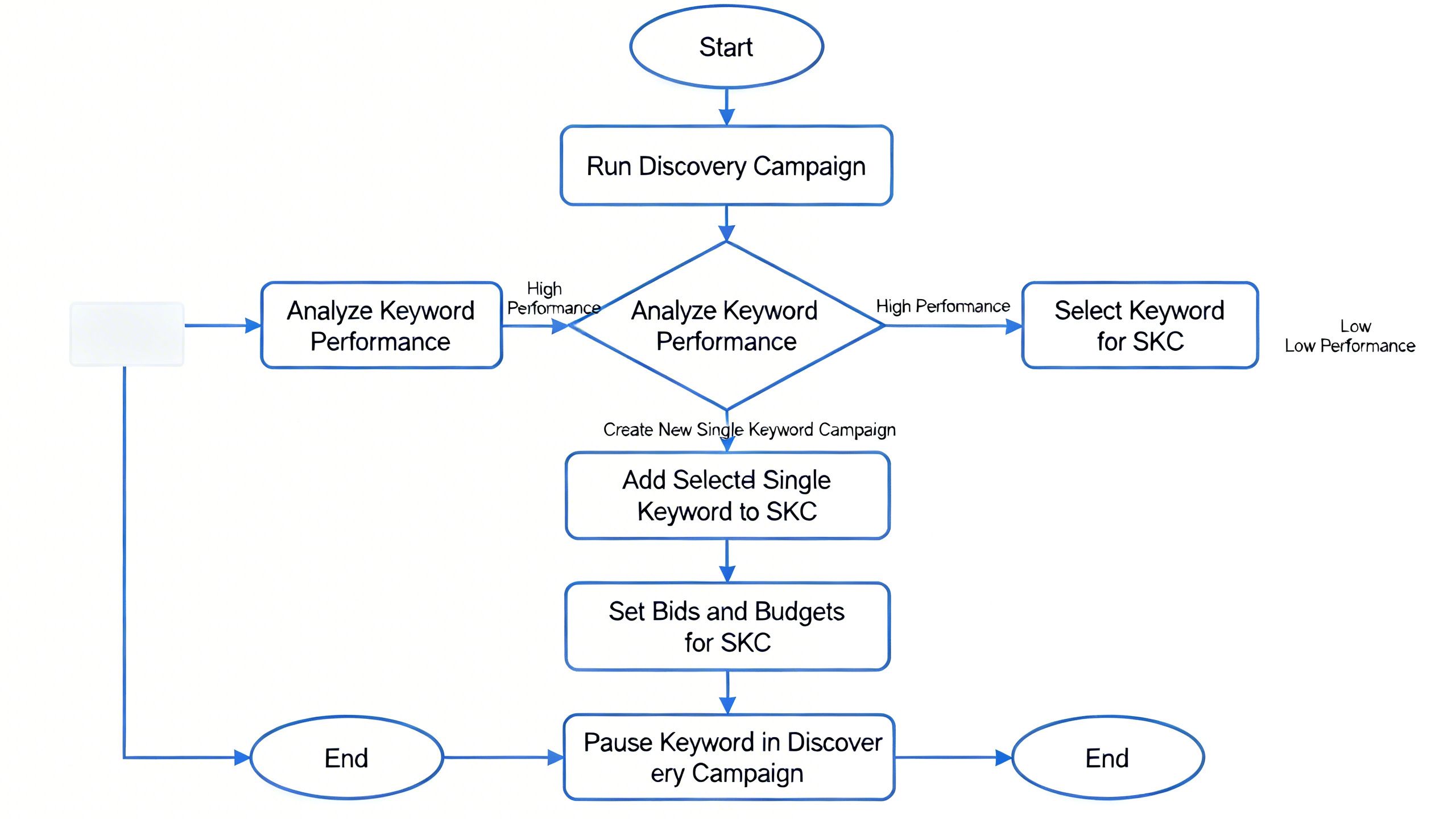
Your Step-by-Step Guide to Launching a Killer SKC
Ready to build your first SKC? The process is strategic. You don't just pick keywords out of a hat. You promote them based on proven performance.
Step 1: Identify Your 'Blue-Chip' Keywords
SKCs are for proven winners only. Your first step is to go hunting for them in your existing campaigns. You're looking for keywords that meet these criteria:
- High Conversion Rate: It consistently drives sales at or above your account average.
- Proven Profitability: It's already at or below your target ACoS.
- Sufficient Data: It has enough clicks and conversions (e.g., over 30-90 days) to prove its performance isn't a fluke.
- High Revenue Contribution: It's one of your top 10-20% revenue-driving terms.
Key Tip: Your best friend here is Amazon's Search Query Performance report. Dive into this data to find the search terms that are actually converting. These are your prime candidates for graduation into their own Single Keyword Campaign.
Step 2: The 'One Campaign, One Keyword' Setup
Once you've identified a winner, it's time to build its new home. The setup is critical for maintaining data purity.
- Create a New Campaign: Go to your campaign manager and start a new Sponsored Products campaign.
- Use Manual Targeting: This gives you full control.
- Create One Ad Group.
- Add One Keyword: Add your chosen keyword as an Exact Match type. This is crucial. Using Phrase or Broad match defeats the purpose of isolation.
- Add Negatives: Go back to the original campaign where you found this keyword and add it as a Negative Exact keyword. This prevents your old campaign from competing with your new SKC for the same traffic (a phenomenon known as keyword cannibalization).
Key Tip: Use a clear naming convention to stay organized. A good format is SKC - [Product] - [Keyword] - EX. For example: SKC - Yoga Mat - Eco Friendly Yoga Mat - EX. This will save you from insanity later.
Step 3: Set Budgets and Tune Placements
Don't just guess your budget. You can make a data-driven estimate.
Here’s a simple formula:Target Daily Conversions / Keyword's Conversion Rate = Clicks Needed
Clicks Needed * Keyword's Average CPC = Estimated Daily Budget
Example:
- Target Conversions: 5 per day
- Known Conversion Rate: 10% (or 0.10)
- Average CPC: $2.00
5 / 0.10 = 50 clicks needed
50 clicks * $2.00 CPC = $100 daily budget
Start with a conservative budget (maybe 75% of your estimate) and scale up as you validate performance. Then, start testing placement multipliers. Increase your Top of Search bid by +25% and let it run for 7-14 days. Did performance improve? Great. Did it get worse? Roll it back and test the Product Pages placement instead. Test one variable at a time.
Why TrackIQ Matters: Automating Your SKC Strategy
The biggest arguments against SKCs are that they're time-consuming and lead to