The Seller's Playbook for Surviving the Amazon Shipping Delay Crisis
Quick Summary (TL;DR)
• Delays Are the New Normal: Amazon shipping delays have surged by 37% compared to pre-pandemic levels, with the average FBA transit time increasing by a staggering 23 days. The two-day Prime promise is a memory.
• The True Cost is Catastrophic: It's not just lost sales. Delays trigger a death spiral of lost Buy Box percentage, plummeting search rankings, negative reviews, and serious risks to your account health (hello, Late Shipment Rate).
• Resilience Requires a System, Not Hope: To survive, you need to ditch outdated strategies. The new playbook involves 30-45 day inventory buffers, splitting inventory between FBA and a 3PL, and diversifying your import routes across multiple ports.
—
Remember when “Amazon Prime” was a sacred promise? Two days, guaranteed. It felt like magic. Now, it feels more like a suggestion. That dreaded “Amazon order delayed not yet shipped” notification has become a regular gut punch for sellers and customers alike. Your inventory vanishes into a black hole, your customers get angry, and your sales chart starts to look like a downhill ski slope.
This isn't a temporary glitch; it's the new reality of eCommerce. The system is fractured by everything from port congestion and labor strikes to Amazon's own aging infrastructure. While your competitors are panicking and blaming the algorithm, elite sellers are turning this chaos into a competitive advantage. They've realized that in this new era, the winner isn't the one with the best product, but the one who can actually get it to the customer.
This guide is your playbook to join them. We'll break down the real reasons for these delays, calculate the devastating hidden costs, and give you actionable strategies to build a resilient fulfillment system. It's time to stop being a victim of logistics and start owning your destiny. The future of your business depends on it, and a powerful agentic AI system is the key to staying ahead.
What Exactly Are 'Amazon Shipping Delays' in 2026?
When we talk about Amazon shipping delays, we're not just talking about a package arriving a day late. We're describing a systemic breakdown across the entire supply chain. It starts with a container ship waiting for weeks off the coast of California, continues with your pallets sitting in a trailer at an overwhelmed FBA warehouse for 24 days, and ends with a last-mile carrier running out of capacity. It’s a cascade of failures where each step adds more time, uncertainty, and cost.
The average FBA receiving time now stretches 10 to 24 days during peak periods, a far cry from Amazon’s claimed 3 to 7 days. That’s three weeks your product is unavailable to sell.
This isn't about bad weather anymore. It's about fundamental cracks in the global logistics network that Amazon, for all its power, is not immune to. Understanding this is the first step to protecting yourself.
The Silent Killers: How Delays Quietly Destroy Your Amazon Business
The immediate loss of a sale is just the tip of the iceberg. The real damage from Amazon shipping delays is long-term and compounds silently, wrecking the business you've worked so hard to build.
The Buy Box Disappearing Act: Now You See It, Now You Don't
You spend months optimizing your listing, running ads, and collecting reviews to win that coveted 85% Buy Box share. Then, a shipment delay causes a one-week stockout. Your Buy Box share plummets to 10%. A competitor swoops in, and suddenly their product is the default choice. Even when you're back in stock, you're no longer the king of the hill. You have to burn cash on ads and slash prices just to claw your way back.
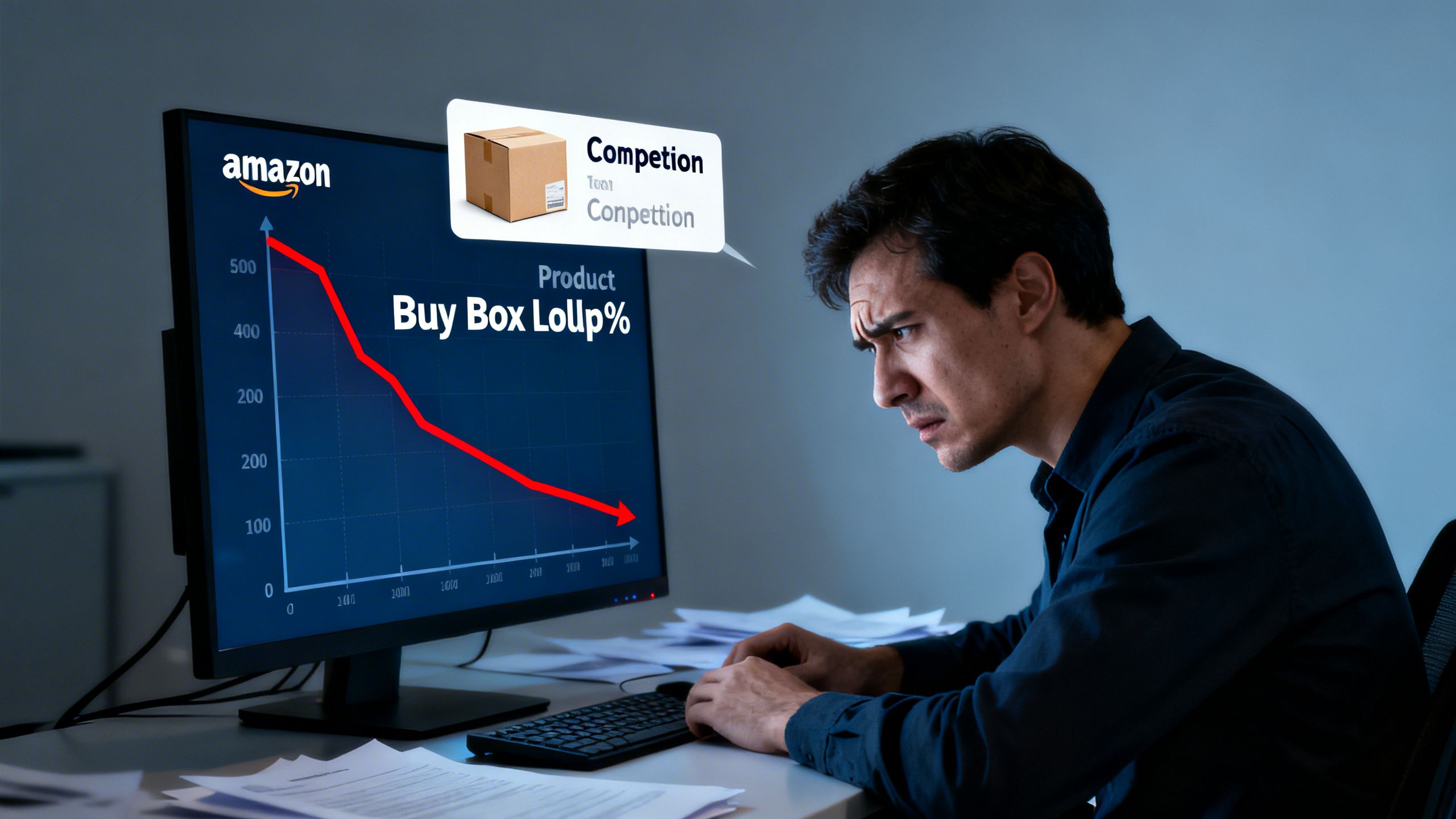
“I’ve seen sellers spend six months building a product from 20% Buy Box to 75%, then lose it all in a week-long stock-out caused by a customs delay they had zero control over. The ranking recovery alone took three months.” – Brij Purohit, Co-founder of SellerApp
The Review Death Spiral: From 5 Stars to Account Suspension
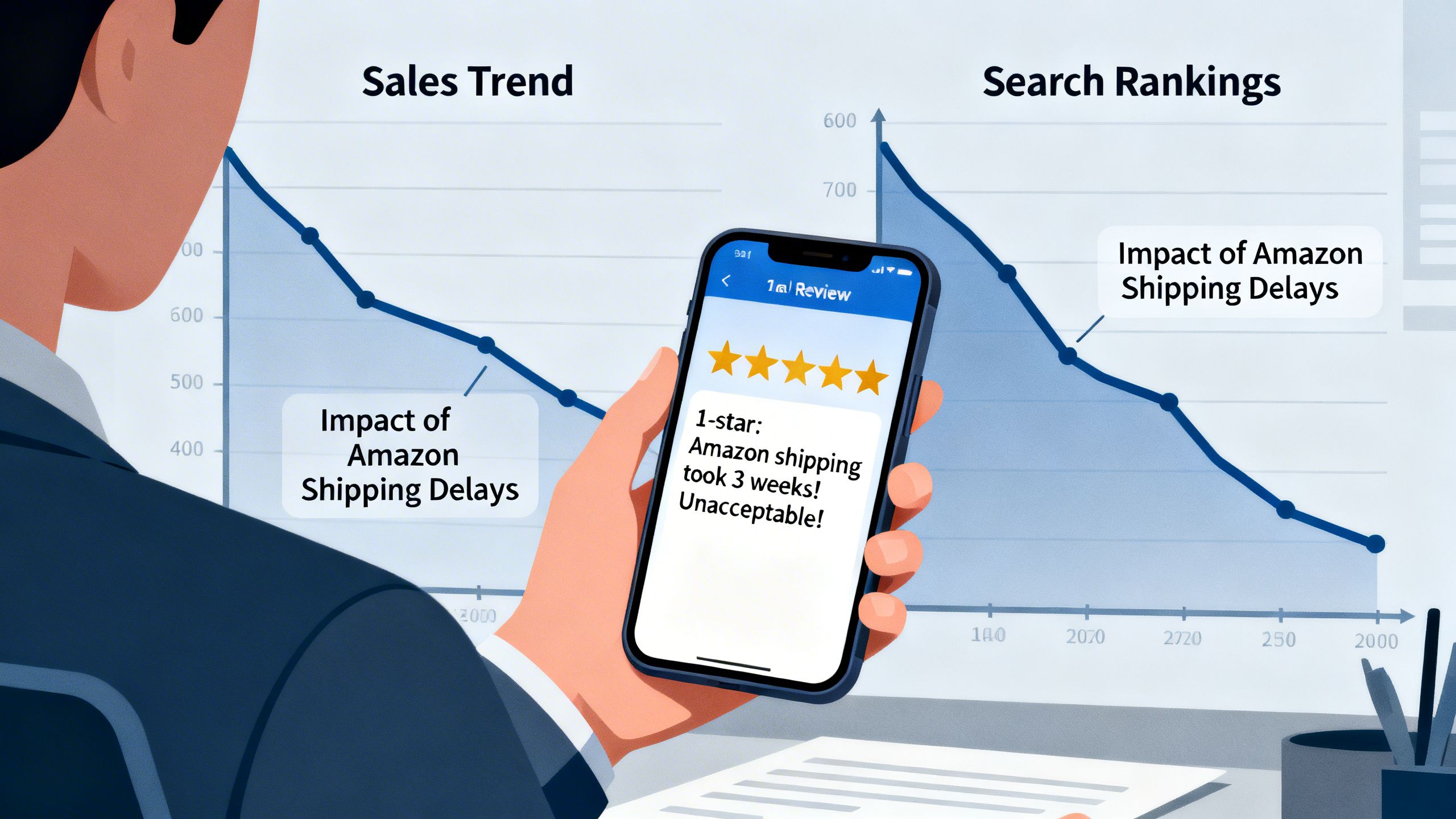
Late deliveries are the fastest way to earn one-star reviews. Customers don't care why it's late; they just know you broke a promise. Here’s the vicious cycle:
- An Amazon delivery delay leads to a “Product never arrived” one-star review.
- Your average rating drops from 4.7 to 4.4.
- Your conversion rate tanks because shoppers avoid products with lower ratings.
- Amazon’s algorithm sees the lower conversion rate and drops your organic search ranking.
- You're now on page two, invisible. Your sales evaporate.
Meanwhile, if you're an FBM seller, these delays directly impact your Late Shipment Rate (LSR). Creep above 4%, and you're staring down the barrel of an account suspension. It's a nightmare scenario triggered by factors often outside your control.
Your Proactive Playbook: Building a Resilient Fulfillment System
Enough with the doom and gloom. Generic advice like “monitor your metrics” is useless. You need specific, actionable strategies that build a fortress around your business.
Step 1: Rethink Your Inventory: Buffers for Reality, Not Hope
The 14-day inventory buffer is a relic of a bygone era. In 2026, it’s an act of self-sabotage. You need to base your safety stock on the current chaotic reality. We're talking a 30 to 45-day buffer for your best-selling products.
Key Tip: Use this simple formula to calculate your new reorder point:Reorder Point = (Average Daily Sales x Lead Time in Days) + (Average Daily Sales x 45-Day Buffer)
Yes, this ties up more capital. But the cost of holding extra inventory is a rounding error compared to the cost of missing your entire Q4 selling season. This is your insurance policy against the unpredictable.
Step 2: Don't Put All Your Eggs in Amazon's Basket: The FBA/3PL Split
Relying 100% on FBA is like betting your life savings on a single stock. It's time to diversify your fulfillment. The solution is a hybrid model: keep the majority of your inventory in FBA but hold a strategic reserve at a third-party logistics (3PL) provider.
Key Tip: A 70/30 split is ideal. 70% of your stock goes to FBA to leverage Prime benefits. The other 30% sits at a US-based 3PL. When FBA inventory runs low or gets stuck in a receiving black hole, you simply flip your listing to Fulfilled by Merchant (FBM) and ship from your 3PL. You avoid the stockout, protect your rank, and keep the sales flowing.
Step 3: Mastering Geography: Why Port Diversification is Non-Negotiable
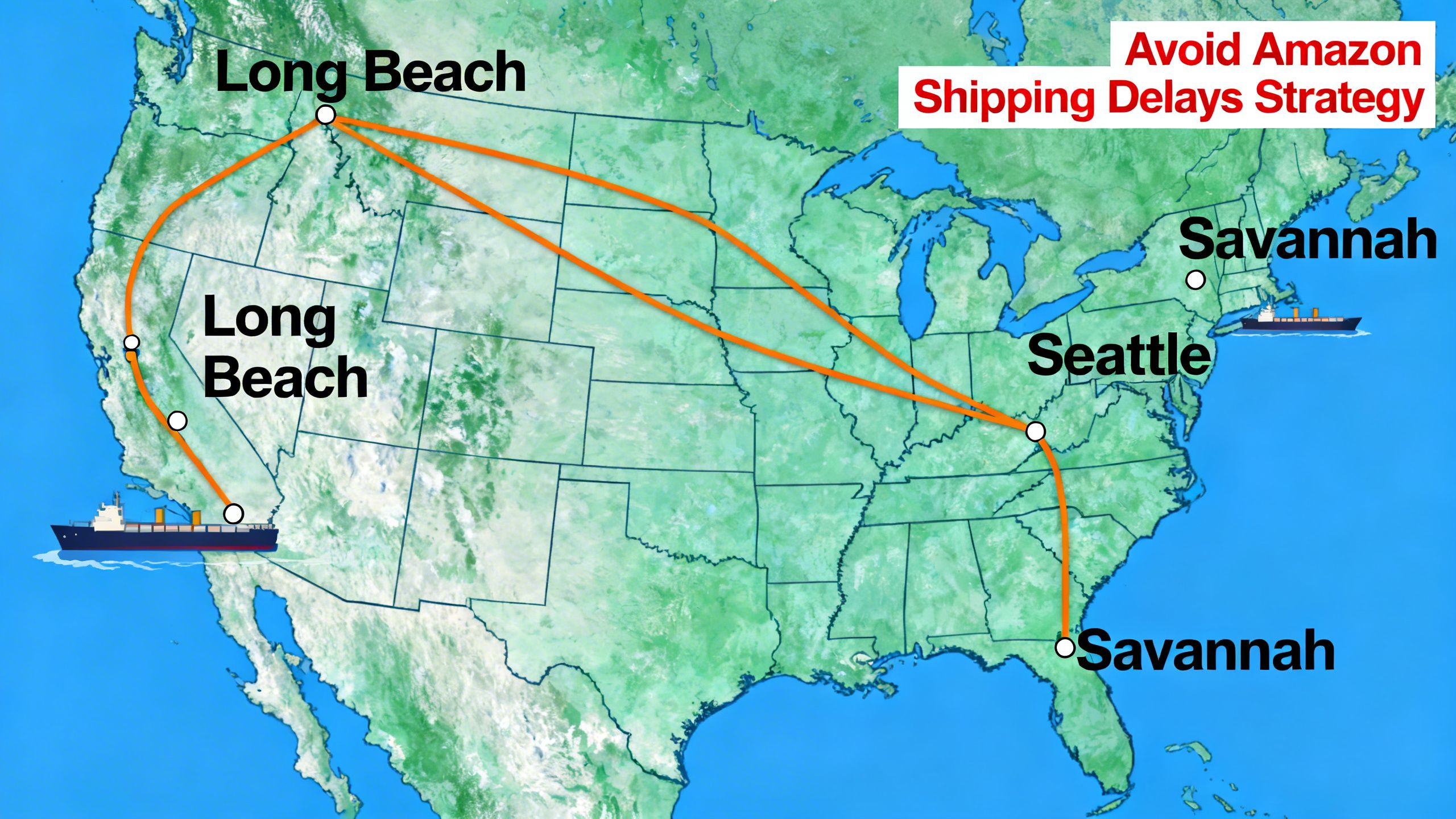
Routing all your shipments through a single port like Long Beach is playing Russian roulette with your business. One labor strike, customs backlog, or weather event, and your entire inventory is stuck. Data shows that sellers using at least three different ports of entry experience 41% fewer stockouts.
Key Tip: Work with your freight forwarder to split large shipments. Send 50% to a primary West Coast port, 30% to a secondary port on the same coast, and 20% to an East Coast port like Savannah. When one port becomes a bottleneck, your other shipments keep moving. This complexity is the price of resilience.
Advanced Tactics: Turning Chaos into Competitive Advantage
Once your defensive systems are in place, you can go on the offensive. These tactics separate the survivors from the thrivers.
Advanced Practice: Obsessive Monitoring From Data Dump to Decision-Making
Checking your metrics once a week isn't enough. You need to be obsessive. But who has the time? This is where AI comes in. Instead of drowning in spreadsheets, you can have an AI agent watching your back 24/7. Imagine being able to simply ask, “Are any of my top SKUs at risk of a stockout due to receiving delays?” and getting an instant, data-backed answer. This isn't science fiction; it's how top sellers operate now. You can stop burning 2–3 hours every week piecing together reports and start making decisions.
Advanced Practice: Proactive Communication to Win Over Angry Customers
When a delay is unavoidable, silence is your enemy. Proactive communication can turn a potentially negative experience into a moment of trust-building. Don't wait for the angry “Where’s my stuff?!” email. Get ahead of it.
Pro Tip: Use this template: Subject: A Quick, Honest Update on Your Order #[Order Number] Hi [Customer Name], I wanted to let you know personally that your order is facing an unexpected shipping delay due to [Specific, Honest Reason - e.g., severe congestion at the carrier's hub]. Your new estimated delivery is [New Date]. I know this is frustrating. If you can't wait, please reply to this email, and I will process a full, no-questions-asked refund immediately. Thank you for your patience. Sincerely, [Your Name]
This approach de-escalates anger, reduces negative reviews, and shows the customer you’re on their side.
Why TrackIQ Matters in an Age of Uncertainty
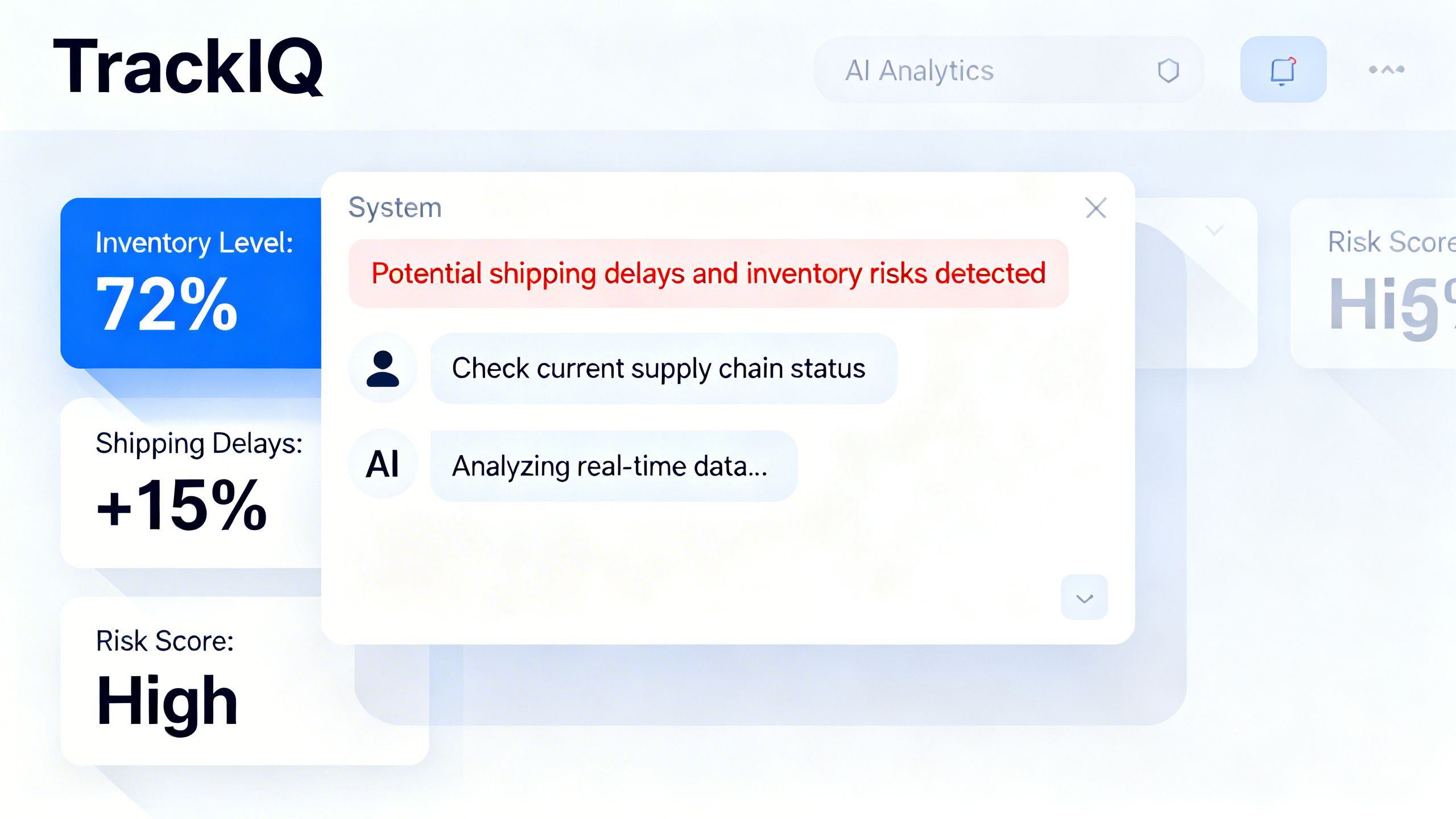
In this environment, managing your Amazon business with manual spreadsheets is like trying to navigate a hurricane with a paper map. The sheer volume of data and the speed at which things change make it impossible to keep up. This is precisely why tools like TrackIQ are no longer a luxury but a necessity.
Historically, getting answers required wrestling with complex dashboards. The Conversational AI Advantage changes the game. Instead of digging for data, you have a conversation. TrackIQ’s AI agent connects to your Amazon data, constantly observing performance metrics, inventory levels, and fulfillment timelines. It doesn't just present data; it surfaces insights.
- It alerts you before a problem becomes a crisis. Imagine getting a notification: “Warning: Your Late Shipment Rate has increased to 3.2% this week. At this rate, you are at risk of suspension in 10 days.”
- It answers complex questions in plain English. You can simply ask questions and get answers like, “What was my profit margin on SKU X last month after accounting for all fees and ad spend?”
- It automates the work you hate. It replaces the hours spent downloading CSVs and building pivot tables with a simple, ongoing conversation about your business health.
In a world of constant delays and uncertainty, having an AI-powered analyst on your team 24/7 is the ultimate competitive edge.
Common Mistakes That Amplify Delay Damage
Even sellers with good intentions make critical mistakes that turn a small problem into a catastrophe.
The Self-Inflicted Wound: Setting Unrealistic Handling Times
In a desperate attempt to look competitive, many FBM sellers set a 1-day handling time when their actual process takes two days. This is a ticking time bomb. A single busy day can cause a cascade of late shipments, pushing your LSR into the danger zone and risking account suspension. Always add a buffer to your handling time. It's better to under-promise and over-deliver.
The "Domestic Customs" Trap: Ignoring Carrier Performance
Did you know your domestic shipment can be delayed by customs? It sounds insane, but it happens. Some LTL freight carriers bundle domestic and international pallets on the same truck. When that truck arrives at an Amazon fulfillment center, the entire load can be flagged for customs inspection, delaying your domestic inventory for weeks. If you see “customs clearance delay” on a domestic shipment, it’s time to fire your carrier.
The Crisis Playbook: What to Do When Delays Hit Anyway
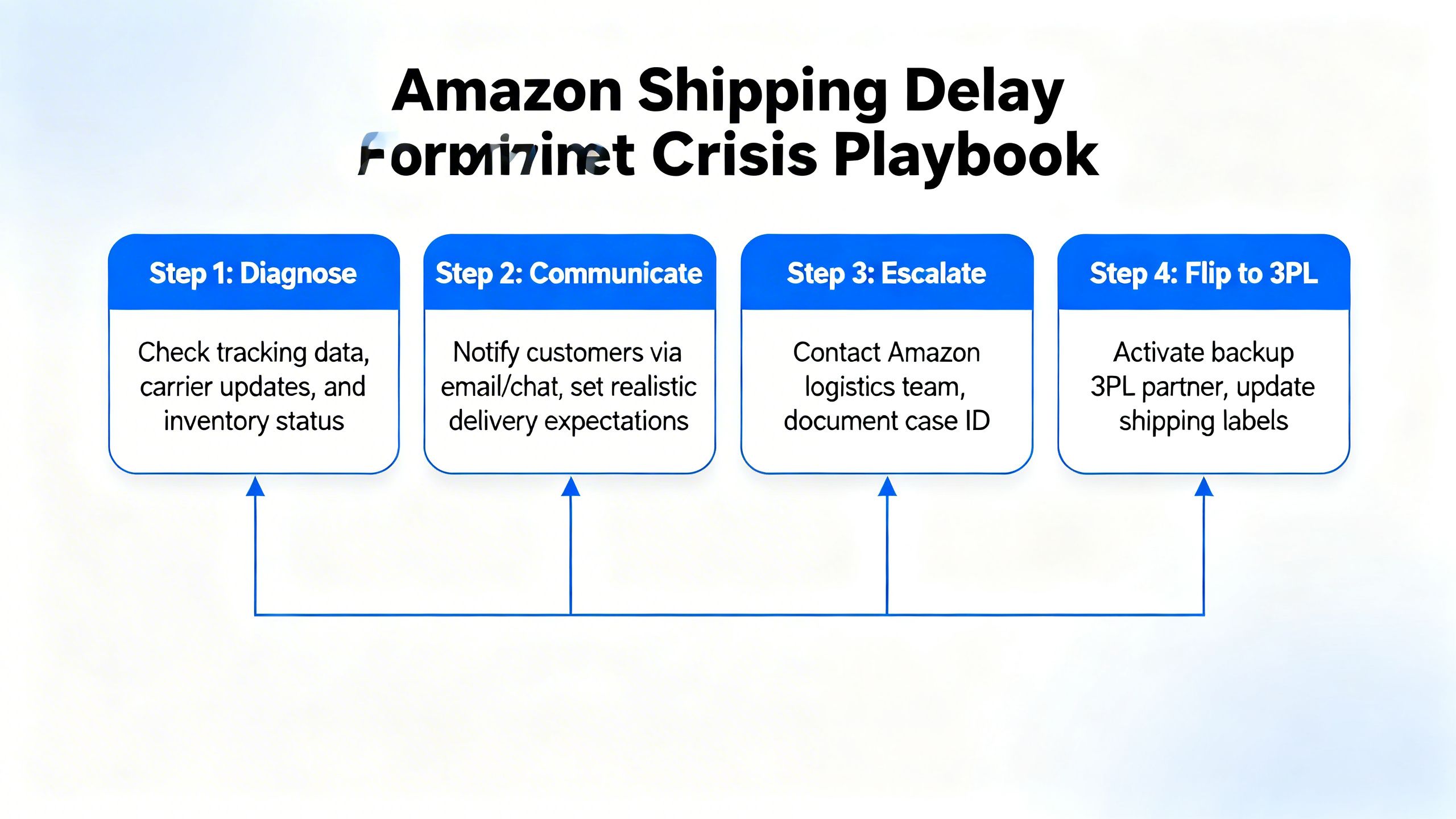
Despite your best efforts, a crisis will eventually hit. Here’s your “break glass in case of emergency” plan.
- Diagnose Fast: Don't waste days on a deep analysis. In 30 minutes, identify where the delay is, which orders are affected, and what your fastest workaround is.
- Update Everything: Immediately adjust the estimated delivery dates in Seller Central. Transparency prevents customer frustration.
- Escalate with Carriers: Don't just call the 1-800 number. Use your account manager's direct line. Frame the issue in terms of business impact and revenue lost.
- Flip to Backup Fulfillment: This is why you have a 3PL. When FBA is a black hole, activate your FBM listings and keep selling.
- Offer Strategic Compensation: For minor delays, an apology is enough. For major delays (5+ days), proactively offer a partial refund or a discount on a future purchase. It’s cheaper than a one-star review.
From Victim to Victor: Owning Your Logistics Destiny
- Systemize Resilience: Stop treating delays as random disasters. Build robust systems—inventory buffers, 3PL partnerships, and port diversification—to absorb the inevitable shocks to the system.
- Leverage Technology: Manual tracking is a losing game. Use AI-powered tools like TrackIQ to obsessively monitor your performance, automate reporting, and get ahead of problems before they tank your business.
- Control the Narrative: Proactive, honest communication with customers is your most powerful tool. It transforms a negative experience into a trust-building opportunity and protects your brand reputation.
Conclusion
The era of “set it and forget it” FBA fulfillment is over. The sellers who thrive in this new landscape are not the ones who get lucky; they are the ones who are prepared. They treat logistics not as a cost center, but as a competitive weapon. They accept the complexity of a diversified fulfillment strategy as the price of resilience.
Amazon shipping delays are no longer a question of if, but when. You can either continue to operate on hope, scrambling reactively when the next crisis hits, or you can build a systematic, data-driven, and technologically-empowered operation that is built to withstand the chaos. The choice is yours, but your competitors have already made theirs.
Ready to upgrade your workflow and protect your business? Explore how TrackIQ can automate your analytics and give you the insights needed to navigate the complexities of modern eCommerce.
—