The AI That Reads Spreadsheets: How Tabular Foundation Models Are Changing eCommerce

Quick Summary (TL;DR)
• The End of Spreadsheet Hell: Tabular foundation models (TFMs) are a new type of AI, like ChatGPT but for your business data (think sales reports, ad spend, inventory logs). They understand the numbers in your spreadsheets without you needing to be a data scientist.
• Smarter Than Your Average Model: New models like Mitra are pretrained on massive amounts of synthetic data, allowing them to understand a vast range of business scenarios before even seeing your data. This makes them incredibly powerful for forecasting and finding hidden trends.
• From Data to Decisions, Instantly: The real magic isn't the model itself, but how you use it. Platforms like TrackIQ act as an AI co-pilot, using this technology to give you direct answers and automate tasks, freeing you from hours of manual analysis.
—
Ever feel like you're drowning in data? You've got spreadsheets for sales, CSVs from Amazon, ad campaign reports, inventory logs... it's a chaotic digital paper trail. You know there are gold nuggets of insight hidden in there, but finding them feels like a full-time job. You spend hours wrestling with pivot tables, trying to connect the dots, and by the time you have a report, the data is already old news.
What if you could just ask your data questions? Like, "Which of my products are most likely to run out of stock next month?" or "What was the real ROI on my last Prime Day campaign, factoring in all costs?" This isn't science fiction anymore. It's the reality of tabular foundation models (TFMs), a game-changing technology that's poised to become your new secret weapon in eCommerce.
This guide will break down what these models are, why they matter more than the latest AI buzzword, and how you can leverage them to get an unfair advantage.
What the Heck Are Tabular Foundation Models Anyway?
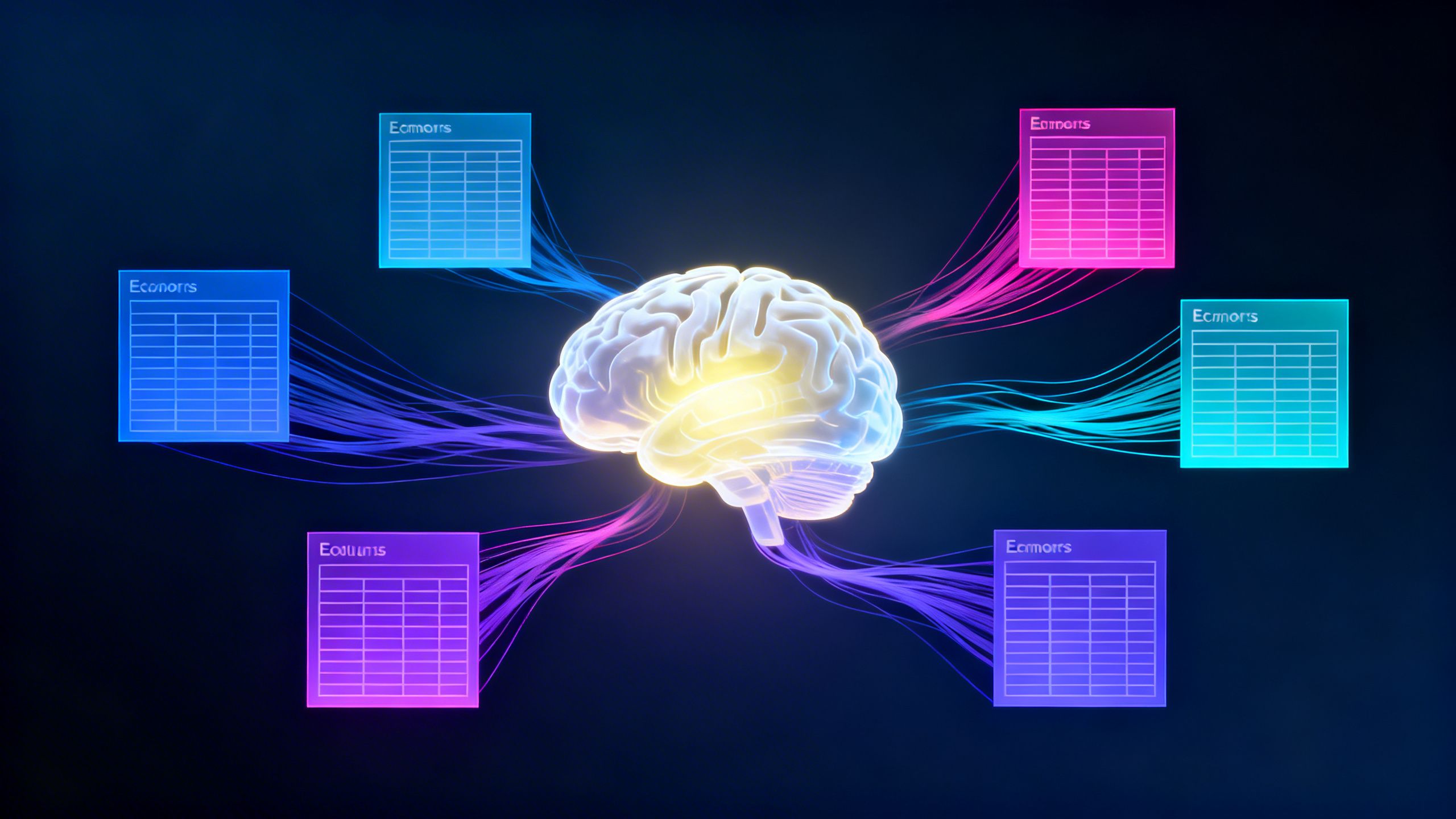
Let's cut the jargon. You know how Large Language Models (LLMs) like ChatGPT were trained on the entire internet to understand text? Well, tabular foundation models (TFMs) are trained on a universe of tables and spreadsheets to understand numbers, categories, and the relationships between them.
In simple terms: Tabular data is just data in a table. Your Amazon sales report? That's tabular data. Your Google Sheets budget? Tabular data. Your customer list? You guessed it—tabular data.
For years, analyzing this data required custom-built models for each specific dataset. It was slow, expensive, and rigid. TFMs change the game. A single, powerful pre-trained model can now adapt to your specific data on the fly, a process called "in-context learning." It’s like hiring a world-class data analyst who instantly understands the nuances of your business.
Why Should an eCommerce Seller Care?
This all sounds very technical, but the practical benefits are what will change how you run your business. It’s about moving from reactive problem-solving to proactive, AI-driven strategy.
Benefit 1: Unlock Predictive Superpowers
Imagine knowing with high accuracy which ASINs will see a demand spike next quarter or which ad campaigns will fizzle out before you've wasted thousands on them. TFMs excel at prediction because they've learned from millions of different data patterns. A new model from Amazon, called Mitra, was trained entirely on synthetic data—computer-generated datasets that cover a vast range of possible scenarios. This means it can make sharp predictions even on new or unusual data, a huge advantage in the volatile world of eCommerce.

Real-World Impact: Instead of setting inventory reorder points based on last month's sales, a TFM can analyze seasonality, ad spend velocity, and market trends to give you a dynamic forecast. This means fewer stockouts during peak season and less capital tied up in slow-moving inventory.
Benefit 2: Automate the Grunt Work
How many hours a week do you or your team spend pulling reports, cleaning data, and building dashboards? This is low-value work that AI is perfectly suited to eliminate. Because TFMs can understand the structure of your data, they can automate the entire analysis pipeline. You don't need to tell it which columns to join or what formulas to use. You just ask the question.
This is the core philosophy behind agentic AI. It's not just a tool for analysis; it's an active partner. This is a huge leap from older AI systems that just throw more charts at you. As we've discussed before, the future is an eCommerce co-pilot that does the work for you, not a tool that creates more work.
A Practical Guide to Using Tabular AI
So, how do you go from theory to practice? You don't need a PhD in machine learning. You just need the right approach and the right tools.
Step 1: Centralize Your Data (Without the Headache)
Your data is probably scattered across Amazon Seller Central, Shopify, your ad platforms, and a dozen spreadsheets. The first step is to bring it together. But forget complex data warehouses. Modern platforms can connect directly to these sources via APIs, pulling the data automatically.
Key Tip: Don't try to build this yourself. Use a tool that has pre-built connectors for the platforms you use. The goal is to have all your data—sales, inventory, PPC, COGS—in one place where an AI can see it all.
Step 2: Start Asking Questions, Not Building Reports
This is the mental shift. Instead of thinking, "I need to build a report that shows A, B, and C," start thinking, "What question do I want to answer?" For example:
- Instead of: "I need to export my PPC data and my sales data and combine them in Excel."
- Ask: "What was my true profit on my top 5 keywords last week?"
Key Tip: A good AI platform will allow you to ask these questions in natural language. The TFM works in the background to understand your intent, find the right data, perform the calculation, and give you the answer.
Step 3: Turn Insights into Automated Actions
The final step is to close the loop. An insight is useless if you don't act on it. This is where agentic AI shines. The system doesn't just tell you that your ACoS is creeping up on a campaign; it can suggest a bid reduction and, with your approval, execute it.
Key Tip: Look for systems that connect insights to actions. For example, if the AI detects a competitor is out of stock on a competing product, it could suggest increasing your ad spend on that ASIN to capture market share.
Tabular Models in Action: Real-World Scenarios
Scenario 1: The Phantom Inventory Drain
Challenge: A seller notices their profit margins are shrinking but can't pinpoint why. Sales are steady, and ad spend is stable. Manually digging through months of reports is a nightmare.
Solution: Using a TFM-powered platform, they ask, "Show me any unusual changes in my fees or costs over the last 90 days." The AI cross-references fulfillment fees, storage fees, and return data. It flags a specific ASIN where the return rate has quietly doubled, and due to a recent change in packaging, it's being classified in a larger, more expensive fulfillment tier.
Result: The seller identifies a problem that would have taken weeks to find. They fix the packaging, and their profit margin recovers. The AI saved them thousands in lost profit.

Scenario 2: The Proactive Price Optimizer
Challenge: An agency managing 20 brands wants to optimize pricing but can't manually track competitor prices, stock levels, and market velocity for hundreds of products.
Solution: They use an AI agent to monitor key competitors. The AI doesn't just track prices; it understands context. When a key competitor goes out of stock, the AI alerts the agency and suggests a 5% price increase on their competing product to maximize profit while the competition is down.
Result: The agency captures thousands in extra high-margin revenue across its portfolio every month. This isn't about being the cheapest; it's about being the smartest. It proves that faster, not bigger, AI is the real game-changer—it's about getting actionable intelligence when it matters.
Common Pitfalls to Avoid
Mistake 1: Chasing the 'Shiny Object'
It's easy to get excited by a flashy demo of a powerful new model like Mitra. But a model is not a product. The mistake is investing in raw technology without a clear path to using it. You'll end up with a powerful engine but no car.
How to Avoid: Focus on the business problem you're trying to solve first. Then, look for a solution that uses advanced AI to solve it. Don't buy a shovel; buy the hole.
Mistake 2: Believing You Need a Data Science Team
Five years ago, you would have needed a team of expensive data scientists to even think about this stuff. That's no longer true. The whole point of platforms built on TFMs is to democratize this power.
How to Avoid: Look for no-code or low-code solutions designed for business users, not developers. The interface should be a conversation, not a code editor. TrackIQ's AI Agent, for example, lets you get answers from your data just by asking questions.
Why TrackIQ Matters: From Raw Power to Real Results
This brings us to the critical link. Groundbreaking research on models like Mitra is exciting, but how does it actually help you sell more on Amazon? On its own, it doesn't.
That's where TrackIQ comes in. We believe the purpose of AI is to give you back time and provide clear, immediate answers to your most pressing questions. Our platform is built from the ground up to be an eCommerce co-pilot.
We use the principles behind advanced tabular models to power our AI Agent. But we don't just give you the model; we've built the entire system around it to make it useful for sellers and agencies:
- Automated Data Integration: We connect directly to your Amazon account, so the AI has the full picture of your business.
- Conversational Interface: You don't need to learn a new language. Just ask questions in plain English.
- Agentic Automation: Our AI doesn't just find problems; it suggests solutions and can take action on your behalf.
While the world's top AI labs are building the engines, TrackIQ is building the car—a high-performance vehicle designed specifically for the rugged terrain of eCommerce.

Conclusion: Your New Competitive Edge
The era of manually wrestling with spreadsheets to find insights is over. The competitive landscape of eCommerce is being redrawn by those who can leverage their data most effectively. Tabular foundation models are the single biggest leap forward in making that possible for everyone, not just mega-corporations.
Here are your key takeaways:
- Embrace Question-Driven Analysis: Stop thinking in reports and start thinking in questions. Your data has the answers if you have a way to ask.
- Focus on Action, Not Just Insight: The goal isn't another dashboard. The goal is a smarter decision, a saved cost, or a captured opportunity. Look for tools that bridge that gap.
- You Don't Need to Be a Tech Genius: The best tools are the ones that feel like magic. They hide the complexity and just deliver the result.
The future of eCommerce management isn't about working harder; it's about working smarter. It's about augmenting your intuition and experience with the raw analytical power of an AI that can see patterns you can't. Start by exploring how an AI co-pilot can transform your data from a burden into your most valuable asset.
—