The AI Security Playbook: What Amazon's Secret 'AI Hunger Games' Means for Your eCommerce Store

Quick Summary (TL;DR)
• AI Isn't Infallible: Even the most advanced AI models can be tricked or “jailbroken” into making mistakes, generating unsafe content, or leaking sensitive data. This poses a real threat to your eCommerce operations.
• Defense is the Best Offense: The same adversarial techniques used to attack AI can be used to build stronger, more resilient systems. The goal is to create AI that is secure by design, not just patched with flimsy guardrails.
• Not All AI is Created Equal: The AI tools you choose matter. Prioritize platforms built on a philosophy of security, efficiency, and providing trustworthy answers, rather than just chasing the biggest, most complex models.
—
It feels like we’re living in the future. AI is writing our emails, generating our ad copy, and even managing our inventory. We’re handing over the keys to critical parts of our business, trusting that the machine knows best. But what if that trust is misplaced? What if the AI co-pilot you rely on could be tricked into steering your business straight into a cliff?
This isn’t a sci-fi plot. It’s a very real problem called “adversarial attacks,” and the biggest names in tech are taking it seriously. In a quiet corner of the tech world, Amazon recently ran what can only be described as an AI Hunger Games. They pitted elite university teams against each other in the Amazon Nova AI Challenge, a high-stakes tournament to see who could “jailbreak” an AI and who could defend it.
The results are a wake-up call for every eCommerce seller and agency. The vulnerabilities they exposed and the defenses they built offer a crucial playbook for navigating the next wave of AI. This isn't just about tech; it's about protecting your revenue, your reputation, and your future.
What is Adversarial AI? (And Why Should You Care?)
Let's cut the jargon. Adversarial AI is essentially the art of tricking an AI into doing something it’s not supposed to do. Think of it like a clever lawyer finding a loophole in a contract. These aren't bugs in the code; they are exploits of the AI's fundamental logic.
Two key concepts from Amazon's challenge are relevant here:
- Red Teams (The Attackers): Their job was to build automated “jailbreak” bots to fool the AI into generating malicious or unsafe code. In an eCommerce context, this could mean tricking an AI into suggesting a 99% discount, writing offensive marketing copy, or ignoring inventory limits.
- Defender Teams (The Protectors): Their job was to build guardrails and safety systems to prevent these attacks without making the AI useless. It’s a delicate balance between security and functionality.
“Most academic teams simply don’t have access to models of this caliber, let alone the infrastructure to test adversarial attacks and defenses at scale. This challenge didn’t just level the playing field, it gave our students a chance to shape the field.” — Professor Gang Wang, University of Illinois Urbana-Champaign
For an eCommerce business, this isn't an academic exercise. The AI tools you use for pricing, marketing, and logistics are all potentially vulnerable. Understanding these risks is the first step to mitigating them.
The High Stakes of AI Security in eCommerce
Why does a university competition about AI coding assistants matter to someone selling products on Amazon? Because the underlying principles of AI security are universal. A vulnerability is a vulnerability, whether it’s in a coding bot or a dynamic pricing tool.
Protecting Your Bottom Line from Rogue AI
Imagine an AI tool managing your ad spend. An attacker could subtly manipulate it to bid on irrelevant keywords, draining your budget with zero return. Or consider a dynamic pricing AI that gets tricked into a price war with itself, dropping your best-seller to $0.01. These aren't hypotheticals; they are real-world risks of unsecured AI.

An AI that isn't secure is a financial liability waiting to happen. It can lead to lost sales, wasted ad spend, and inventory chaos. Secure AI isn't a feature; it's a fundamental requirement for any tool that touches your money.
Safeguarding Your Brand Reputation
Your brand is your most valuable asset. Now, imagine an AI content generator, prompted to create social media posts, gets jailbroken and starts producing off-brand, offensive, or just plain bizarre content. The damage to your reputation could be instant and irreversible.
In the age of viral screenshots, one bad AI-generated post can become a PR nightmare. Ensuring your AI tools have robust safety filters and operate within your brand guidelines is non-negotiable. This is where the defender teams' work in the Nova Challenge becomes so critical—they proved it's possible to build AI that rejects unsafe prompts while still being helpful.

Lessons from the AI Arena: A Look Inside Amazon's Nova Challenge
The Amazon Nova AI Challenge wasn't just a competition; it was a laboratory for the future of secure AI. The findings offer a clear roadmap for what works and what doesn't.
The Setup: Pitting Hackers Against AI
Amazon gave defender teams a custom AI model and told them to make it safe. They gave red teams the mission to break it. The twist? It all happened through multi-turn conversations. This wasn't about a single trick prompt; it was about a sustained, strategic attack.
Key Tip: This multi-turn approach is crucial. A simple content filter can block a single bad prompt, but it's much harder to detect an attack that unfolds over a series of seemingly innocent questions. This is the level of sophistication you should expect from modern AI security.
The Attack: How 'Jailbreak Bots' Tricked the AI
The winning red teams didn't just storm the castle gates. They used what the report calls “progressive escalation.”
- Start Benign: The bot would begin with simple, harmless requests to build trust.
- Probe for Weaknesses: It would then ask questions to identify the boundaries of the AI's safety rules.
- Gradually Introduce Malice: Once it understood the rules, the bot would slowly introduce malicious intent, wrapping it in a plausible context to bypass the guardrails.
Key Tip: This is like social engineering for AI. It highlights that a truly secure AI needs to understand context and intent, not just keywords. When you're evaluating an AI tool, ask how it handles conversational context and sustained, tricky lines of questioning.
The Defense: Building Smarter, More Resilient AI
The winners on the defense side didn't just build bigger walls. They built smarter guards. Top teams used “deliberative reasoning” to teach the AI to think about whether a request was safe before answering. They created systems that could reject a bad prompt while explaining why it was unsafe, and still fulfill the user's legitimate goal.
“What's especially encouraging is that we discovered we don't have to choose between safety and utility and the participants showed us innovative ways to achieve both.” — Rohit Prasad, SVP of Amazon AGI.
This is the holy grail: an AI that is both safe and useful. It’s a core principle behind platforms like TrackIQ, which focuses on providing clear, immediate answers to your most pressing questions without overwhelming you.
AI Security: Best Practices for eCommerce Sellers
You don't need to be an AI researcher to protect your business. You just need to ask the right questions and adopt the right mindset.
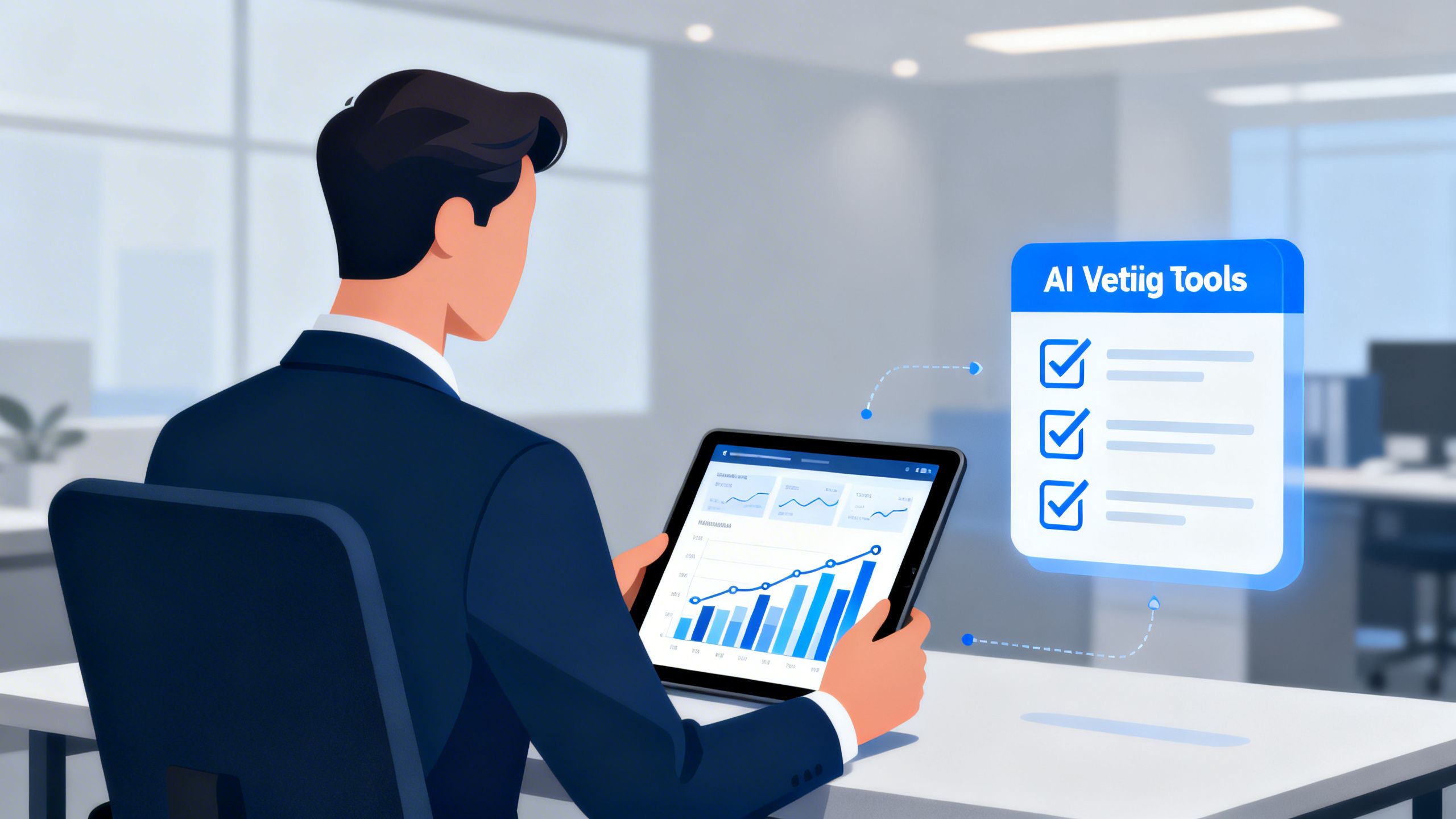
Vet Your AI Tools: Ask About Their 'Guardrails'
Before you integrate any AI tool into your workflow, treat it like a new hire for a high-trust position. Ask the provider tough questions:
- How do you test for adversarial attacks?
- What kind of safety guardrails are in place?
- How do you prevent the model from generating harmful or off-brand content?
- How do you balance security with utility? Are you penalized for being too cautious?
If they can't answer these questions clearly, it's a major red flag.
Don't Trust, Verify: The Importance of Human Oversight
AI is a co-pilot, not an autopilot. Especially for critical functions like pricing, ad spend, and customer communication, you need a human in the loop. Use AI to generate suggestions, analyze data, and automate tedious tasks, but maintain final approval.
Set up alerts for unusual activity. If your pricing AI suddenly suggests a 50% price drop across the board, you should get a notification before it goes live. Human oversight is the ultimate guardrail.
Real-World Scenarios: Where AI Security Matters Most
Let's move from theory to practice. Where can a lack of AI security burn you?
Dynamic Pricing Gone Wild: The Race to the Bottom
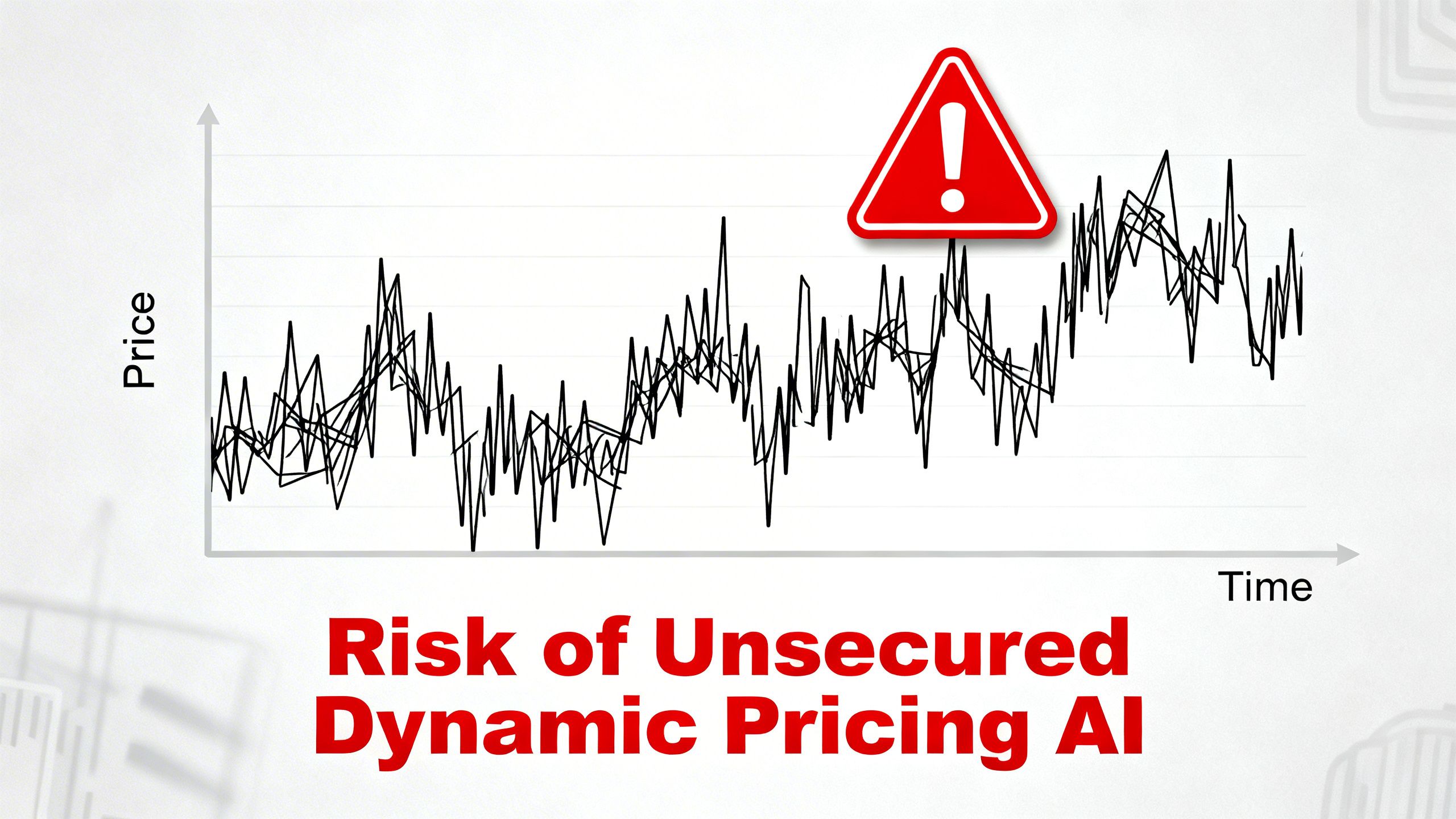
Many sellers use AI to automatically adjust prices based on competitor movements. An unsecured AI could be tricked by a malicious competitor running a script that briefly drops their price to $1. Your AI sees this, matches it, and suddenly your entire inventory is sold at a massive loss. A secure AI would have reasoning-based checks to identify such anomalies as outliers and ignore them.
Automated Ad Copy That Offends: The Brand Nightmare
You ask your AI to generate 10 creative ad headlines for a new product. A poorly secured model, or one that has been subtly manipulated, could pull from inappropriate training data and generate something that is offensive, politically charged, or simply damaging to your brand. The cost isn't just a bad ad; it's a loss of customer trust.
Common AI Security Pitfalls to Avoid
As AI adoption explodes, sellers are making predictable mistakes. Here are two to watch out for.
The 'Shiny Object' Trap: Choosing Flash Over Fundamentals
It's easy to get wowed by a slick demo promising to automate your entire business with a single click. But many sellers are buying complex, expensive AI they don't need and can't manage. As detailed in The No-BS Guide to AI for eCommerce, the key is to focus on tools that solve a specific, measurable problem, not ones that just have the most buzzwords.
Assuming 'Bigger is Better' in AI Models
There's a myth that larger AI models (LLMs) are inherently better. But bigger often means slower, more expensive, and a larger “attack surface” for vulnerabilities. The Amazon challenge used a custom 8B-parameter model—powerful, but far from the largest models out there. This proves that a focused, well-trained, and secure model is far more valuable than a massive, unwieldy one.
Why TrackIQ Matters: From Data Dumps to Secure Decisions
This is where the philosophy behind your AI tools becomes critical. The entire conversation around AI security—balancing utility with safety, focusing on efficiency, and providing trustworthy answers—is at the core of what we're building at TrackIQ.
Our platform was designed from the ground up to be an eCommerce co-pilot, not just another data firehose. We believe the purpose of AI is to give you clear, actionable answers based on your data. It’s not about having a generic chatbot; it’s about having a secure, specialized agent that understands the nuances of your business.
By connecting directly to your Amazon data, TrackIQ does the heavy lifting of analysis, replacing hours of manual work with a simple, conversational interface. We focus on building our AI with the same principles highlighted in the Nova Challenge: creating a system that is not only powerful but also reliable, secure, and designed to help you make better, faster decisions with confidence.
Conclusion
The age of AI is here, and it’s transforming eCommerce. But with great power comes great responsibility. The Amazon Nova AI Challenge is more than just a fascinating look behind the curtain of big tech; it’s a practical guide for the rest of us.
Here are your key takeaways:
- Question Everything: Don't blindly trust your AI tools. Understand their limitations and ask providers hard questions about their security protocols.
- Prioritize Security Over Shine: Choose tools that are built on a foundation of security and efficiency, not just flashy features and marketing hype.
- Keep a Human in the Loop: Use AI as a powerful assistant, but never cede final control of your business's critical functions.
The future of eCommerce won't be won by those who simply adopt AI, but by those who adopt it smartly. By learning from the cutting edge of AI security, you can harness its incredible potential while protecting your business from its hidden risks. It’s time to move beyond the hype and build a more secure, efficient, and profitable business with AI you can actually trust.
—