The AI Diet: How AI Model Pruning Makes Your eCommerce Tools Faster, Smarter, and Cheaper

Quick Summary (TL;DR)
• What is AI Model Pruning?: It’s the process of trimming unnecessary components from a large AI model, making it leaner and more efficient without sacrificing its core capabilities. Think of it as training a marathon runner, not a bodybuilder.
• Why It Matters for eCommerce: Pruning leads to faster data analysis, significantly lower operational costs, and AI tools that are hyper-specialized for the unique challenges of your business, like inventory or PPC management.
• The Big Picture: The future isn't about using the biggest, most powerful AI. It's about using the right AI. Lean, specialized models provide clear, actionable answers, turning data chaos into decisive action.
—
Ever tried to run a modern video game on a ten-year-old laptop? You hit ‘play,’ the fans start screaming like a jet engine, and you get a magnificent slideshow of three frames per minute. That’s bloatware in action. The game is packed with so much code for high-end graphics you don’t have that it can barely perform its basic function.
In a weird way, the world of AI is heading down a similar path. We’re obsessed with size. GPT-4, Llama 3, models with trillions of parameters—bigger is always better, right? Not so fast. For an eCommerce seller trying to figure out how much inventory to order for Prime Day, using a massive, general-purpose AI is like using a sledgehammer to crack a nut. It’s slow, expensive, and wildly inefficient.
This is where a powerful but surprisingly simple concept comes in: AI model pruning. It’s the secret sauce that’s making AI tools for eCommerce faster, cheaper, and genuinely smarter. It’s about trimming the fat, ditching the bloat, and creating a lean, mean, insight-generating machine. In this guide, we’ll break down what AI model pruning is, why it’s a game-changer for sellers, and how it turns your AI from a sluggish beast into a nimble co-pilot.

What is AI Model Pruning? (And Why It's Not as Scary as it Sounds)
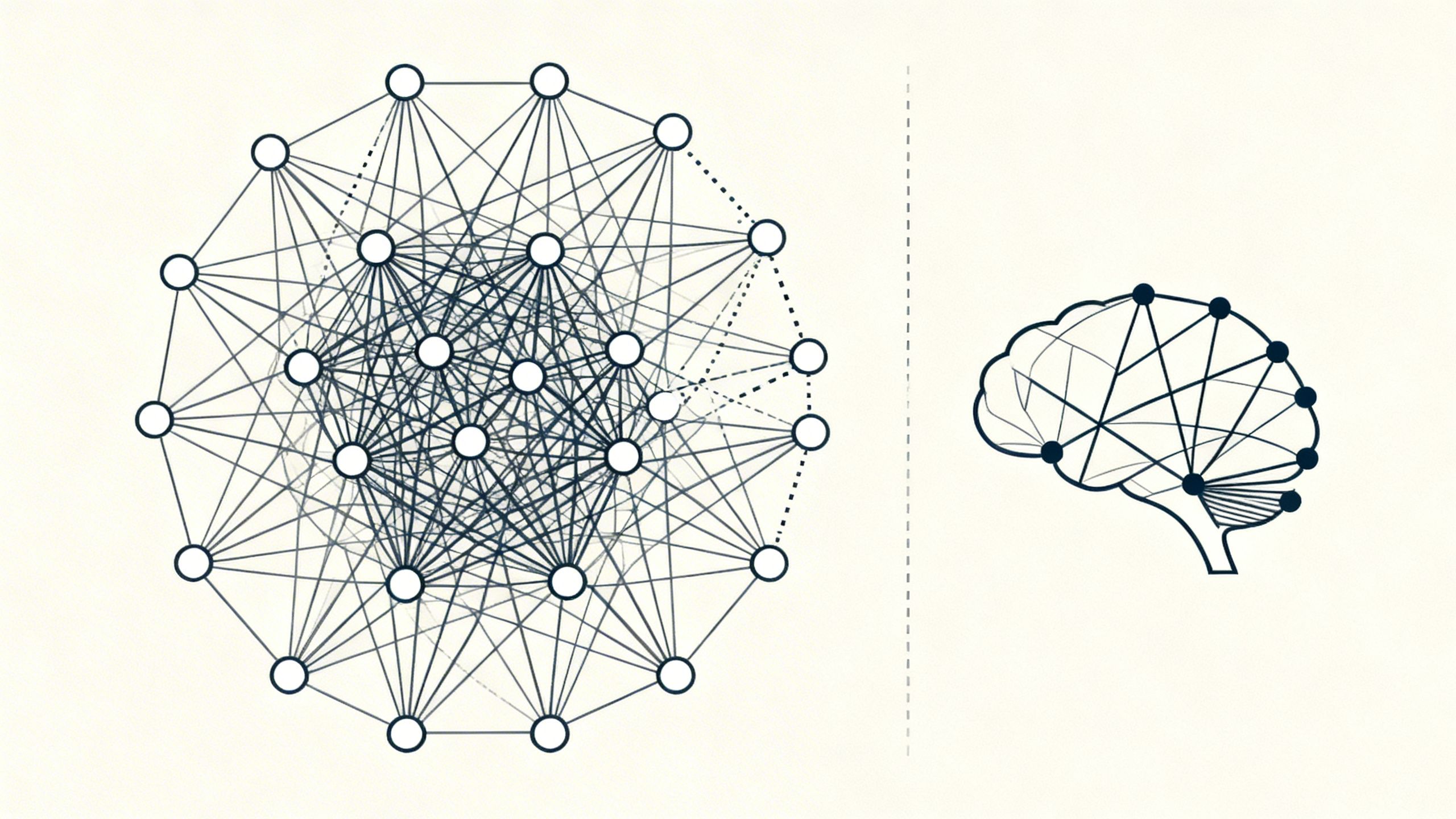
Let's ditch the jargon. AI model pruning is the practice of selectively removing parts of a neural network—the “neurons” or processing nodes—that are redundant or irrelevant to a specific task. Imagine a master chef with a giant, 100-piece knife set. Does she use every single knife to prepare a meal? Of course not. She picks the two or three she needs: the paring knife for the vegetables, the filet knife for the fish. The rest stay in the block.
Pruning does the same for AI. A massive foundation model is trained on the entire internet—it knows about Shakespeare, quantum physics, and cat memes. But for an Amazon seller, 99% of that is useless noise. Pruning identifies and removes the “neurons” that specialize in Shakespeare, leaving behind a streamlined model that’s an expert in sales data, conversion rates, and supply chain logistics.
As researchers are discovering, you can often remove huge chunks of a model with almost no impact on its performance for a specific task. One study found that up to 70% of some network components could be excised with minimal effect. It’s all about specialization.
The Triple-Threat Advantage: Why Lean AI Wins in eCommerce
A pruned AI model isn't just a novelty; it delivers three concrete benefits that directly impact your bottom line.
Blazing-Fast Speed: From Hours to Seconds
Time is money, and in eCommerce, that’s not a cliché—it’s a law. Waiting hours for a report on your ad spend is a recipe for losing to competitors. Because pruned models have fewer calculations to make, they deliver answers exponentially faster. The technical term is “reduced inference time,” but what it really means is you can ask a question and get an answer in seconds, not hours.
This allows for real-time decision-making. Should you raise the bid on a keyword right now? Is a product about to stock out today? A lean AI gives you the speed to act before it's too late. This is the core philosophy behind building faster, not bigger, AI for the real world of eCommerce.
Slashing Costs: Stop Paying for AI You Don't Use
Running a massive AI model is incredibly resource-intensive. It requires immense computational power, which translates directly to higher energy consumption and, ultimately, higher costs for the end-user. When you use a bloated, one-size-fits-all AI tool, you’re paying for all those useless neurons that know about 18th-century poetry.
AI model pruning cuts those costs dramatically. By using a smaller, more efficient model, platforms can pass those savings on to you. It’s the difference between chartering a private jet for a trip across town versus hopping on a scooter. Both get you there, but one is far more practical and affordable for the task at hand.

Hyper-Specialization: An AI That Actually Gets Your Business
This might be the most important benefit. A general AI might try to analyze your sales data using patterns it learned from financial news or weather reports. The result? Generic, often useless insights.
A pruned and fine-tuned model, however, becomes a true specialist. It learns the unique rhythm of your business: your sales cycles, your customer behavior, the way seasonality affects your top products. It speaks the language of Amazon—ACOS, TACOS, IPI scores—natively. This specialization allows it to spot opportunities and risks that a general model would completely miss, transforming it from a simple calculator into a strategic partner.
How AI Model Pruning Works: A Peek Under the Hood
So how does this “diet” actually work? While the deep technical details are complex, the process can be broken down into three main stages.
Step 1: Start with a Powerful Foundation Model
You don't start from scratch. The process begins with a large, pre-trained foundation model (like the ones developed by Google, Meta, or OpenAI). This model is the block of marble before the sculptor gets to work—full of potential but unrefined.
Key Tip: The quality of the foundation model matters. A good starting point ensures the core reasoning and language capabilities are strong, even after parts are removed.
Step 2: Identify the 'Dead Wood' with Gate Predictors
This is the magic. The model is analyzed to see which “modules” or bundles of neurons activate for specific tasks. For example, when fed Amazon sales data, one set of neurons will light up. When asked about Shakespeare, a different set activates. Using techniques like gate predictors, engineers can identify and flag the neurons that are irrelevant for eCommerce analytics.
Key Tip: This isn’t just about deleting random parts. It’s a data-driven process that maps the AI’s internal structure to real-world tasks, ensuring only the non-essential components are marked for removal.
Step 3: Trim, Fine-Tune, and Validate
Once the irrelevant parts are identified, they are “pruned” away. The now-slimmer model is then fine-tuned on a high-quality, domain-specific dataset—in this case, mountains of eCommerce data. This step sharpens its abilities and ensures it hasn't lost accuracy on its core tasks.
The final model is faster, cheaper, and an expert in its niche.
AI Model Pruning in Action: Real-World eCommerce Scenarios
This all sounds great in theory, but what does it look like in practice?
Best Practice: Dynamic Inventory Forecasting
A generic AI might see a sales spike and recommend a massive restock. A pruned, eCommerce-specific model does more. It cross-references the spike with your ad spend, checks for seasonal trends, analyzes your current inventory turnover rate, and considers your supplier’s lead time. Instead of a blunt “buy more,” it gives you a precise recommendation: “Order 350 units now to maintain a 45-day supply, avoiding both a stockout and long-term storage fees.”
Best Practice: Intelligent PPC Ad Optimization
Managing Amazon PPC is a classic needle-in-a-haystack problem. A general AI doesn't understand the nuances of ACOS vs. TACOS or the impact of a new competitor on your main keyword. A pruned model trained on PPC data does. It can analyze your campaigns and say, “Your bid on ‘organic dog food’ is unprofitable between 2 AM and 6 AM. Pause it during these hours to save 18% of your daily budget without losing sales.” That’s not just data; it’s a money-making instruction.
Why TrackIQ Matters: From Bloatware to Agentic AI
This philosophy of lean, specialized, and actionable AI is the bedrock of TrackIQ. We saw the “bigger is better” trend and knew it was the wrong path for busy eCommerce sellers who need answers, not encyclopedias.
Our platform was built from the ground up on the principle of AI model pruning. We don’t use a generic chatbot that happens to know what a spreadsheet is. We’ve developed a highly specialized AI that lives and breathes Amazon data. It’s been trained to understand the intricate connections between your advertising, inventory, sales, and profitability.
This allows TrackIQ to be more than just a dashboard; it’s an agentic co-pilot. It doesn’t just show you a chart of your declining sales. It proactively tells you why they’re declining (“Your main competitor just dropped their price by 15%”) and suggests what to do about it. This is the evolution beyond the simple chatbot into a true eCommerce co-pilot.
Common Traps: The "Bigger is Better" Fallacy in AI
As with any new technology, there are pitfalls to avoid. The biggest one in AI today is the allure of the massive, do-everything platform.
The Shiny Object Syndrome: Buying Tech You Don't Need
It’s easy to get wowed by a demo showing an AI that can write a sonnet, compose a song, and analyze your sales data. But if you only need the sales analysis, you’re paying for two features you’ll never use. This “shiny object syndrome” leads many sellers to invest in expensive, complex tools that are overkill for their needs and ultimately slow them down.
Drowning in Data, Starving for Insight
The second trap is mistaking data output for insight. A huge AI model can generate endless charts, graphs, and reports. But this often creates more work, forcing you to dig for the one important piece of information. A lean, pruned AI is designed to do the opposite: it sifts through the noise for you and delivers the one key insight you need to act on.

Advanced Strategy: The Future is Agentic and Specialized
AI model pruning is just the beginning. The next frontier is Agentic AI—systems that can not only provide insights but also execute tasks on your behalf. Imagine an AI that not only tells you to lower a PPC bid but asks for your permission and then does it for you. Or an AI that automatically creates a removal order for slow-moving inventory to avoid storage fees.
This is only possible with specialized models. A generic AI can’t be trusted to take actions within the complex environment of Amazon Seller Central. But an AI that has been pruned and fine-tuned to be an expert in that specific domain can act as a reliable, autonomous team member, freeing you up to focus on strategy and growth.
Key Takeaways: Trim the Fat, Boost Your Business
If you remember anything from this guide, let it be these three points:
- Embrace Lean AI: In the world of eCommerce, speed and precision beat brute force. Seek out tools that are built for your specific needs, not ones that try to do everything.
- Question Your Tools: Look at your current software stack. Are your tools giving you clear, actionable answers, or are they just generating more reports for you to analyze? Demand insights, not just data.
- The Future is Specialized: The most valuable AI for your business will be one that understands your business. Specialization through techniques like AI model pruning is what separates a novelty chatbot from a true digital co-pilot.
Conclusion
The AI arms race, with its focus on building ever-larger models, is a fascinating spectacle. But for the practical world of eCommerce, it’s a distraction. The real revolution isn’t happening in the massive data centers training behemoth AIs; it’s happening in the careful, deliberate act of pruning those models down to create lean, efficient, and incredibly powerful specialists.
By embracing AI model pruning, you’re not just choosing a different kind of technology. You’re choosing a different philosophy: one of speed over size, clarity over complexity, and action over analysis. You’re choosing to have an AI that works for you, not one that creates more work for you.
Ready to see what a lean, specialized AI can do for your Amazon business? Meet the TrackIQ Agent and turn your data into decisions.
—