Stop Guessing, Start Measuring: How AI is Forcing a Rethink of Developer Productivity
Quick Summary (TL;DR)
• Old Metrics are Obsolete: Measuring developer productivity by lines of code or tickets closed is a losing game. It's time for a metric that reflects real business impact.
• Embrace CTS-SW: Amazon's "Cost-to-Serve-Software" (CTS-SW) offers a revolutionary way to measure the true cost and efficiency of shipping software, linking developer effort directly to business value.
• AI is the Accelerator: Generative AI tools aren't just hype. Data from Amazon proves they have a direct, causal impact on increasing development velocity and lowering the cost to serve software.
—
Ever tried to explain the value of a software development team to a non-technical stakeholder? It can feel like trying to nail Jell-O to a wall. You talk about velocity, story points, and deployment frequency, and their eyes just glaze over. The truth is, for decades, we've been stuck using proxy metrics that don't capture the one thing that actually matters: efficiently delivering value to customers.
We've all been in that meeting, trying to justify a new tool or an architectural refactor. The conversation often stalls at, "But how will this really impact the bottom line?" It's a fair question, and one that's been notoriously hard to answer. Until now. The rise of AI in software development isn't just changing how we build; it's forcing us to get brutally honest about how we measure our work. This isn't just another article about AI hype; it's a deep dive into a new way of thinking, backed by Amazon's internal research, that could change how you run your eCommerce tech stack forever.
What the Heck is 'Cost-to-Serve-Software' (CTS-SW) Anyway?
Let's break it down. Imagine you're running an Amazon fulfillment center. You wouldn't measure your success by how many steps your workers take or how many boxes they touch. You'd measure the total cost to get a package from the shelf to a customer's doorstep. That's the "cost-to-serve."
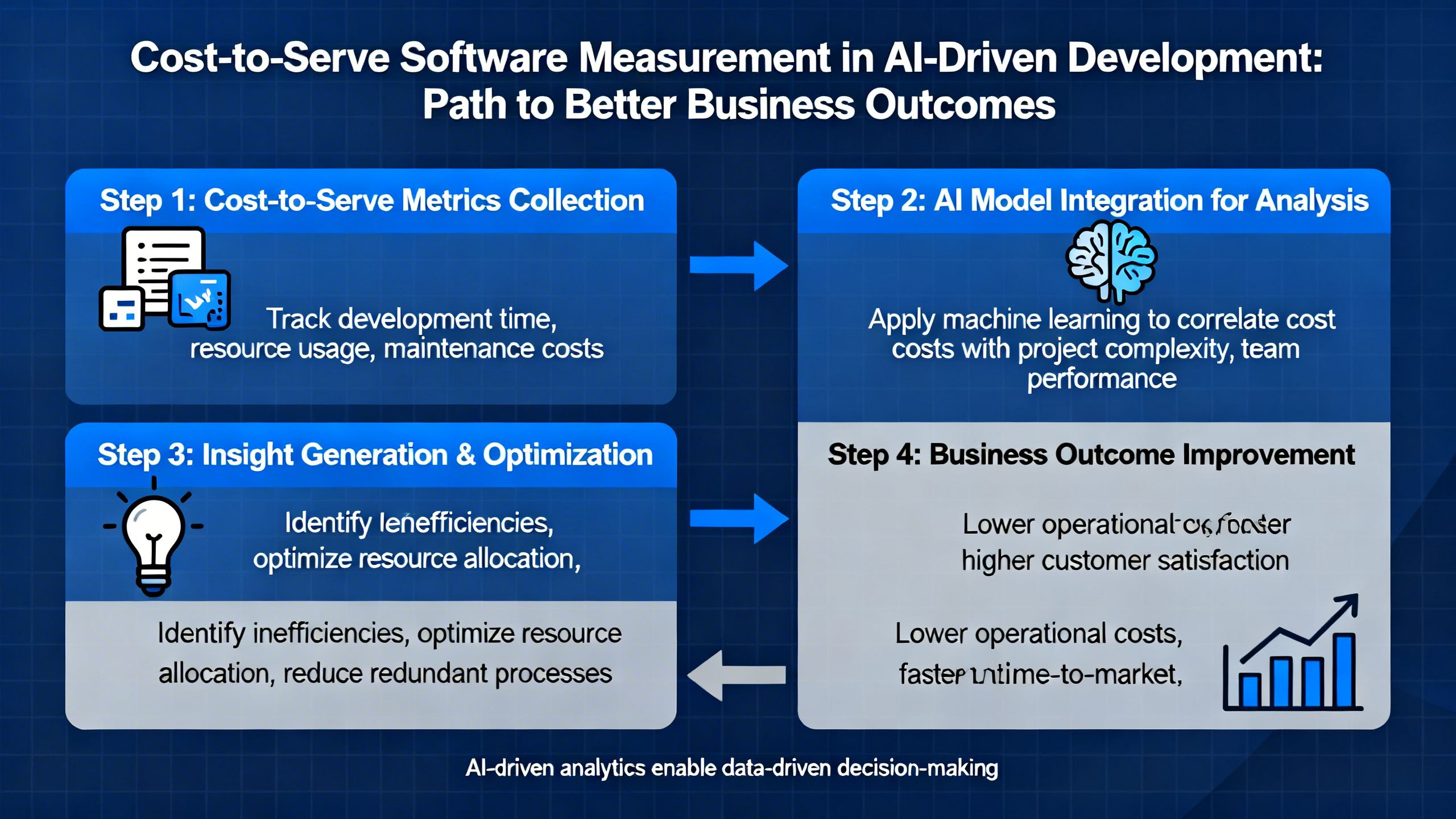
Amazon's internal engineering teams applied this exact logic to software. Cost-to-Serve-Software (CTS-SW) is a metric that quantifies the total investment (mostly developer time and salary) required to get a single unit of software into the hands of customers. That "unit" could be a deployment, a shipped feature, or a merged pull request. It simplifies a massively complex process down to a single, powerful equation:
CTS-SW = Total Input Costs (Developer Time) / Total Output Units (Deployments)
By focusing on this ratio instead of vanity metrics, you get a clear, bottom-line indicator of your team's efficiency. It's a number your CFO can actually understand.
Why You Should Immediately Care About Your CTS-SW
Adopting a CTS-SW mindset isn't just for mega-corporations like Amazon. It's a game-changer for any eCommerce business that relies on software to compete. Here’s why.
Beyond Velocity Metrics: Get a True Picture of Efficiency
Team velocity is important, but it's only half the story. A team could be merging tons of code, but if that code is buggy, requires constant rollbacks, and creates operational drag, their high velocity is actually increasing costs. CTS-SW captures this nuance. Amazon's research found that teams with better "delivery health"—meaning fewer rollbacks and manual interventions—had a significantly better CTS-SW. It forces a focus on quality and stability, not just speed for speed's sake.
A recent study by Amazon found that team velocity (the number of code reviews merged per week) was the single largest predictor of a lower CTS-SW. But this only works when paired with high delivery health.
Justify Your Tech Stack: Make Data-Driven Decisions on Tooling
Should you invest in that new AI-powered testing suite? Is that expensive CI/CD platform worth it? With CTS-SW, you can find out. By measuring your CTS-SW before and after implementing a new tool, you can see its direct impact on your bottom line. This is exactly what Amazon did to measure the impact of its AI tool, Q Developer. They proved it had a causal relationship with increased deployment velocity, providing a clear ROI for the technology. This moves your tech decisions from "gut feel" to data-driven certainty.
A Practical Guide to Thinking in CTS-SW
Okay, you're sold on the concept. But you're not Amazon. You don't have a team of data scientists to build complex models. The good news is you don't need to. You can start applying the principles of CTS-SW today.
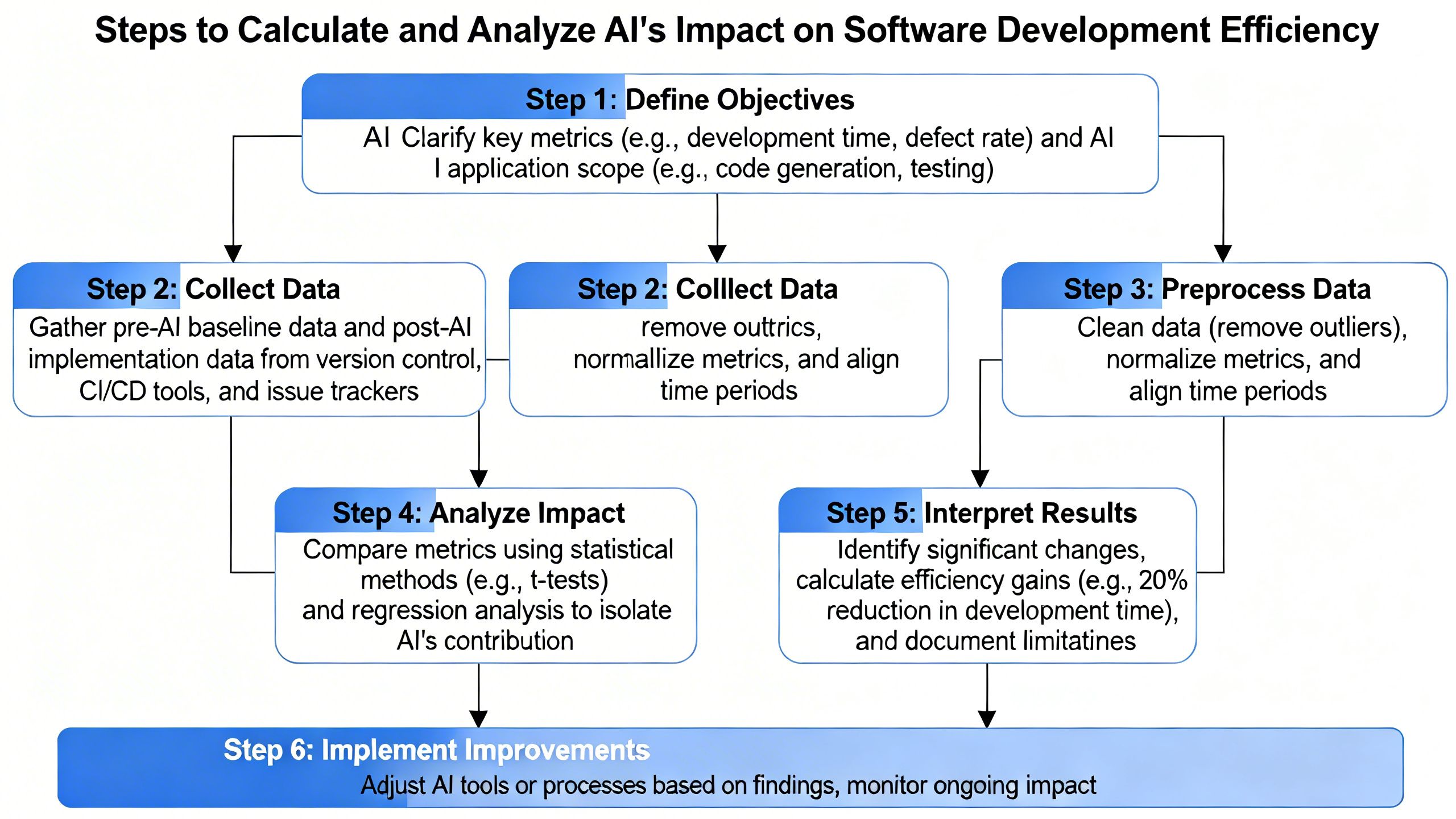
Step 1: Define Your 'Unit of Software'
First, decide what you're measuring. For most modern eCommerce platforms using a microservices architecture, a deployment is the perfect unit. It represents a discrete package of value delivered to customers. If you're working with a monolith or have a less frequent release schedule, a shipped pull request might be a better unit. The key is to choose something that consistently represents value reaching production.
Key Tip: Don't overcomplicate it. Pick one metric and stick with it for a few quarters to establish a baseline. Consistency is more important than perfection at the start.
Step 2: Track Your Inputs (Honestly)
The biggest input cost is your development team's time. This is more than just salaries. It includes the time spent on planning, coding, reviewing, testing, deploying, and—crucially—handling incidents and maintenance. You don't need to track every minute, but you should have a rough idea of the fully-loaded cost of your engineering team per week or month.
Key Tip: Use a simple spreadsheet to start. (Total Monthly Engineering Cost) / (Number of Deployments in that Month) = Your CTS-SW. It's a rough starting point, but it's already more insightful than story points.
Step 3: Identify and Pull the Levers
Once you have a baseline CTS-SW, you can start optimizing. Amazon's research gives us a treasure map of where to look first:
- Team Velocity: How can you safely help your team merge more code? Better onboarding, clearer documentation, and yes, AI code assistants.
- Delivery Health: How can you reduce deployment friction and rollbacks? Invest in CI/CD automation and better change safety practices.
- Operational Load: How can you reduce the number of pages and alerts your on-call engineers receive? Proactive monitoring and fixing root causes instead of just patching symptoms.
AI in Software Development: The Great Accelerator
This is where things get really exciting. The levers that drive down CTS-SW are the very things that modern AI tools are designed to supercharge.
The Rise of AI Co-Pilots: More Than Just Autocomplete
Tools like Amazon Q Developer and GitHub Copilot are not just fancy autocomplete. Amazon's study provided causal evidence that adopting these tools directly leads to higher code review velocity and deployment velocity. Think about that: not a correlation, a causal link. By generating code, writing tests, and helping developers navigate unfamiliar codebases, these AI co-pilots directly reduce the time input required for each deployment, smashing your CTS-SW.
Agentic AI: Your Newest, Tireless Team Member
The real future, as hinted at in Amazon's research, is Agentic AI. This goes far beyond the chatbot. Imagine AI agents that don't just suggest code but can take on entire tasks: giving feedback on design docs, suggesting fixes for failed builds, or even automatically resolving production incidents. This isn't science fiction; it's the next frontier, and it will completely redefine what's possible in terms of software development efficiency.
Real-World Impact: The Amazon Case Study
Let's look at how this works in the real world. Amazon's internal teams didn't just theorize about AI's impact; they measured it.

The Experiment: Introducing Amazon Q Developer
When Amazon rolled out its AI coding assistant, Q Developer, they treated it as a massive natural experiment. They created a panel dataset tracking thousands of their "two-pizza teams" over a nine-month period. They tracked who was using the tool and how much, alongside their deployment velocity, rollback rates, and other key metrics.
The Result: Causal Proof of Increased Velocity
Using sophisticated causal inference models, they were able to filter out the noise and prove a direct, causal relationship. Teams that adopted Q Developer saw a statistically significant increase in both their code review velocity and their deployment velocity. This provided hard, financial justification for the tool. It wasn't just making developers feel more productive; it was measurably lowering the cost to serve software.
Common Traps in Measuring Developer Productivity
As you embark on this journey, be wary of these common pitfalls.
The Individual Performance Trap: Don't Be a Creep
Amazon's research is clear: these are team-level metrics. Using code review velocity to rank individual engineers is a recipe for disaster. It creates toxic competition, encourages gaming the system (e.g., breaking work into tiny, meaningless commits), and destroys psychological safety. Software development is a team sport. Measure it that way.
The 'Numbers Don't Lie' Fallacy: Context is King
Your CTS-SW suddenly drops by 50%. Time to celebrate? Maybe. Or maybe your team is cutting corners on testing and shipping buggy code that will lead to a massive spike in customer support tickets and operational load next quarter. A number is just a number. You have to understand the story behind it. Always pair your quantitative CTS-SW metric with qualitative feedback from your team and customers.
Why TrackIQ Matters: From Messy Data to Actionable Insights
Reading about Amazon's massive data science teams and complex regression models might feel intimidating. You're running an eCommerce business, not an R&D lab. How can you possibly compete?
This is precisely the gap that TrackIQ was built to fill. The philosophy behind CTS-SW—leveraging rich telemetry data to derive actionable business insights—is in our DNA. While Amazon built internal tools to measure developer efficiency, we built TrackIQ to measure and automate the core drivers of your eCommerce business efficiency.
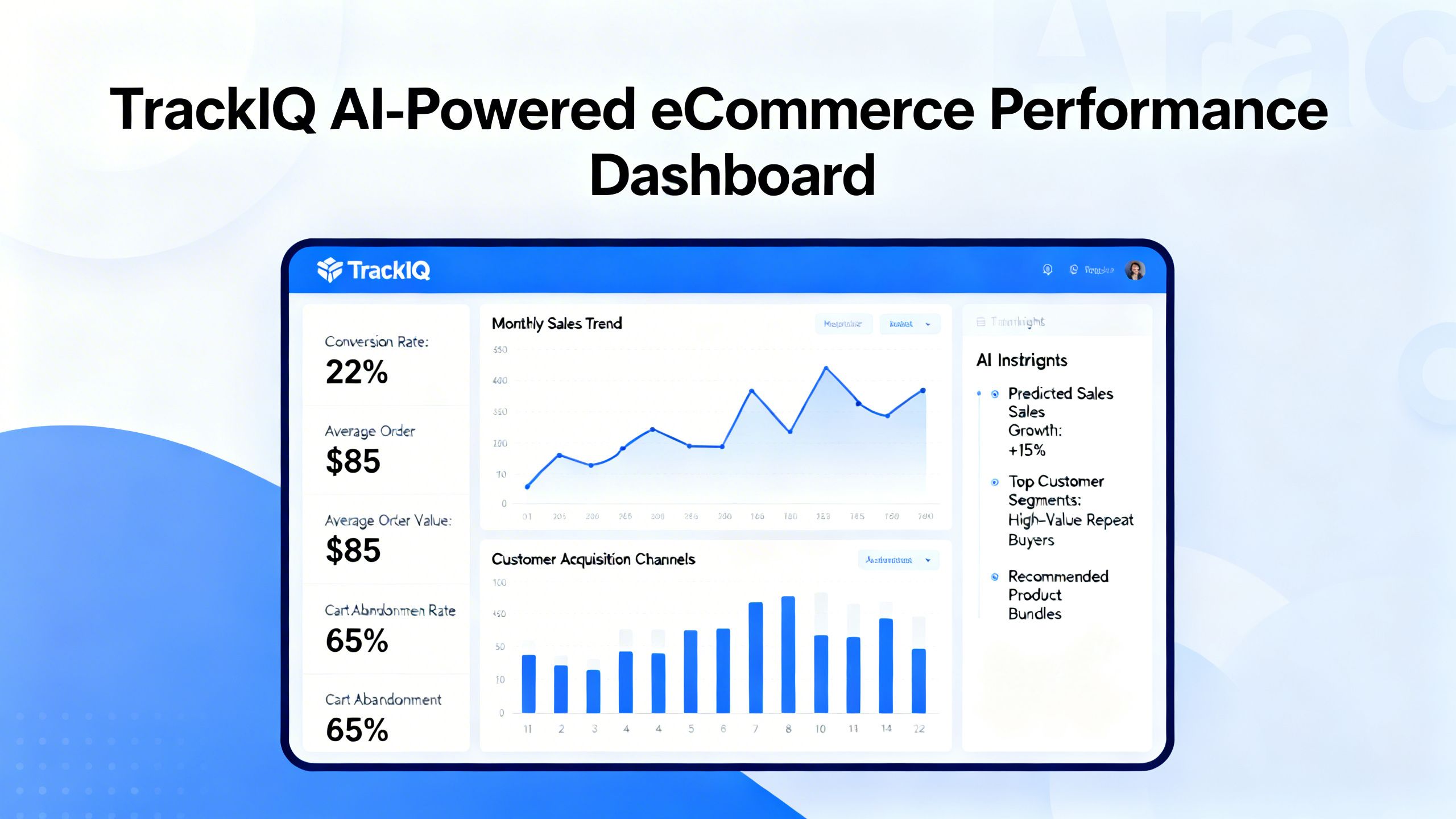
Our platform connects directly to your Amazon data, doing the heavy lifting of analysis that would otherwise require a team of experts. We believe the purpose of AI is not to drown you in dashboards, but to provide clear answers and even take action on your behalf. Whether it's optimizing ad spend, managing inventory, or identifying new growth opportunities, TrackIQ acts as your agentic co-pilot.
You don't need to build your own causal inference models. You can leverage ours. We provide the insights that let you make smarter, faster decisions—all in one conversational interface. It's about democratizing the power of data science, giving you the same analytical firepower as the giants. See how it works and how you can stop guessing and start knowing.
Key Takeaways for Your eCommerce Business
If you remember nothing else from this article, remember these three things:
- Your current developer metrics are likely lying to you. Ditch vanity metrics and find a measure that connects effort to value, like CTS-SW.
- What gets measured gets managed. Start tracking your cost-per-deployment, even if it's a back-of-the-napkin calculation. It will change the way you think about efficiency.
- AI is a measurable performance multiplier. AI tools are not a cost center; they are an investment in lowering your CTS-SW and increasing your competitive edge.
Conclusion
The age of ambiguity in software development is over. We can no longer afford to operate on gut feelings and proxy metrics. The principles behind Cost-to-Serve-Software, validated by the measurable impact of AI tools, provide a clear path forward. It's a path that connects the code your team writes directly to the financial health of your business.
Embracing this new paradigm of measurement is the single most important thing you can do to prepare your eCommerce business for the AI-driven future. It's time to stop guessing, start measuring, and unlock a new level of efficiency you never thought possible.
—