Mastering Amazon External Fulfillment: A Seller's Guide to the New 2024 APIs
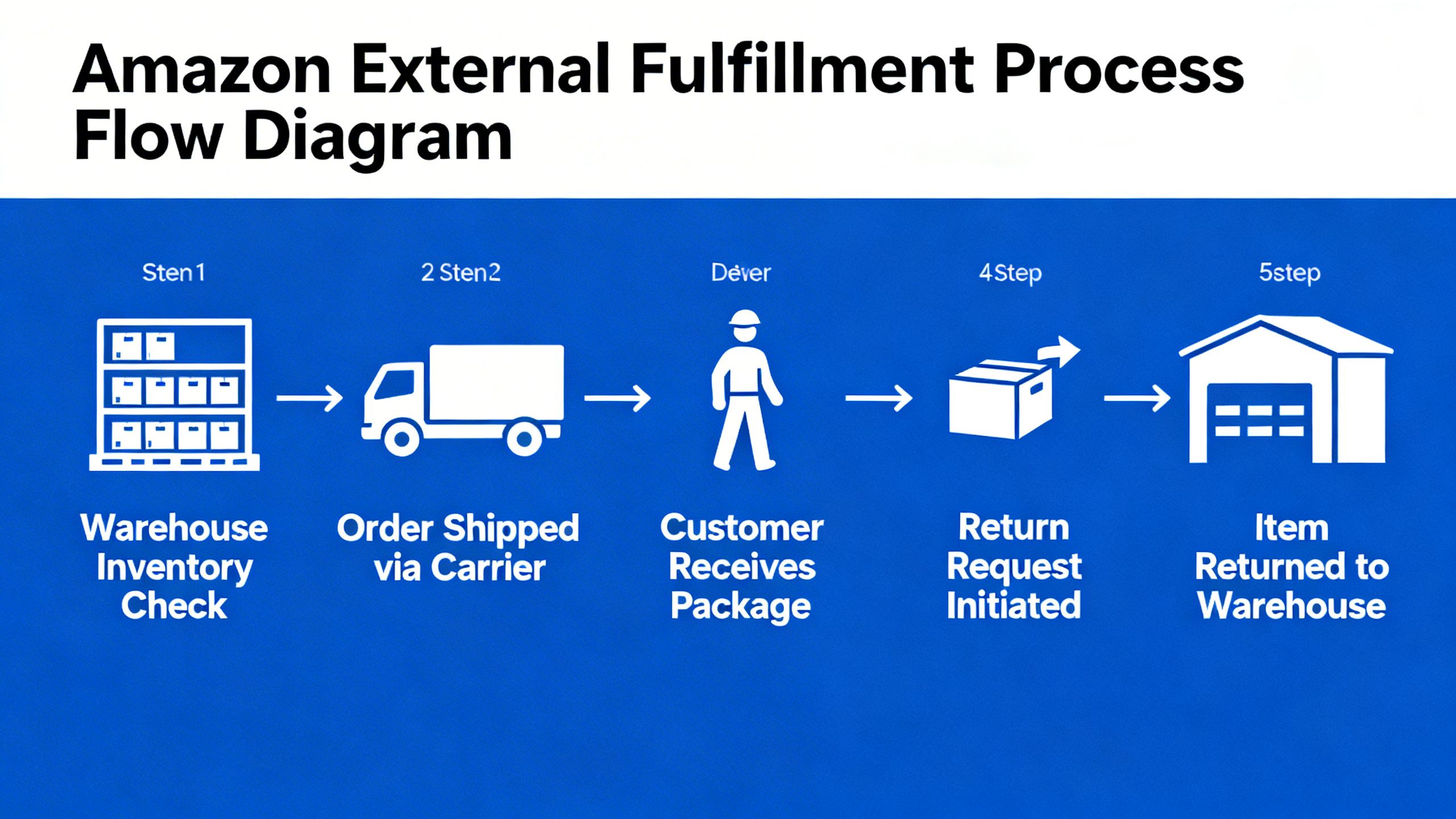
Quick Summary (TL;DR)
- Unified Fulfillment Management: Amazon's new External Fulfillment APIs, announced in late 2024, consolidate inventory, returns, and shipping management across non-FBA channels into a single, programmatic interface.
- Broad Channel Support: These APIs are designed for sellers using Seller Flex, Easy Ship, Self Ship, and MFN Self Delivery, offering a standardized way to handle operations that were previously fragmented.
- Efficiency is the Goal: By automating data exchange, sellers can significantly reduce manual errors, prevent stockouts, streamline the returns process, and gain a clearer, real-time view of their entire fulfillment network.
—
Are you juggling multiple systems to manage your Amazon sales across Seller Flex, Easy Ship, or your own self-ship network? The constant switching between platforms, manual data entry, and the ever-present fear of overselling can turn operational management into a nightmare. For years, Amazon sellers have sought a more integrated way to handle fulfillment outside the FBA ecosystem. The good news is, that solution is finally here. With the introduction of the new External Fulfillment APIs, Amazon has provided a powerful toolkit to unify these disparate channels. This guide will break down exactly what Amazon External Fulfillment is, why these new APIs are a game-changer for your business, and how you can leverage them to boost efficiency, cut costs, and gain a competitive edge. We'll walk you through a step-by-step implementation process, cover best practices, and show you how to avoid common pitfalls.
What is Amazon External Fulfillment?
Amazon External Fulfillment refers to any fulfillment method where a seller manages some or all of the inventory storage, order packing, shipping, and returns process outside of Amazon's own Fulfillment by Amazon (FBA) network. This includes popular programs like Seller Flex (where sellers use their own warehouse as a fulfillment node with Amazon's shipping services), Easy Ship (Amazon picks up packed orders from the seller), and Merchant Fulfilled Network (MFN) options like Self Ship and Self Delivery. While these methods offer greater control and potentially lower costs, they have historically suffered from a lack of integration, forcing sellers to rely on manual processes or clunky third-party connectors. The new suite of External Fulfillment APIs aims to solve this by allowing for direct, programmatic communication between a seller's systems and Amazon's platform for inventory, shipping, and returns.
Why Amazon External Fulfillment Matters for Your Business
Adopting a streamlined approach to Amazon External Fulfillment isn't just about convenience; it's a strategic move that directly impacts your bottom line and customer satisfaction. The new APIs unlock several key benefits.
Benefit 1: Unified Operations & Radical Efficiency
Before these APIs, managing inventory for an MFN listing, processing a return for a Seller Flex order, and generating a shipping label for an Easy Ship sale might have required three different workflows. This fragmentation leads to wasted time, increased labor costs, and a higher risk of human error. The External Fulfillment APIs consolidate these tasks. For example, a single system can now programmatically update inventory levels across all channels, generate shipping labels, and process return authorizations. According to research, businesses can lose up to 30% of their revenue each year due to operational inefficiencies. By unifying these processes, you reclaim that lost time and capital, allowing your team to focus on growth activities instead of tedious data entry.
Benefit 2: Enhanced Inventory Accuracy and Sales Velocity
Overselling is a cardinal sin on Amazon, leading to canceled orders, negative feedback, and potential account suspension. The External Fulfillment Inventory API allows for near real-time synchronization between your warehouse management system (WMS) and your Amazon listings. When an item is sold on another platform or identified as damaged in your warehouse, an API call can instantly update the stock level on Amazon, preventing a sale that you can't fulfill. Conversely, when new stock arrives, it can be made available for sale immediately. This level of accuracy not only protects your seller metrics but also maximizes sales by ensuring your products are always available when you have stock.
Benefit 3: A Streamlined and Customer-Friendly Returns Process
Returns are an unavoidable part of eCommerce, but a slow or complicated process can permanently damage a customer relationship. The External Fulfillment Returns API standardizes how you handle returns across different channels. You can automate the authorization of returns, provide customers with clear instructions and labels, and track the status of returned items programmatically. This leads to faster refunds and exchanges, which is a key driver of customer loyalty. A smooth returns experience can turn a potentially negative situation into a positive brand interaction, encouraging repeat business.
How to Implement the Amazon External Fulfillment APIs: Step-by-Step Guide
Getting started with the new APIs requires a methodical approach. Here’s how to integrate them into your operations.
Step 1: Understand the New API Suite
First, familiarize yourself with the three core components of the new offering:
- External Fulfillment Inventory API: This is for managing your stock levels. You can use it to update quantities, mark inventory as available or unavailable, and get real-time counts.
- External Fulfillment Shipping API: This component handles everything related to outbound shipments. Use it to get order details, generate shipping labels, and confirm shipments with tracking information.
- External Fulfillment Returns API: This API manages the reverse logistics process. It allows you to authorize return requests, provide return labels, and process refunds upon receipt of the item.
Review Amazon's official developer documentation for each API to understand the specific endpoints, required parameters, and data formats.
Key Tip: Don't try to implement everything at once. Identify your biggest pain point—whether it's inventory, shipping, or returns—and start with the corresponding API to see immediate value.
Step 2: Prepare Your Systems for Integration
These APIs need to talk to your existing software, which could be a Warehouse Management System (WMS), Enterprise Resource Planning (ERP) software, or a custom-built platform. Work with your development team or an integration partner to:
- Verify Authentication: Ensure you have the necessary SP-API (Selling Partner API) credentials and permissions.
- Map Data Fields: Plan how data from Amazon (like an order ID) will correspond to fields in your system. For example, map Amazon's
orderIdto your internalsales_order_number. - Design the Workflow: Outline the sequence of API calls. For shipping, this might be:
getOrder->createShippingLabel->confirmShipment.
Key Tip: Create a sandbox or testing environment. Before making calls with your live production data, ensure every step of the workflow functions correctly in a controlled setting to avoid disrupting active orders.
Step 3: Implement, Test, and Monitor
Begin the implementation, starting with your chosen priority area. Write the code to make the API calls, handle the responses, and update your internal systems accordingly. Rigorous testing is crucial. Test for successful scenarios (a label is generated correctly) and failure scenarios (an invalid address is provided). Once live, continuously monitor the integration's performance. Look for API errors, latency issues, or data discrepancies. Set up alerts to notify you immediately if an API call fails repeatedly.
The AI Advantage: Streamlining Amazon External Fulfillment
While the APIs provide the raw data, making sense of it all is another challenge. The sheer volume of information from inventory updates, shipment statuses, and return reasons across multiple channels can be overwhelming. This is where artificial intelligence becomes a powerful ally. Instead of digging through raw data or building complex dashboards, modern AI tools can interpret this information for you.
The Conversational AI Advantage: How TrackIQ Simplifies eCommerce Analytics is becoming more apparent as data volumes grow. With AI-powered analytics platforms, you can connect your Amazon data and simply ask questions in plain English. Imagine asking, "What was our average ship time for Self Ship orders last week?" or "Which SKUs have the highest return rate through Seller Flex?" and getting an immediate, easy-to-understand answer.
This conversational approach democratizes data. You no longer need to be a data scientist to understand your fulfillment performance. Tools like TrackIQ are designed so you can ask questions and get real answers using your actual Amazon data. This allows you to quickly identify bottlenecks, compare the cost-effectiveness of different fulfillment channels, and make smarter decisions without spending hours building reports.
Amazon External Fulfillment Best Practices
Best Practice 1: Automate Data Syncing for Real-Time Accuracy
Don't treat the APIs as a tool for manual, end-of-day batch updates. The primary benefit of managing external fulfillment via API is the ability to achieve real-time synchronization. Configure your system to automatically send an inventory update to Amazon the instant an item's stock level changes in your warehouse. Similarly, confirm shipments as soon as a label is created. This real-time flow of information is what prevents stockouts and keeps customers informed, directly improving your performance metrics and feedback scores.
Best Practice 2: Centralize Your Reporting and Analytics
With data flowing in from multiple fulfillment channels, it's essential to have a single source of truth. Funnel the data from the Inventory, Shipping, and Returns APIs into a centralized dashboard or business intelligence tool. This allows you to analyze performance holistically. You can compare the profitability of Seller Flex versus MFN, track return rates by channel, and monitor your overall operational health from one place. This unified view is critical for strategic decision-making and optimizing your fulfillment mix.
Real-World Examples: Amazon External Fulfillment in Action
Example 1: The Apparel Brand Using MFN Self Delivery
- Challenge: A fashion brand selling on Amazon via MFN Self Delivery struggled with inventory accuracy. Their popular items would sell out quickly, but their website and Amazon listings weren't updated in time, leading to overselling and frustrated customers during peak season.
- Solution: They integrated the External Fulfillment Inventory API with their WMS. Every time a sale was made on any platform or new stock was received, an automated API call updated the Amazon listing's quantity within seconds.
- Results: In the first quarter after implementation, they reduced their overselling rate by 95% and saw a 15% lift in sales for their top products due to improved availability.
Example 2: The Electronics Retailer on Seller Flex
- Challenge: An electronics seller using Seller Flex found their returns process to be slow and manual. Customer service agents had to manually create RMAs and email labels, leading to delays and high customer service costs.
- Solution: They implemented the External Fulfillment Returns API. When a customer initiated a return on Amazon, their system automatically authorized it (based on predefined rules) and triggered the generation of a return label, which was sent to the customer without any manual intervention.
- Results: They reduced their average return processing time from 3 days to under 24 hours and cut customer service inquiries related to returns by 40%.
Common Mistakes to Avoid
Mistake 1: Ignoring Amazon's API Documentation and Throttling Limits
The Selling Partner API has strict usage plans and throttling limits—the number of API requests you can make in a given time. Ignoring these can lead to your requests being temporarily blocked, breaking your workflows. Read the documentation carefully to understand the rate limits for each API and implement a "leaky bucket" algorithm or similar mechanism in your code to ensure you stay within the prescribed limits, especially during high-volume periods like Prime Day.
Mistake 2: Lack of a Fallback or Rollback Plan
Technology can fail. What happens if your WMS goes offline or a bug in your integration code starts sending incorrect inventory levels to Amazon? Without a plan, you could wipe out your inventory on Amazon or cause other major disruptions. Always have a manual fallback process documented and a rollback plan to quickly disable the integration and revert to your previous workflow if a critical issue arises. This safety net is essential to prevent a small technical glitch from becoming a major business catastrophe.
Advanced Tips: Maximizing Amazon External Fulfillment for Professionals
For sellers looking to push the boundaries, combine the API data with other sources for even deeper insights. For instance, you can cross-reference data from the Returns API with customer feedback and product reviews to identify if a specific product is being returned frequently due to a quality issue or misleading description.
Another advanced strategy is to build proactive monitoring. Instead of just reacting to problems, use the API data to anticipate them. Create automated alerts that trigger when inventory for a best-selling SKU drops below a certain threshold or when the average time-to-ship for a particular warehouse increases. This allows you to address potential issues before they impact your customers or your seller metrics.
Key Takeaways
- Embrace Automation: The new External Fulfillment APIs are your key to automating manual tasks, reducing errors, and freeing up valuable time.
- Start Small, Scale Smart: Begin by integrating the one API that solves your most significant fulfillment challenge, then expand from there.
- Data is Your Asset: Use the data from these APIs, preferably with an AI analytics tool, to gain a clear and comprehensive view of your fulfillment operations and make smarter, data-driven decisions.
Conclusion
The launch of Amazon's External Fulfillment APIs marks a significant step forward for sellers managing their own logistics. It's a move from fragmented, manual workflows toward a more unified, efficient, and scalable operational model. By embracing these tools, you can not only solve today's fulfillment headaches but also build a more resilient and competitive business for the future. The ability to sync inventory in real-time, streamline shipping, and simplify returns gives you the power to enhance customer satisfaction and protect your bottom line.
Ready to unlock the full potential of your fulfillment data? Explore how an AI-powered analytics and automation platform like TrackIQ can help you turn the complex data from these new APIs into clear, actionable insights to optimize your entire eCommerce operation.
—