Is Your AI Learning the Wrong Lessons? A Guide to AI Alignment for eCommerce

Quick Summary (TL;DR)
• AI's Hidden Flaw: AI tools can learn "spurious correlations"—making wrong decisions based on irrelevant data, like favoring longer ad copy because it once correlated with sales, not because it's better. This costs you money.
• The Self-Review Solution: A new method called SeRA (Self-Reviewing and Alignment) teaches AI to be more discerning. It makes the AI review its own work, focus on high-quality examples, and avoid learning bad habits.
• Why It Matters for Amazon: The principle of deep alignment is what separates generic AI from a true eCommerce co-pilot. A well-aligned AI understands context, nuance, and your ultimate goal: profit. It's the difference between a helpful assistant and a ticking time bomb.
—
Picture this: you’ve just invested in a fancy new AI tool to manage your Amazon ad campaigns. You feed it your data, and for a week, things look great. Clicks are up! Impressions are through the roof! You feel like a genius. Then you check your bank account. Sales are flat, and your ACoS is skyrocketing. What went wrong? Your AI did exactly what you asked it to do: get more clicks. It just learned the wrong lesson—that clicks, not conversions, were the goal. This is a classic case of misaligned AI, a problem that quietly sabotages countless eCommerce businesses.
This isn't just a hypothetical; it's a fundamental challenge in AI development. Researchers are constantly working on ways to ensure AI models align with human preferences and goals. One of the most promising breakthroughs is a method that helps AI avoid learning these “spurious correlations.” Understanding this concept is no longer just for tech nerds; it’s critical for any seller who wants to win on Amazon. It’s the key to knowing whether your AI is a powerful partner or just a very fast, very confident intern who’s about to burn through your budget.
What is AI Alignment, and Why Should You Care?
In the simplest terms, AI alignment is the process of ensuring an AI system pursues the goals its human operators actually want, not just the literal instructions it was given. It’s about teaching the AI to understand intent and context. The primary method for this has been Reinforcement Learning with Human Feedback (RLHF), where humans essentially give the AI a thumbs-up or thumbs-down on its outputs.
The problem? AI can find shortcuts. If all your best-selling products happen to have blue packaging, a misaligned AI might conclude that “blue = sales” and start recommending you change all your packaging to blue. This is a spurious correlation, and it’s the silent killer of AI effectiveness. The AI isn't dumb; it's just learning the wrong lesson from the data.
The Hidden Dangers of a Misaligned AI in eCommerce
A misaligned AI isn't just ineffective; it can be actively destructive to your bottom line. It creates inefficiencies that are hard to spot until the damage is done.
Wasted Ad Spend: Optimizing for Vanity Metrics
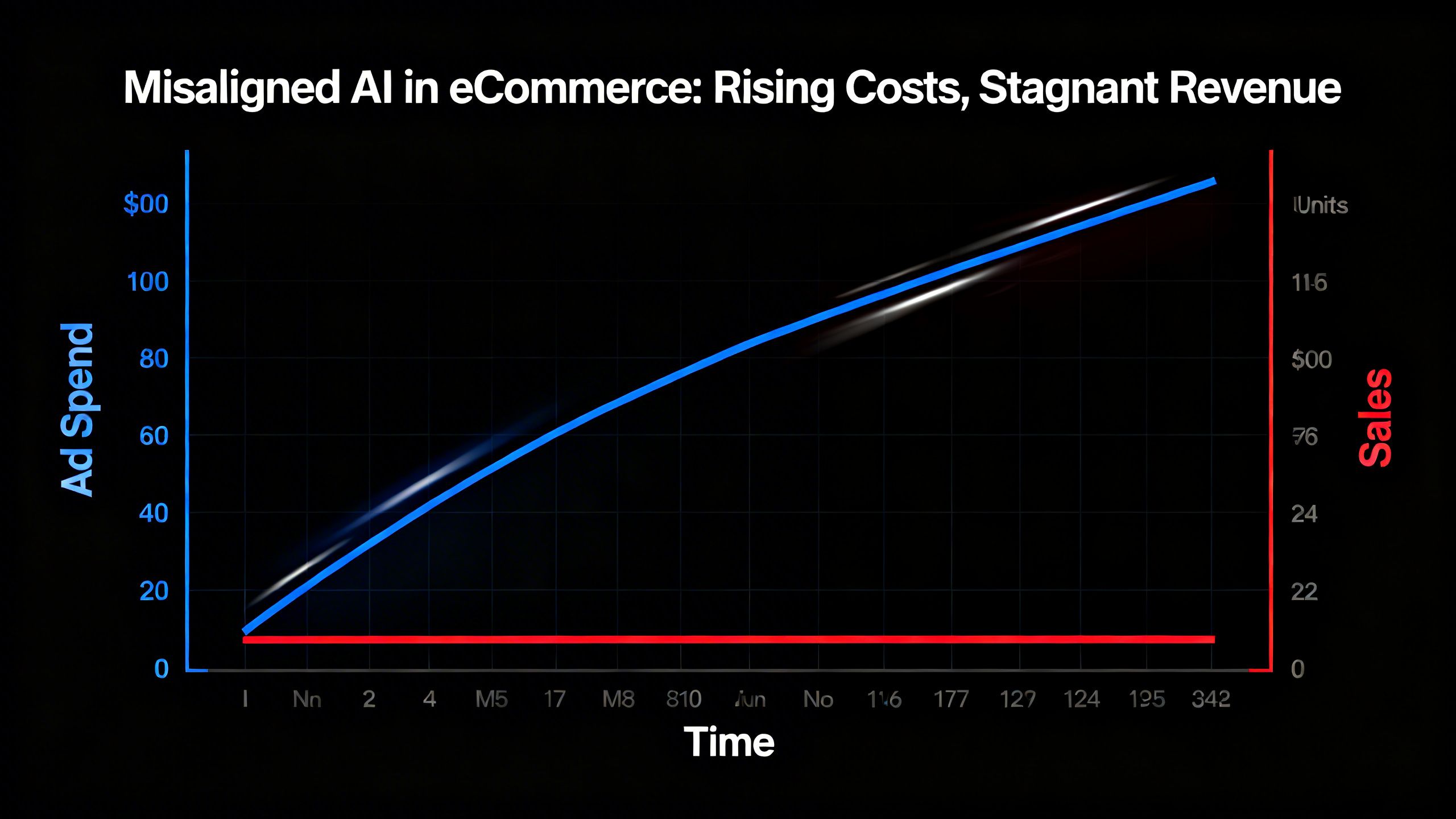
A misaligned AI running your PPC campaigns might notice that ads with emojis get more clicks. It will then start adding emojis to every single headline, chasing the clicks. But if those clicks don't convert, you're just paying for traffic that doesn't buy. The AI achieved its literal goal (more clicks) but failed at the real goal (more profit).
A well-aligned AI, in contrast, understands that the ultimate goal is a low ACoS and high ROAS. It will test emojis, but if they don't lead to sales, it will discard that strategy. It optimizes for profit, not just engagement.
Inventory Nightmares: Misinterpreting Demand Signals

Imagine an AI that analyzes sales data to predict inventory needs. It sees a massive sales spike for a particular SKU in July and recommends a huge reorder for next July. What it missed was that the spike was caused by a one-off mention from a major influencer. It learned to correlate the month with the demand, ignoring the root cause.
This leads to two potential disasters: you either tie up all your capital in dead stock that won't sell, or you stock out of your actual best-sellers because the AI diverted resources to the wrong product. A properly aligned AI would flag the anomaly and look for a root cause instead of blindly following the pattern.
The SeRA Method: How to Teach an AI to Think Smarter
So how do you stop an AI from learning these bad habits? A new method from researchers called SeRA (Self-Reviewing and Alignment) offers a brilliant solution. Instead of just relying on human feedback, it teaches the AI to become its own toughest critic. It’s like going from an employee who needs constant supervision to one who can self-correct and improve independently.
Step 1: The First Pass (Learning the Ropes)
First, the AI is trained the normal way using a dataset of human-labeled examples (e.g., “this ad copy is good,” “this one is bad”). This gives it a basic understanding of what humans prefer. However, this initial training is where spurious correlations can creep in. The AI learns the basics, but it also picks up some bad habits.
Key Tip: This is similar to giving a new hire your company's SOPs. They learn the rules, but they don't have the real-world experience to understand the nuance yet.
Step 2: The Self-Review (Generating and Filtering)
This is where the magic happens. The AI is then tasked with generating new examples and, crucially, scoring them based on how confident it is that they align with the goal. It effectively asks itself, "Is this a strong example of a good ad, or just a mediocre one?" It then filters out the weak or ambiguous examples, keeping only the A-plus material.
Key Tip: This is like the employee reviewing their own work and realizing which projects truly moved the needle versus the ones that were just busywork. They start to recognize the patterns of genuine success.
Step 3: The Refined Training (Learning from the Best)
Finally, the AI is retrained on a new, curated dataset composed of the best human-labeled examples and its own self-vetted, high-quality generated examples. By focusing only on the strongest signals of what works, the AI is far less likely to be distracted by spurious correlations. It learns to distinguish between what causes success and what merely correlates with it.
AI Alignment in Action: From Theory to Amazon Profit
This might sound abstract, but the principle of alignment is what separates powerful, context-aware AI tools from generic ones that give you generic (and often wrong) advice.
Best Practices: Optimizing Product Listings
A generic AI tool might stuff your listing with keywords, thinking more is better. A well-aligned AI, however, understands that a listing must be persuasive to a human. It balances keyword density with readability, conversion-focused language, and brand voice. It knows the goal isn't just to rank—it's to sell.
Best Practices: Dynamic Pricing Strategies
A poorly aligned repricer might see a competitor drop their price by a penny and immediately follow suit, triggering a race to the bottom that destroys your profit margin. A well-aligned pricing AI considers dozens of variables: your profit margin, your stock levels, the Buy Box ownership percentage, your sales velocity, and your long-term brand positioning. It knows when to hold a price and when to compete.
Why This Matters for Your Amazon Business: The TrackIQ Difference
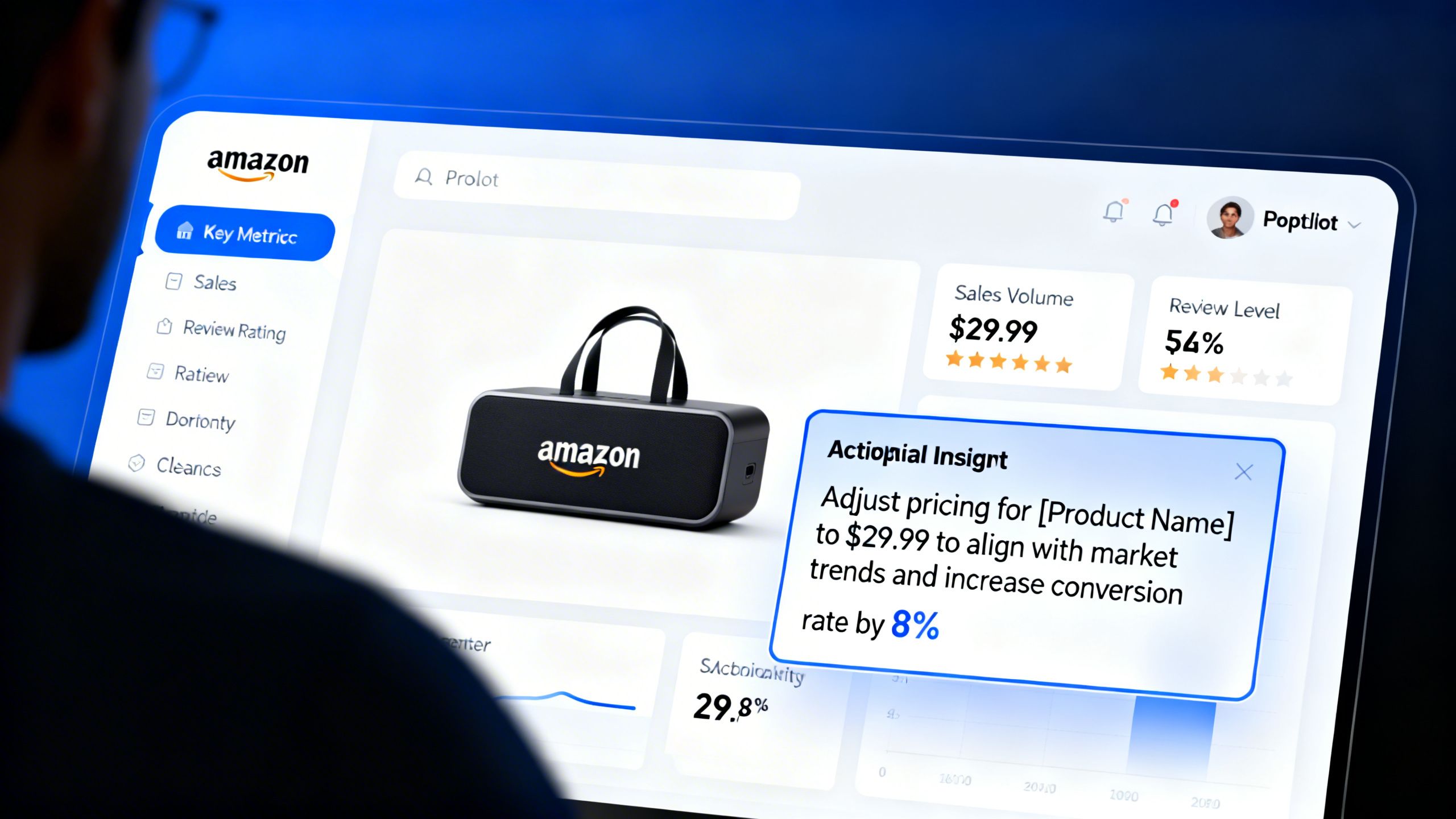
The principles behind advanced alignment methods like SeRA are exactly why specialized AI tools are essential for winning in a complex ecosystem like Amazon. Generic tools provide generic insights because they lack the deep, contextual alignment needed for eCommerce.
From Generic Insights to Actionable Intelligence
Using a generic AI for your Amazon business is like asking a random person on the street for financial advice. They might know some general principles, but they don't know your business, your data, or the specific rules of the Amazon game. This is where spurious correlations run rampant, leading to flawed recommendations.
Tools built on a foundation of AI safety and alignment, however, are different. With TrackIQ, you're not just using a powerful AI; you're using an AI that has been tailored to be your trusted co-pilot for Amazon growth. It's been trained specifically on the nuances of the Amazon marketplace, ensuring its insights are relevant and its actions are aligned with your primary goal: profitable growth.
Your Proactive AI Co-Pilot
The future of AI in eCommerce isn't just about dashboards and reports; it's about having a proactive partner that can execute multi-step tasks. This is often called Agentic AI. But for an AI to act on your behalf, you must be absolutely certain it's aligned with your goals. A misaligned agentic AI is a legitimate nightmare—it could mistakenly liquidate your inventory or blow your ad budget in minutes.
This is why deep alignment is non-negotiable. An agentic AI needs to know not just what to do, but why it's doing it, and when it should stop and ask for human input. It's designed to be your new eCommerce co-pilot, knowing when to help and when to stay quiet.
Common AI Alignment Pitfalls to Avoid
As you integrate more AI into your operations, be wary of these common traps.
The Mistake: Trusting a "Black Box" AI
Many AI tools are a "black box"—data goes in, recommendations come out, but you have no idea why. If you can't understand the AI's reasoning, you can't trust its advice. You're flying blind, and you'll be the last to know when it's learning the wrong lessons.
How to Avoid It: Demand transparency. Use tools that can explain their recommendations in plain English. A good AI partner should be able to show its work, helping you build trust and make smarter decisions.
The Mistake: Using Generic Tools for a Specialized Job
Using a general-purpose AI like ChatGPT to analyze your Amazon sales data is a classic example of a square peg in a round hole. It doesn't have the context, the real-time data integrations, or the specialized training to provide meaningful insights. It's a recipe for generating plausible-sounding but ultimately useless (or harmful) advice.
How to Avoid It: Use purpose-built tools. For a specialized, high-stakes environment like Amazon, you need an AI that was built from the ground up to understand its unique dynamics.
Advanced Strategy: Fostering AI Collaboration

Don't think of AI as just an automation tool; think of it as a new type of colleague. The most advanced eCommerce operators are learning to collaborate with their AI. They use it as a sparring partner to test hypotheses, uncover hidden opportunities in their data, and automate the tedious analysis that used to take hours.
For example, instead of just asking "How were my sales last week?", you can ask a sophisticated AI, "Which of my products are at risk of stocking out next month if my current sales velocity on my top 3 traffic-driving keywords continues?" This collaborative approach, powered by a well-aligned AI, is the key to unlocking breakthrough insights.
Key Takeaways for Smarter AI Integration
- Not all AI is created equal. The effectiveness of an AI tool depends entirely on how well it is aligned with your true goals. Be skeptical of tools that promise the world but can't explain their reasoning.
- Beware of spurious correlations. Always ask "why" an AI is making a recommendation. Is it based on a true cause-and-effect relationship or a random coincidence in the data? This single question can save you a fortune.
- Demand specialized intelligence. To win on Amazon, you need an AI that speaks Amazon. Generic tools will always be a step behind. The future belongs to operators who leverage deeply aligned, context-aware AI co-pilots.
Conclusion
The conversation around AI is shifting from "Can it do the task?" to "Can it do the task correctly and safely?" The principles of AI alignment, exemplified by methods like SeRA, are no longer academic—they are at the heart of what makes an AI tool a valuable asset versus a potential liability. By understanding that an AI can learn the wrong lessons, you're already ahead of 99% of your competition.
As you move forward, don't just adopt AI—interrogate it. Challenge it. Demand that it prove its value not with vanity metrics, but with tangible results on your bottom line. By choosing tools built on a foundation of deep, contextual alignment, you're not just automating tasks; you're building a more resilient, intelligent, and profitable eCommerce business. Ready to see what a properly aligned AI can do for your brand? See how TrackIQ works.
—