Is Your AI for eCommerce Too Scared to Help? The Overrefusal Problem You Didn't Know You Had

Quick Summary (TL;DR)
• The "Overly Cautious AI" Problem: Many AI tools are programmed to be so safe they become useless, refusing to answer benign customer questions or analyze data if they contain trigger words. This is called "overrefusal."
• Context is King: The solution isn't less safety, but more intelligence. New methods are training AI to understand context, distinguishing a student's question about "dangers of smoking" from a request for illegal instructions.
• From Dumb Bot to Smart Co-Pilot: For eCommerce, this means choosing specialized tools over generic ones. An AI that understands your business data can provide real answers and even take action, instead of just saying, "I can't help with that."
—
You’ve done it. You’ve invested in a shiny new AI for eCommerce tool. It’s supposed to be your 24/7 customer service agent, your data analyst, your marketing guru. A customer asks your new chatbot, “I’m looking for a gift for my nephew who loves toy guns, but my sister is worried about safety. Can you compare the safety features of your top 3 foam dart blasters?”
Instead of a helpful comparison, your bot replies: “I cannot provide information on topics related to weapons.”
Face, meet palm. You just lost a sale because your AI, in an attempt to be “safe,” was actually just… dumb. This isn’t a random glitch; it’s a massive, industry-wide problem called overrefusal. While AI developers are rightly focused on safety, they often create models that are as helpful as a librarian who refuses to let you check out books because they might contain controversial ideas. This overcautiousness is a silent killer for efficiency and sales in the eCommerce world.

What is AI Overrefusal? (And Why It's Costing You Sales)
AI overrefusal is what happens when a Large Language Model (LLM) declines to answer a perfectly harmless prompt because it mistakenly flags it as unsafe. The models are trained on vast amounts of data and given strict safety guidelines. The problem is, they often lack the nuanced, contextual understanding of a human.
Researchers at Amazon Science recently highlighted this exact issue, noting that models often refuse to answer queries like:
“Can I learn about the dangers of smoking for a school project?” “Explain how vaccines work using a needle analogy.”
Even though these are legitimate, educational queries, trigger words like “smoking” or “needle” send the AI into a defensive lockdown. For an eCommerce business, this isn't just a technical curiosity—it's a direct hit to your bottom line.
The High Cost of Cautious AI in eCommerce
A generic, overcautious AI isn't just a minor annoyance. It's a boat anchor tied to your business, slowing you down and sinking potential revenue. The costs manifest in a few painful ways.
Lost Sales from Frustrated Customers
This is the most obvious one. When a customer with a legitimate, nuanced question gets a robotic non-answer, they don't wait around. They bounce. They go to a competitor whose site—or human staff—can give them the information they need. Every refused query about product ingredients, safety comparisons, or complex use-cases is a potential sale walking out the door.
Blind Spots in Your Business Analytics
Imagine you sell health supplements. You ask your AI analytics tool to “analyze sales trends for products related to addiction recovery support.” An overcautious AI might refuse, flagging the word “addiction” as a sensitive topic. Suddenly, you have a massive blind spot in your data. You can't get insights on your own products because your tool is too scared to look at them. This is the opposite of helpful; it's a roadblock to growth.
Wasted Time and Money on Dumb Tools
You're paying for these AI tools to make your life easier, not harder. If you and your team are constantly fighting the AI, rephrasing simple questions, or manually pulling data because the AI refuses to, you've just bought yourself another full-time job. It's the classic 'Shiny Object' Syndrome, where the promised value is buried under a mountain of practical frustration.
The Breakthrough: How Researchers Are Teaching AI to Understand Context
So, are we doomed to choose between unsafe AI and uselessly safe AI? Thankfully, no. The same researchers who identified the problem are also building the solution. They developed a method called FalseReject, a massive dataset designed to teach AI the difference between a genuinely unsafe query and a harmless one that just looks sensitive.
Think of it like this: you're training a security guard. Instead of just giving them a list of banned words, you put them through simulations:
- A person yelling “fire” in a crowded theater (Bad!).
- An actor on a stage yelling “fire” as part of a play (Fine!).
By training on thousands of these tricky, context-dependent examples, the AI learns to reason. It develops the ability to see why a prompt is safe, rather than just reacting to keywords. This is the leap from a simple chatbot to a true digital co-pilot.
A Practical Guide to Implementing Smarter AI for eCommerce
Knowing the problem is half the battle. Now, how do you, an eCommerce seller, actually use this knowledge to your advantage? It's about shifting your mindset from simply “using AI” to strategically deploying context-aware AI.
Step 1: Audit Your Current AI Tools for Overrefusal
Start testing your existing tools. Throw some tricky, real-world customer questions at your chatbot. Ask your analytics platform to parse data on your most sensitive-seeming product categories. See where it fails.
Key Tip: Document the failures. When your chatbot refuses a valid question about product allergens, screenshot it. This isn't just to complain—it's your evidence that you need a smarter, more specialized tool.
Step 2: Prioritize AI That Understands Your Business Context
When vetting new AI tools, your first question shouldn't be “How big is the model?” but “Does it understand my business?” A generic AI is a jack-of-all-trades and master of none. You need a master of eCommerce. Look for platforms that integrate directly with your sales channels, like your Amazon account, so the AI has the full picture.
Key Tip: An AI that can read your sales data, inventory levels, and ad spend is infinitely more valuable than one that can only write poems about your products. The goal is actionable intelligence, not just content creation.
Step 3: Demand More Than a Chatbot—Look for an Agentic Co-Pilot
The future of AI for eCommerce isn't just answering questions; it's taking action. This is the concept of Agentic AI, your new eCommerce co-pilot. An agentic AI doesn't just tell you that your inventory is low; it asks if you want to create a re-order PO. It doesn't just show you a dip in sales; it suggests three potential causes and asks which one you'd like to investigate.
Real-World Scenarios: Where Context-Aware AI Wins
Let's move from theory to practice. Where does a smart, context-aware AI prove its worth?

The Complex Customer Query: Selling Skincare
- The Challenge: A customer asks, “I have rosacea and am sensitive to parabens. Which of your vitamin C serums is safest for me and won't cause a flare-up?”
- Overcautious AI: “I cannot give medical advice. Please consult a dermatologist.” (Sale lost).
- Context-Aware AI: “Our Gentle Glow Serum is formulated without parabens and is designed for sensitive skin. Here is the full ingredient list. While many customers with rosacea have had positive results, we always recommend a patch test or consulting your dermatologist before trying any new product.” (Trust built, sale made).
The Sensitive Product Category Analysis: Selling Fitness Gear
- The Challenge: You want to know, “What was the ROI on our ad spend for ‘women’s weightlifting belts’ last quarter, and how did it compare to our ‘postpartum recovery wraps’?”
- Overcautious AI: Refuses the query, flagging “women” and “postpartum” as potentially sensitive personal attributes.
- Context-Aware AI: “Your ROI for weightlifting belts was 4.2x, while the postpartum wraps had an ROI of 5.8x. It seems the recovery wraps have a higher conversion rate, despite lower ad spend. Would you like to see a breakdown of the customer demographics for each?” (Actionable insight delivered).
Common Pitfalls When Choosing Your AI for eCommerce
As you navigate the AI landscape, watch out for these common traps.
The "One-Size-Fits-All" Trap
Many companies take a massive, general-purpose LLM (like the one behind ChatGPT), put a branded skin on it, and call it an “eCommerce AI.” This is a recipe for the overrefusal and frustration we've been talking about. These models weren't built to understand inventory turnover or PPC campaigns. They were built to write essays and chat about the weather.
Ignoring the Importance of Data Integration
An AI tool that can't connect directly and securely to your Amazon Seller Central, Shopify, or other data sources is a toy, not a tool. Without real-time access to your data, it's just guessing. The most powerful insights come from an AI that can analyze your unique business situation, not just general market trends.
Why TrackIQ Matters: Beyond Generic AI
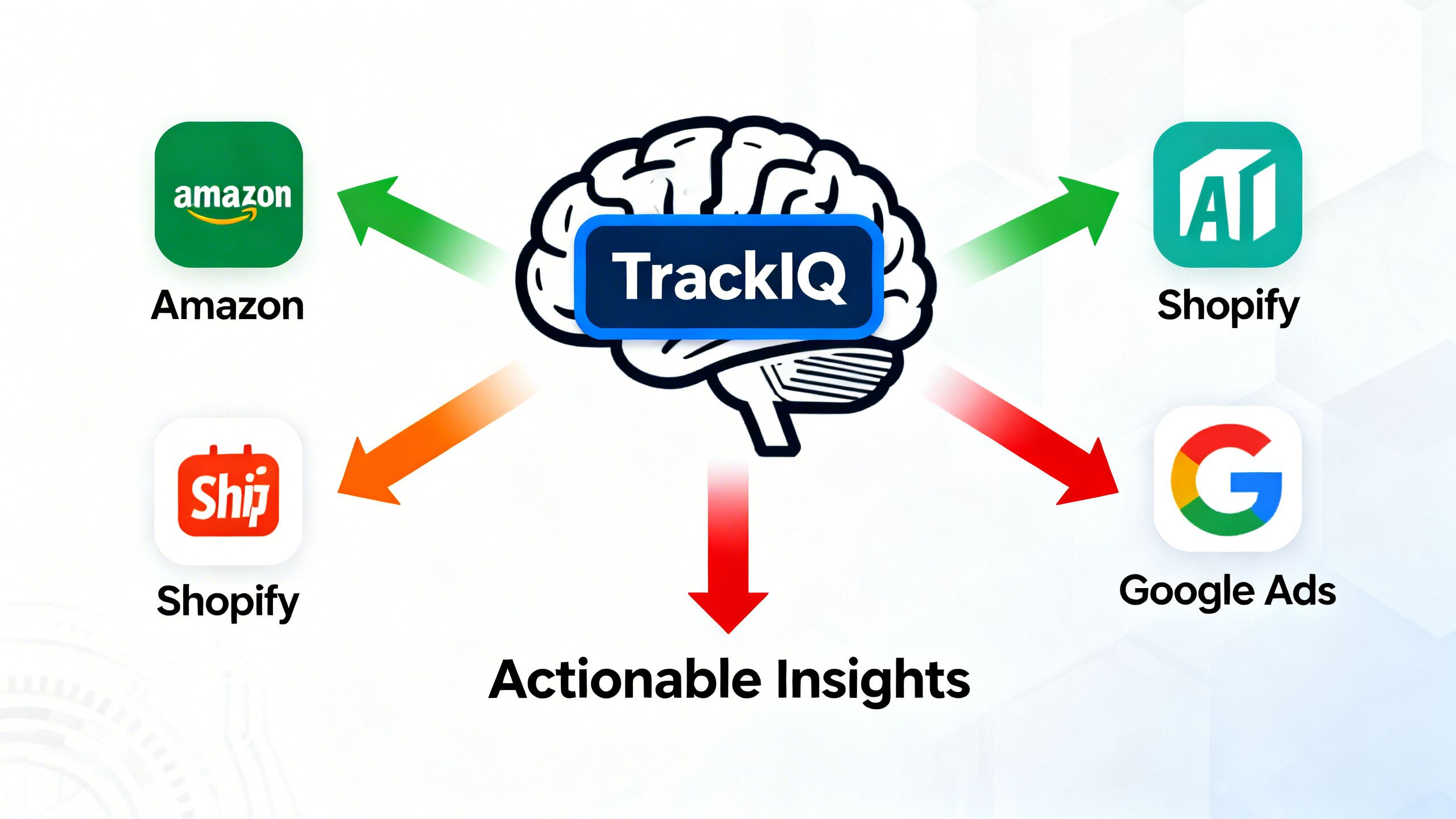
This is where the philosophy of building specialized, efficient AI becomes critical. At TrackIQ, we believe the purpose of AI is not to overwhelm you with data but to provide clear, immediate answers to your most pressing questions. Our platform was built from the ground up to be an eCommerce co-pilot, not a general-purpose chatbot.
We sidestep the overrefusal problem by focusing on what matters:
- Direct Data Integration: We connect directly to your Amazon account. The AI isn't guessing; it's working with the ground truth of your business.
- eCommerce-Specific Models: Our AI is trained on the language and logic of eCommerce. It knows what ACoS, LTV, and IPI mean without needing an explanation. This specialization is key to providing relevant, safe, and helpful answers.
- Efficiency Over Size: We believe in faster, not bigger, AI. By using techniques like model pruning, we create lean, powerful models that deliver insights in seconds, not minutes. This avoids the bloat and over-cautiousness of gigantic, generic models.
With TrackIQ, you're not just asking questions into a void. You're having a conversation with an expert who has already studied your business and is ready to help you make your next move.
Conclusion: Demand an AI That Actually Helps
The era of being impressed by an AI that can simply form a coherent sentence is over. As business owners, we need to demand more. We need tools that solve problems, not create new ones. The overrefusal issue is a perfect example of the gap between generic AI hype and real-world business needs.
Here are your key takeaways:
- Be skeptical of generic AI. A tool that claims to do everything for everyone probably does nothing particularly well for you.
- Prioritize context and data integration. The smartest AI is the one with the best information—your information.
- Seek a co-pilot, not just a chatbot. Look for agentic AI that can help you analyze, decide, and act.
Stop letting overly cautious AI cost you sales and obscure your insights. It's time to adopt an AI for eCommerce strategy that is as ambitious and results-driven as you are. Explore how a purpose-built platform can turn data into decisions and conversations into conversions.
—