From Brown Box to Green Future: The eCommerce Seller's Guide to Sustainable Packaging
Quick Summary (TL;DR)
• The Future is Bio-Based: New materials like biopolyesters are no longer just lab experiments. They're being trialed in real-world eCommerce operations, proving they can replace traditional plastics without sacrificing performance or customer satisfaction.
• AI is Your Sorting Hat: The biggest hurdle with new materials is recycling them effectively. AI-powered robotics are emerging as the key to sorting complex, mixed waste streams, making a true circular economy for plastics a real possibility.
• Sustainability Sells (and Saves): Customers are actively seeking greener options. Adopting sustainable packaging isn't just an ethical choice; it's a powerful strategy to build brand loyalty, attract conscious consumers, and future-proof your business against new regulations.
—
Let’s be honest. We’ve all felt that little pang of “cardboard guilt.” You order a tiny item online, and it arrives in a box big enough to house a cat, cushioned by a sea of plastic air pillows. As an eCommerce seller, you're on the other side of that equation, shipping out hundreds or thousands of those boxes. The sheer volume of packaging waste in eCommerce is staggering, and both customers and regulators are taking notice.
But what if this massive problem is actually a massive opportunity? What if the shift towards sustainability isn't a cost center, but your next competitive advantage? The conversation is moving beyond just using less plastic. We're entering an era of intelligent materials, AI-driven recycling, and a circular economy that could redefine how we ship and sell products. This isn't some far-off fantasy; it's happening now, and the brands that get on board early are the ones that will win the future of eCommerce.
What Exactly Is Sustainable Packaging Anyway?
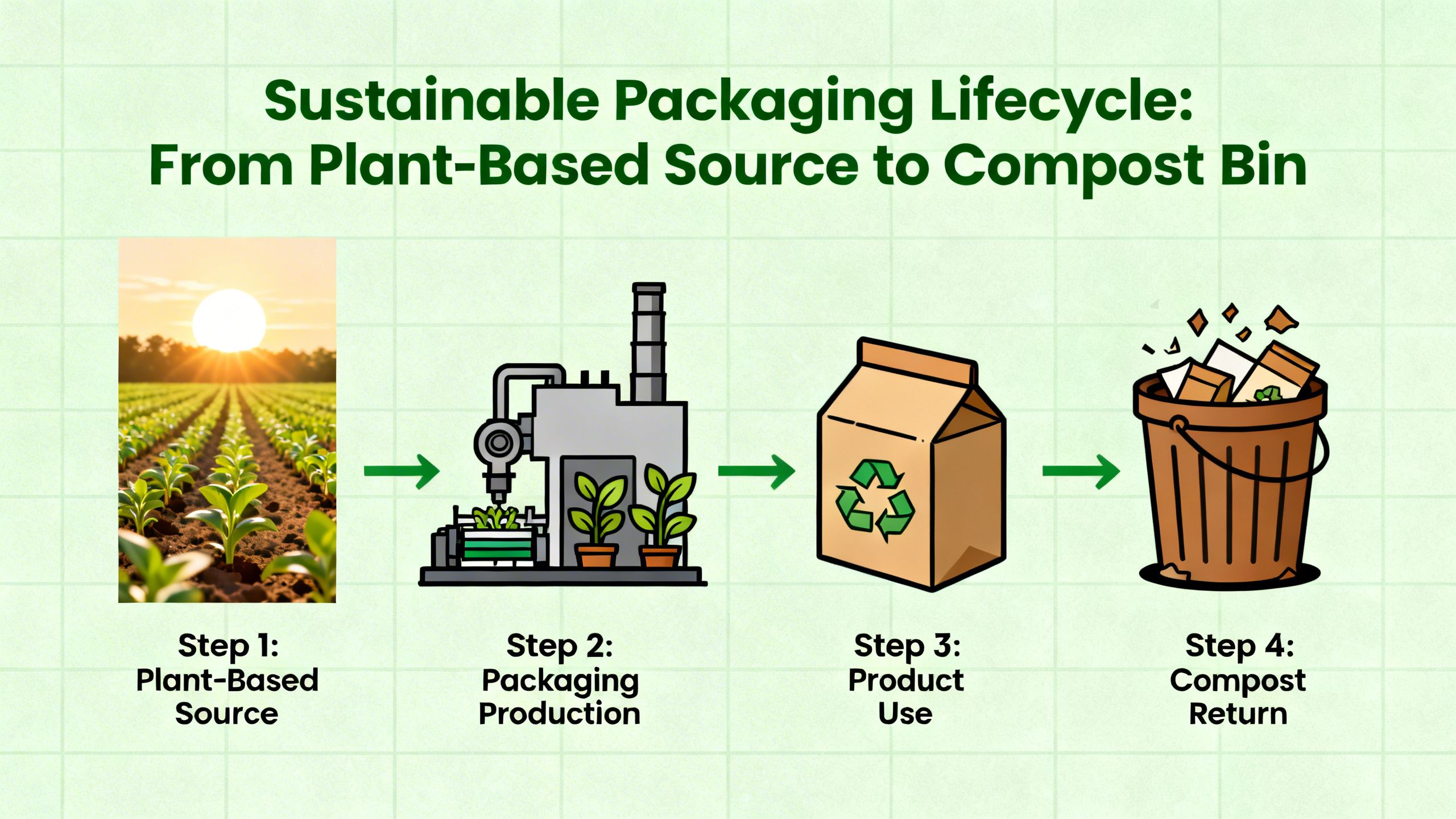
When we talk about sustainable packaging for eCommerce, we're moving beyond just “recyclable.” It’s a holistic approach that considers the entire lifecycle of a package. This includes:
- Materials: Sourced from renewable resources (like plants) instead of finite ones (like petroleum).
- Production: Manufactured using clean energy and minimal waste.
- Use: Designed to be lightweight and efficient, reducing shipping emissions.
- End-of-Life: Can be easily reused, recycled, or composted by the end consumer.
The most exciting frontier is in biopolyesters. Think of materials like polylactic acid (PLA) or polyhydroxyalkanoates (PHAs). These are plastics derived from renewable resources that are not only biodegradable but can also be chemically broken down and reformed into new materials, creating a closed-loop system.
Why Going Green Isn't Just for Tree-Huggers Anymore
Adopting sustainable practices is one of the smartest business decisions you can make today. It’s about building a resilient, forward-thinking brand that customers love and trust.
Win Over Conscious Consumers: The New Brand Loyalty
Today's buyers vote with their wallets, and they're increasingly choosing brands that align with their values. Nielsen reports that 73% of global consumers say they would definitely or probably change their consumption habits to reduce their impact on the environment.
By showcasing your commitment to sustainability, you're not just selling a product; you're selling a story and an identity that people want to be a part of. This builds a stickier, more meaningful form of brand loyalty than any discount code ever could.
Future-Proof Your Operations: Get Ahead of Regulations and Costs
Governments worldwide are cracking down on single-use plastics and packaging waste. Extended Producer Responsibility (EPR) laws are becoming more common, making sellers financially responsible for the end-of-life of their packaging.
By proactively switching to sustainable alternatives, you're not just complying with future laws—you're getting ahead of them. This insulates your business from potential fines and sudden operational pivots. Furthermore, as the technology for materials like biopolyesters scales, their costs will decrease, while the costs associated with traditional, petroleum-based plastics are likely to rise due to regulation and scarcity.
Your Step-by-Step Playbook for Adopting Sustainable Packaging
Making the switch can feel daunting, but it's a journey of a thousand small steps. Here’s how to get started.
Step 1: Conduct a Packaging Audit
You can't improve what you don't measure. Start by analyzing every single piece of packaging you use, from the outer box to the tape, filler, and product wrap. Ask yourself:
- Is this component necessary?
- Is it made from recycled or sustainable materials?
- Can it be easily recycled or composted by my customer?
- Could a smaller or lighter version do the same job?
Key Tip: This is a data-gathering mission. Create a simple spreadsheet to track each packaging component, its material, its weight, and its cost. This will become your roadmap for optimization.
Step 2: Explore Your Material Options
Once you know what you're using, you can explore alternatives. The market for green materials is exploding. Look into:
- Biopolyesters: For applications where you need plastic-like properties (e.g., moisture barriers), materials like PLA or PHA blends are becoming viable. Amazon's trials with Novamont's Mater-Bi bags show they can perform on par with conventional plastics.
- Mushroom or Seaweed Packaging: Excellent for molded inserts to replace styrofoam.
- Air Pillows from Recycled Materials: If you need filler, choose options that are both recycled and recyclable.
- Water-Activated Tape: A recyclable alternative to plastic packing tape.
Key Tip: Don't just look at the material; consider the supplier's certifications (e.g., Forest Stewardship Council for paper, BPI for compostability) to ensure their claims are legitimate.
Step 3: Run Small-Scale Tests
Before you overhaul your entire operation, run a pilot program. Ship a small batch of orders with your new packaging and see how it holds up. Get feedback from your warehouse team on ease of use and from a few trusted customers on their unboxing experience.
Amazon's trials in Italy showed that new biopolyester bags had no negative impact on operational efficiency. In Spain, they actually saw improvements in quality metrics, with fewer damaged items. Testing is crucial to validate performance.
Sustainable Packaging for eCommerce: Best Practices from the Bleeding Edge
Designing for Disassembly (and Recycling)
The easier you make it for the customer to do the right thing, the more likely they are to do it. This means designing your packaging for easy sorting. For example, if your product is in a glass jar (recyclable) with a plastic label (not always), can you use a paper label or print directly on the glass?
This is where the work of companies like Glacier, which uses AI-powered robots to sort materials, becomes so important. Their trials found that packaging with consistent, visible features was identified correctly 99% of the time. Designing with the end-of-life sorting process in mind is the next level of sustainable design.
Telling Your Green Story (Without Greenwashing)
If you're investing in sustainability, you should absolutely tell your customers about it. Use a small icon on your box, a note in the package, or a dedicated page on your website to explain what your packaging is made of and how to dispose of it correctly.
Be specific and honest. Instead of a vague claim like "eco-friendly," say "This box is made from 90% post-consumer recycled cardboard and is fully recyclable." Transparency builds trust; exaggeration destroys it.
Lessons from the Front Lines: Amazon's Bioplastic Experiments
To see how this works in the real world, look no further than Amazon's own trials.
The Compostable Produce Bag Test
In Seattle, Amazon Fresh stores tested biopolyester produce bags. The result? Customers loved them, with 83% reporting they "really liked" the new compostable bags. While long-term storage performance varied by produce type, it proved that for many applications, the switch was a win-win for customer perception and functionality.
Reinventing the Fulfillment Prep Bag
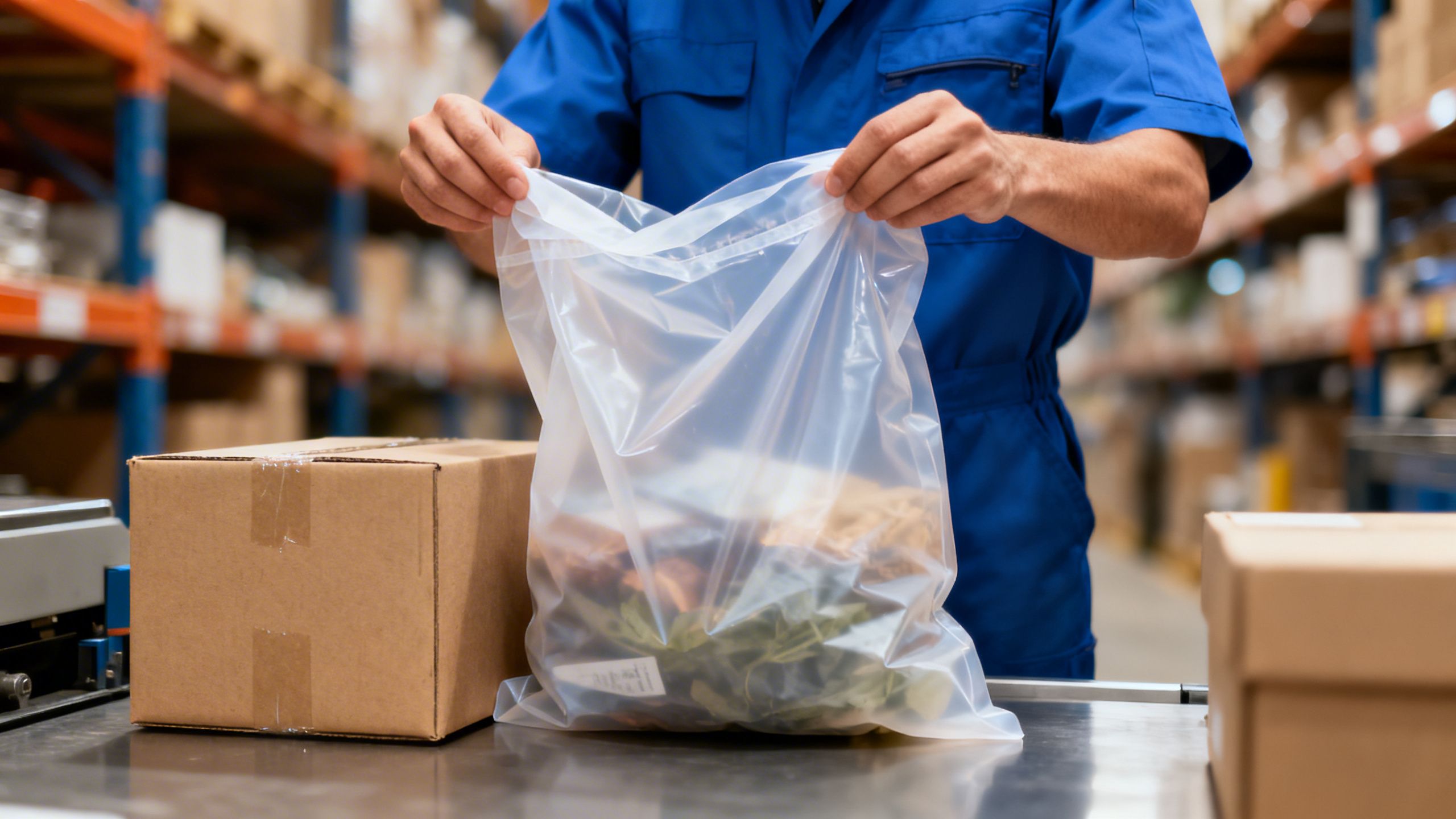
In European fulfillment centers, Amazon trialed biopolyester prep bags. The feedback from associates was overwhelmingly positive: the bags were just as easy to use as traditional plastic, causing no slowdowns in operations. This is a critical proof point: going green doesn't have to mean sacrificing efficiency.
Common Traps on the Path to Sustainability
The "Greenwashing" Boomerang
Making false or exaggerated claims about your sustainability efforts is called greenwashing, and it's a one-way ticket to losing customer trust. Consumers are savvy and have access to more information than ever. If your "eco-friendly" claims are just marketing fluff, you will be called out. Honesty and transparency are your only currency.
Forgetting the Full Lifecycle
A material might be compostable, but if there are no commercial composting facilities in the regions where you sell, is it truly a sustainable choice for your customers? A truly sustainable approach considers the entire system, from sourcing to the practical end-of-life options available to the end user. Don't just choose a material; understand its entire journey.
Why TrackIQ Matters: The AI Co-Pilot for a Complex World
Building a sustainable value chain is a complex challenge. It requires sifting through immense amounts of data—from material science and supply chain logistics to AI-powered sorting and customer feedback—to make intelligent decisions. This is a perfect parallel to the challenges of scaling an Amazon business.
Your Amazon business is its own complex ecosystem of inventory, advertising, pricing, and competitor data. Trying to manage it all manually is like trying to sort a mixed waste stream by hand—inefficient and prone to error. This is where having an AI co-pilot becomes a game-changer.
Platforms like TrackIQ act as your command center, turning chaotic data into clear, actionable insights. It automates the tedious work of monitoring performance and surfaces opportunities you didn't even know to look for. By handling the day-to-day complexities, it frees you up to focus on the big-picture strategic initiatives that truly drive growth—like building a more sustainable brand. Just as AI is needed to solve the future of plastics, it's needed to win in the future of eCommerce. Understanding how it works reveals how you can spend less time in spreadsheets and more time building a brand that matters.
Conclusion: Your Green Journey Starts Now
Transitioning to sustainable packaging for eCommerce is no longer a niche trend; it's a fundamental shift in how business is done. The technology, materials, and consumer demand are finally aligning to make it not just possible, but profitable.
Here are your key takeaways:
- Start Small, Think Big: You don't need to change everything overnight. Start with a simple packaging audit and identify one or two easy wins.
- Embrace New Materials: Keep an eye on innovations in biopolyesters and other bio-based materials. They are the future of packaging.
- Tell Your Story Authentically: Use your sustainability efforts as a way to connect with customers on a deeper level. Be honest, be transparent, and educate them on how to be part of the solution.
The path to a circular economy is complex, but it's a journey worth taking. By embracing sustainable packaging, you're not just reducing waste; you're building a stronger, more resilient, and more beloved brand for the future. Free up your time with smart automation and start building that future today.
—