Beyond the Chatbot: How Agentic AI is Your New eCommerce Co-Pilot

Quick Summary (TL;DR)
• What is Agentic AI?: It's not just a chatbot. Agentic AI are systems that don't just answer questions—they take action and complete complex tasks on your behalf, like managing ad spend or reordering inventory.
• Why It Matters: Agentic AI automates the soul-crushing manual work that bogs down sellers. It moves beyond simple analytics to become a proactive partner that executes strategies, saving you time and uncovering hidden revenue.
• The Bottom Line: By delegating tasks to an AI co-pilot, you can focus on high-level strategy instead of getting lost in spreadsheets. It's about making decisions faster and more accurately than your competitors.
—
It's 2 AM. You're staring at a spreadsheet, cross-eyed, trying to figure out why your top-selling SKU is suddenly tanking. Your coffee is cold, and your brain feels like mush. Every eCommerce seller has been there, drowning in a sea of data, reports, and endless manual tasks. What if you had a partner who could not only analyze that data but also act on it for you, even while you sleep?
That's the promise of Agentic AI. Forget the simple chatbots you've seen. We're talking about a true eCommerce co-pilot that can autonomously manage ad campaigns, forecast inventory needs, and flag issues before they become catastrophes. This isn't science fiction; it's the new frontier for competitive eCommerce, and it’s leveling the playing field for sellers who want to scale without scaling their headcount.
This guide will break down what Agentic AI is, how it's revolutionizing eCommerce operations, and how you can put your own AI co-pilot in the driver's seat to grow your business.
What Exactly is Agentic AI?
Let's cut through the buzzwords. Agentic AI refers to artificial intelligence systems that can proactively perform tasks to achieve a specific goal without step-by-step human instruction.
Think of the difference between a GPS and a self-driving car:
- Traditional AI (The GPS): It can analyze data and give you directions. It tells you what to do.
Turn left in 500 feet. - Agentic AI (The Self-Driving Car): It takes the directions and drives the car for you. It understands the goal—get to the destination—and handles the steering, acceleration, and braking to make it happen.
In eCommerce, this means an AI that doesn't just show you a dashboard of your ACoS (Advertising Cost of Sale); it actively adjusts your bids on underperforming keywords to fix your ACoS.
Why Agentic AI is a Game-Changer for eCommerce
Adopting agentic AI isn't just about adding another tool to your tech stack. It's a fundamental shift in how you operate, moving from reactive problem-solving to proactive, automated optimization.
Benefit 1: Automating the Mind-Numbing Grunt Work
Every seller spends hours on repetitive tasks: pulling reports, adjusting ad bids, monitoring inventory levels, and tracking competitors. Agentic AI takes over this workload, executing complex workflows 24/7 with perfect accuracy.
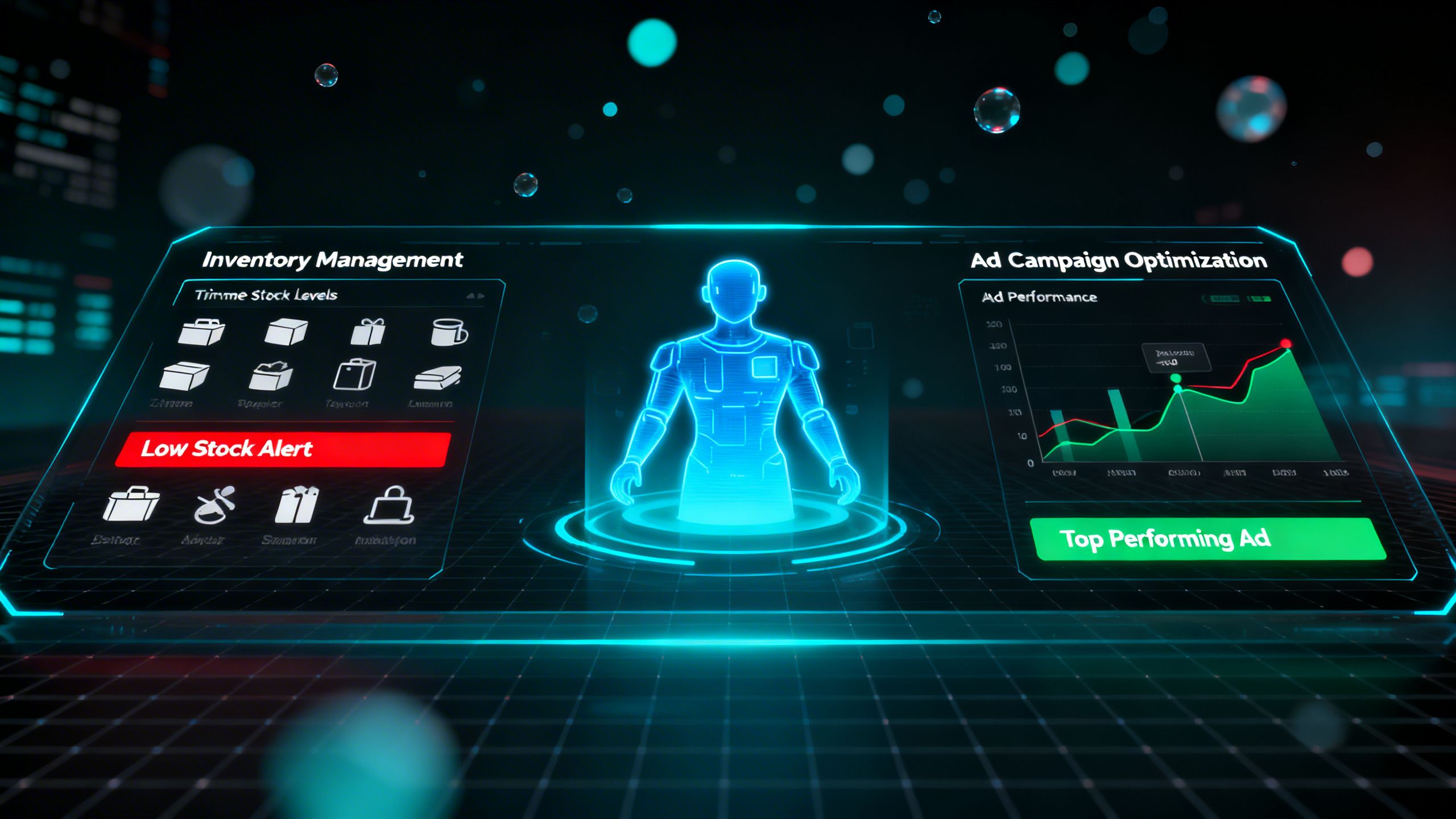
Imagine an agent that monitors your PPC campaigns. It sees a keyword's conversion rate drop and automatically lowers the bid. It notices a competitor just ran out of stock on a competing product and increases your ad spend to capture their market share. This isn't just automation; it's intelligent action.
Benefit 2: Making Decisions at Machine Speed
The eCommerce landscape changes in minutes, not days. A competitor can launch a flash sale, a TikTok video can make your product go viral, or a supply chain delay can threaten a stockout. Humans can't possibly react to every variable in real-time. Agentic AI can.

By processing thousands of data points simultaneously, an AI agent can make immediate, optimal decisions. For example, it can implement dynamic pricing, raising the price slightly during peak demand and lowering it to liquidate slow-moving stock, all based on rules you define.
A Practical Guide to Deploying Your AI Co-Pilot
Getting started with agentic AI doesn't require a PhD in machine learning. It's about identifying the right tasks to delegate and giving the AI the right data and goals.
Step 1: Identify Your Biggest Time Sinks
Before you can automate, you need to know what's holding you back. Make a list of the most repetitive, time-consuming tasks in your daily operations. Good candidates for agentic AI include:
- PPC Management: Adjusting bids, pausing poor-performing keywords, and allocating budget.
- Inventory Forecasting: Calculating reorder points and quantities based on sales velocity and lead times.
- Competitor Monitoring: Tracking price changes, new product launches, and stock levels of your key competitors.
- Financial Reconciliation: Matching Amazon payouts to orders and identifying discrepancies.
Key Tip: Start with one well-defined problem. Don't try to boil the ocean. Pick the task that causes you the most pain and automate it first. Success here will build momentum.
Step 2: Connect Your Data Sources
An agent is only as smart as the data it can access. For an eCommerce agent to be effective, it needs a clean, centralized feed of information from all your critical platforms: your Amazon Seller Central account, your advertising console, your inventory management software, and your financial records.
Key Tip: This is where platforms designed for data integration shine. A system that unifies your data in one place is the foundation for any successful agentic AI strategy. Without a single source of truth, your AI will be flying blind.
Step 3: Define Your Goals and Set the Rules
This is the most important step. You are the pilot; the AI is the co-pilot. You need to give it clear instructions. This doesn't mean coding. It means setting business rules in plain language.
- Example Goal (PPC):
Maintain a target ACoS of 25%. - Example Rule:
If a keyword has over 5,000 impressions but zero sales in the last 14 days, pause it. - Example Rule:
If my main competitor for ASIN B0XXXXXXX goes out of stock, increase my daily ad budget for that product by 20%.
These rules create the playbook for your AI agent to follow, allowing it to operate autonomously within the strategic boundaries you've set.
Agentic AI in Action: Real-World eCommerce Scenarios
Let's move from theory to practice. How does this actually look for an Amazon seller?
The Autonomous Ad Manager: From Data Overload to Clear Action
- Challenge: A seller is running hundreds of PPC campaigns. They spend 10 hours a week downloading ad reports, pivoting data in Excel, and manually adjusting bids for thousands of keywords. They know they're missing opportunities but don't have the time to find them.
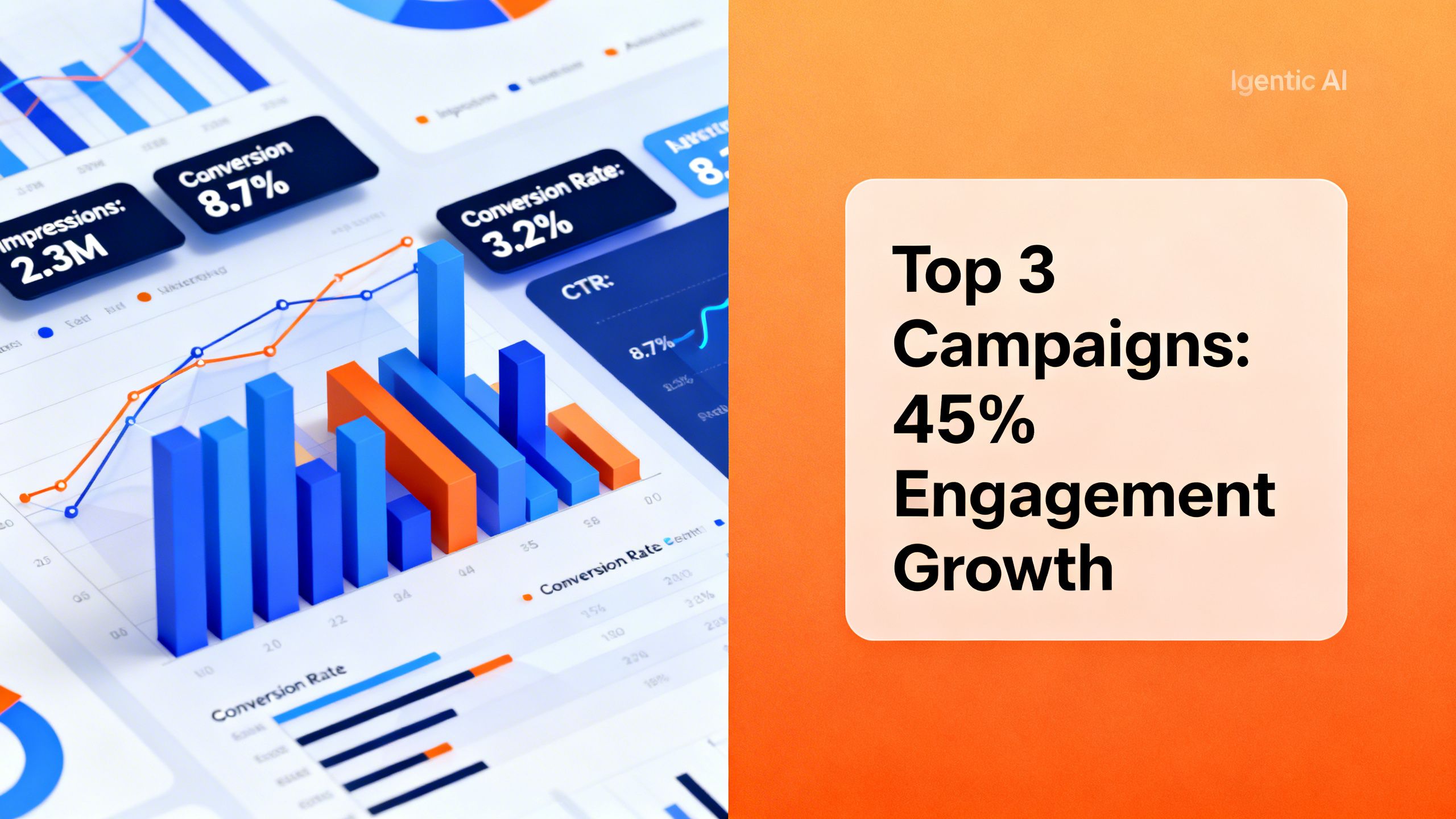
- Agentic Solution: An AI agent connects to their ad account. The seller sets a target ACoS and a few simple rules. The agent now works 24/7, analyzing performance in real-time. It automatically reallocates budget from wasteful campaigns to profitable ones and surfaces a simple insight: "Your top 3 keywords are converting 50% better in the evening. I've adjusted the budget to capture this trend."
- Result: The seller saves 10 hours a week, their ACoS drops by 15%, and sales increase by 8% without any change in total ad spend.
The Proactive Inventory Forecaster: Avoiding the Stockout Scourge
- Challenge: An agency managing 20 brands struggles with inventory. One brand stocks out of its best-seller during Prime Day, losing an estimated $50,000 in sales. Another brand is overstocked on a seasonal item, tying up cash and facing long-term storage fees.
- Agentic Solution: An AI agent integrates sales velocity, seasonality data, supplier lead times, and Amazon's inventory limits. It doesn't just show a dashboard; it sends a proactive alert: "Based on current sales trends, you will stock out of ASIN B0YYYYYYY in 22 days. To avoid this, you need to reorder 1,500 units from your supplier within the next 48 hours."
- Result: The agency avoids costly stockouts, reduces storage fees, and improves its Inventory Performance Index (IPI) score, unlocking more storage capacity.
Common Pitfalls to Avoid When Adopting Agentic AI
While powerful, agentic AI is not a magic wand. Success requires avoiding a few common traps.
The "Set It and Forget It" Trap: It's a Co-Pilot, Not an Autopilot
One of the biggest mistakes is thinking you can turn on an AI agent and walk away forever. Agentic AI is a powerful partner, but it still needs supervision. Market conditions change, new competitors emerge, and your own business goals may shift.
How to Avoid: Schedule regular check-ins (e.g., weekly) to review the actions your agent has taken and the results. Use its performance to refine your rules and strategy. The goal is collaboration, not abdication.
The "Garbage In, Garbage Out" Problem: Data Quality is Everything
An AI agent's decisions are only as good as the data it's fed. If your inventory records are inaccurate, your sales data is incomplete, or your cost of goods is wrong, the agent will make flawed decisions. It will just make them much, much faster.
How to Avoid: Before deploying an agent, perform a data audit. Ensure your core business data is clean, accurate, and centralized. This initial cleanup work will pay massive dividends by enabling your AI to operate on a foundation of truth.
Why TrackIQ Matters: From Insights to Action
This philosophy of fast, actionable, agentic AI is the foundation of TrackIQ. We believe the purpose of AI isn't to overwhelm you with more charts and graphs, but to provide clear answers and, more importantly, to take action on your behalf.
Our platform was built from the ground up to be an eCommerce co-pilot. It doesn't just show you what happened; it helps you decide what to do next and can even execute those decisions for you. Whether it's optimizing ad spend or forecasting inventory, TrackIQ turns your business strategy into automated action, freeing you to focus on what humans do best: building the brand.
Advanced Topic: Multi-Agent Systems & Chain-of-Thought Reasoning
For those who want to peek further into the future, the next evolution is multi-agent systems. This is where multiple specialized AI agents collaborate to solve even more complex problems. It's inspired by how expert teams work.
Imagine you're launching a new product. Instead of one AI, you have a team:
- The Market Analyst Agent: Scans competitors, pricing, and reviews to identify the best market position.
- The Logistics Agent: Calculates initial order quantity based on demand forecasts and supply chain constraints.
- The Marketing Agent: Designs and executes the PPC launch campaign.
These agents don't just work in silos. They use a process called "chain-of-thought" (CoT) deliberation, where they share their findings and reasoning with each other to arrive at a holistic, optimized plan. As recent research from Amazon Science shows, this multi-agent approach dramatically improves the quality and safety of AI-driven decisions. It's like having an entire executive team on call 24/7.
Conclusion: Your Business on Autopilot
We've covered a lot of ground, but the core message is simple. Here are the key takeaways:
- Agentic AI is an active partner, not a passive tool. It completes tasks for you, moving beyond simple analytics to intelligent automation.
- The biggest benefit is time. By delegating repetitive, complex work to an AI co-pilot, you reclaim hours every week to focus on strategy, product development, and customer relationships.
- Getting started is practical. Begin by identifying your biggest operational pain point and finding a tool that can automate it with clear, rule-based instructions.
—
The era of manually wrestling with spreadsheets to run your eCommerce business is coming to an end. The top sellers of tomorrow will be those who successfully partner with AI to make faster, smarter decisions. By embracing an agentic AI co-pilot, you're not just buying software; you're building a more resilient, efficient, and scalable business.
Ready to stop drowning in data and start automating your growth? See how TrackIQ can become your new eCommerce co-pilot.