Beyond Keywords: How Generative AI for eCommerce is Reinventing Product Discovery

Quick Summary (TL;DR)
• Old Search is Obsolete: Traditional, keyword-based search is slow and often misses user intent. It struggles to scale as your product catalog grows, leading to frustrating customer experiences.
• Generative AI is the Future: Instead of just matching keywords, generative retrieval understands context and creates a direct path to the right product, even from complex text and image queries.
• Speed Equals Sales: This new approach offers constant-time retrieval, meaning search is blazing-fast regardless of how many SKUs you have. Faster, more accurate results lead directly to higher conversion rates.
—
Ever felt the soul-crushing despair of typing a perfectly reasonable search query into an online store, only to be met with a page of completely irrelevant junk? You search for a "minimalist black leather crossbody bag," and the site shows you a sequined tote bag, a pair of hiking boots, and a garden gnome. It's a modern-day tragedy.
For years, eCommerce search has been stuck in the digital dark ages, relying on a clunky system of keyword matching and vector embeddings. This old method is like a librarian who can only find books if you know the exact title. Ask for "that blue book about whales," and you're out of luck. This is a huge problem because your customers don't think in keywords; they think in ideas, images, and needs. The rise of Generative AI for eCommerce is finally fixing this, moving us from a simple matching game to a true conversation between the shopper and your catalog.
This isn't just another incremental update. It's a paradigm shift. We're talking about AI that doesn't just search for an answer in a massive database—it generates the answer directly. The result is a faster, smarter, and more intuitive shopping experience that feels less like a database query and more like talking to a world-class personal shopper.
What is Generative Retrieval, and Why Should You Care?
Alright, let's pop the hood for a second, but I promise, no jargon. Traditional AI search works by converting everything—your search query, your product images, your descriptions—into a series of numbers called embeddings. It then plays a massive game of "match the numbers" to find the product embedding that's closest to your query embedding. It works, but when you have millions of products, comparing all those numbers gets incredibly slow.
Generative retrieval flips the script. Instead of comparing your query to everything, it takes your query (like "show me pants that look like this photo but are made of linen") and directly generates a unique identifier (ID) for the single best product. It's the difference between looking for a needle in a haystack and having a magnet that pulls the needle right to you. This is the core innovation behind new models like Amazon's GENIUS, which are making Generative AI for eCommerce a practical reality.
The Speed and Smarts Revolution: Why Generative AI Matters
This shift from searching to generating has massive implications for online sellers. It's not just a technical curiosity; it's a competitive advantage.
Blazing-Fast Search, Regardless of Catalog Size
The biggest bottleneck in embedding-based search is scalability. As your catalog grows, the search time increases. It's a classic computational headache. Generative retrieval solves this with what's called constant-time retrieval.
Because the model generates a product ID directly, it doesn't matter if you have 10,000 products or 10 million. The speed remains the same. This is a game-changer for large retailers and marketplaces where catalog size is a constant challenge.
Search That Understands Context, Not Just Keywords

Keywords are dumb. They lack nuance. A search for "green shirt" doesn't specify if the user wants lime green or forest green, a t-shirt or a blouse. Generative AI excels at multimodal search, meaning it can understand a query that includes both text and images.
A customer can now upload a photo of a pattern they like and type, "I want a dress with this vibe for a beach wedding." The AI can parse the visual style from the image and the context from the text to generate the ID of the perfect product. It's a level of understanding that keyword search could only dream of.
How Generative AI Transforms the Customer Journey
Implementing this technology isn't just about upgrading your search bar. It's about fundamentally rethinking how customers interact with your store.
Step 1: From Vague Idea to Perfect Product
The journey no longer has to start with a specific product in mind. It can start with an inspiration, a photo, or a feeling. Your search becomes a tool for discovery, not just retrieval. Customers can explore your catalog conversationally, narrowing down their options in a way that feels natural and intuitive.
Key Tip: Encourage users to search multimodally. Add a camera icon to your search bar and use copy like "Search with a photo" or "Describe what you're looking for." Make it clear that they can be specific and conversational.
Step 2: Hyper-Personalized Recommendations on the Fly
Because generative models understand context so deeply, they can power recommendation engines that are far more sophisticated. Instead of just showing "customers who bought this also bought...", the AI can suggest items that complete an outfit, match a design aesthetic, or fit a specific use case described by the user.
Key Tip: Integrate generative recommendations on product pages. If a user is looking at a floral sofa, the AI can generate recommendations for solid-colored throw pillows that match the specific shades in the sofa's pattern.
Step 3: Reducing Friction and Boosting Conversions
Every moment a customer spends confused or frustrated is a moment they might leave your site. A fast, intelligent search experience removes that friction. When customers can find what they want on the first try, they are far more likely to make a purchase. The result is lower bounce rates, higher engagement, and ultimately, more sales.
Generative AI for eCommerce: Putting Theory into Practice
This all sounds great, but what does it actually look like?
Visual Search That Actually Works
Imagine a customer sees an influencer post a picture of their new living room. They love the coffee table. Instead of trying to guess the right keywords ("mid-century modern wood coffee table with rounded edges?"), they can simply upload a screenshot to your store. The generative AI analyzes the image and instantly pulls up the exact product or the closest matches in your inventory. This is no longer science fiction; it's a practical tool for conversion.
Conversational Commerce Gets an Upgrade
Chatbots have been a mixed bag, often frustrating users with canned responses. Generative retrieval gives them a superpower. A customer can now have a real conversation with a bot: "I need a waterproof jacket for hiking in the Pacific Northwest in October. I prefer something lightweight and in a dark color." The AI can process this entire request, understand the nuances of weather, activity, and personal preference, and generate the top 3 best matches from your catalog.
Real-World Scenarios: From Clunky to Classy

The Home Decor Dilemma: Solved
- Challenge: A user is redecorating their living room. They have a new blue velvet couch and want a rug that "ties the room together" but is also durable enough for their dog. Traditional search would choke on a query like that.
- Solution: With generative AI, the user uploads a photo of their couch and types, "Find a durable, pet-friendly rug that complements this couch." The AI analyzes the color and style of the couch and cross-references it with product attributes like "pet-friendly" and "high-traffic" to generate the perfect rug.
The Fashionista's Quest: Fulfilled
- Challenge: A shopper finds a designer jacket they love on a blog, but it's way out of their price range. They want something with a similar cut and style but more affordable.
- Solution: They upload the photo to your store and add, "similar style, under $150, in navy blue." The AI identifies the key stylistic elements of the jacket (e.g., lapel style, button placement, length) and finds visually similar items in your catalog that meet the price and color criteria.
Common Stumbling Blocks with Traditional AI Search
To appreciate the leap forward, it helps to remember the problems we're leaving behind.
The Scalability Trap: When More Products Mean Slower Search
This is the silent killer for growing eCommerce businesses. Your success in expanding your product line is punished with a slower, clunkier website. Embedding-based search requires a massive index that needs constant maintenance and becomes exponentially more expensive to search as it grows. It forces a trade-off between catalog size and user experience.
The 'Lost in Translation' Problem
Keyword-based systems are fundamentally incapable of understanding human intent. They don't know that "gift for my dad who loves fishing" is a query about a person's interests, not just the words "dad" and "fishing." This semantic gap is where most customer frustration comes from. The AI isn't dumb, it just doesn't speak human. Generative AI, on the other hand, is designed around understanding and processing natural language.
Why TrackIQ Matters: From Insights to Action
This all sounds incredibly powerful—and maybe a little complex to implement. The truth is, harnessing this level of AI requires a platform built for it. This philosophy of fast, actionable, and agentic AI is the foundation of TrackIQ. We believe the purpose of AI isn't to give you more data to sift through, but to provide clear answers and even take action on your behalf.
While the technology for generative retrieval is cutting-edge, its power lies in making your business run more efficiently. TrackIQ connects directly to your Amazon data, using advanced AI to surface insights you didn't even know to look for. It's about turning the complexity of your sales data into a simple conversation. You can ask questions like, "Which of my products are losing buy-box share to competitors with lower prices?" and get an immediate, actionable answer. This is the same principle of direct, generative response applied to your business operations.
Beyond Search: The Future is Agentic
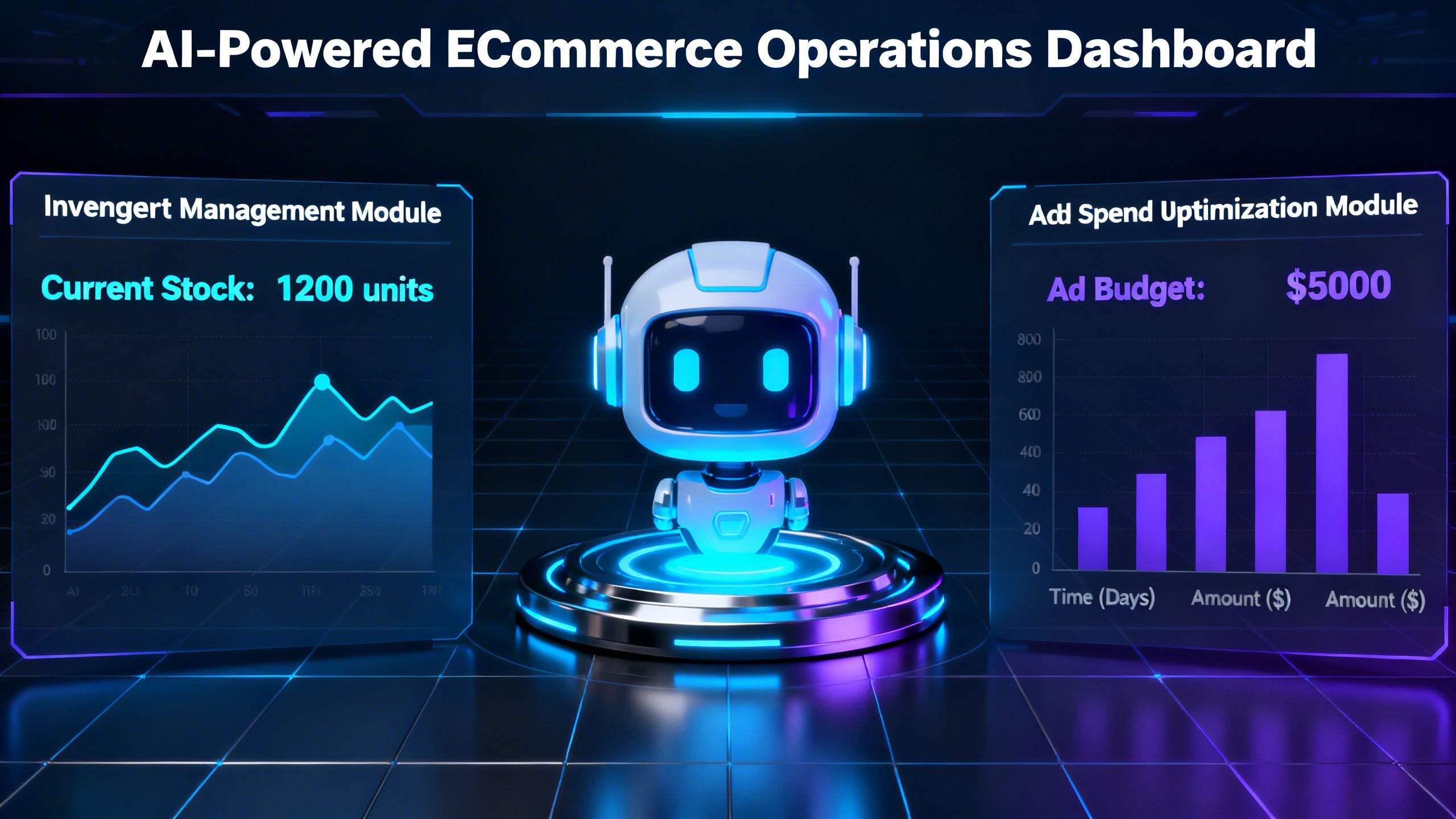
The real magic begins when this technology moves beyond customer-facing search and becomes an operational co-pilot. An agentic AI doesn't just answer questions; it completes tasks. Imagine an AI that not only identifies your slow-moving inventory but also suggests a marketing campaign, drafts the ad copy, and pushes it live for your approval.
This is where the speed of generative AI becomes critical for business intelligence. You need an AI that is faster, not just bigger, to analyze your data and provide insights in real-time. With a platform like TrackIQ, you're not just getting a chatbot; you're getting an eCommerce co-pilot that can understand your requests, analyze your data, and help you execute your next move.
Conclusion
We're at the beginning of a new era for eCommerce. The move from clumsy, keyword-based search to intelligent, generative retrieval is as significant as the move from brick-and-mortar to online shopping. It's a fundamental shift that will separate the brands that thrive from those that get left behind.
Here are the key takeaways:
- Embrace Multimodal Search: Your customers think in pictures and ideas. Your search engine should too.
- Prioritize Speed: A faster search experience is a better customer experience. Generative retrieval offers unparalleled speed at any scale.
- Think Beyond the Search Bar: This technology can power everything from product recommendations to your internal analytics and operational efficiency.
The future of online retail is conversational, intuitive, and incredibly fast. By leveraging Generative AI for eCommerce, you can stop forcing customers to speak your database's language and start speaking theirs. The result will be happier customers, higher conversions, and a smarter business.
Ready to see what an AI co-pilot can do for your brand? Explore how TrackIQ turns complex Amazon data into simple, actionable conversations.
—