Amazon's Robot Army: How AI in eCommerce Logistics is Secretly Rewriting the Rules
Quick Summary (TL;DR)
• Foundation Models are Here: Amazon is using a new type of AI, called a foundation model, to manage its massive fleet of warehouse robots. Think of it as a master brain for logistics.
• 10% More Efficient: This AI, named DeepFleet, is already boosting the efficiency of Amazon's robot deployments by 10%, meaning faster deliveries and lower costs.
• It's Not Just for Giants: While Amazon operates on a massive scale, the principles of using AI to analyze data and automate decisions are becoming accessible to all sellers.
—
Ever had one of those days? The one where a single misplaced pallet in your warehouse causes a domino effect of chaos that makes you want to trade your FBA business for a quiet life as a goat farmer? We’ve all been there. Logistics is the brutally complex, unglamorous backbone of eCommerce. Get it right, and you’re a hero. Get it wrong, and you’re buried in angry customer emails.
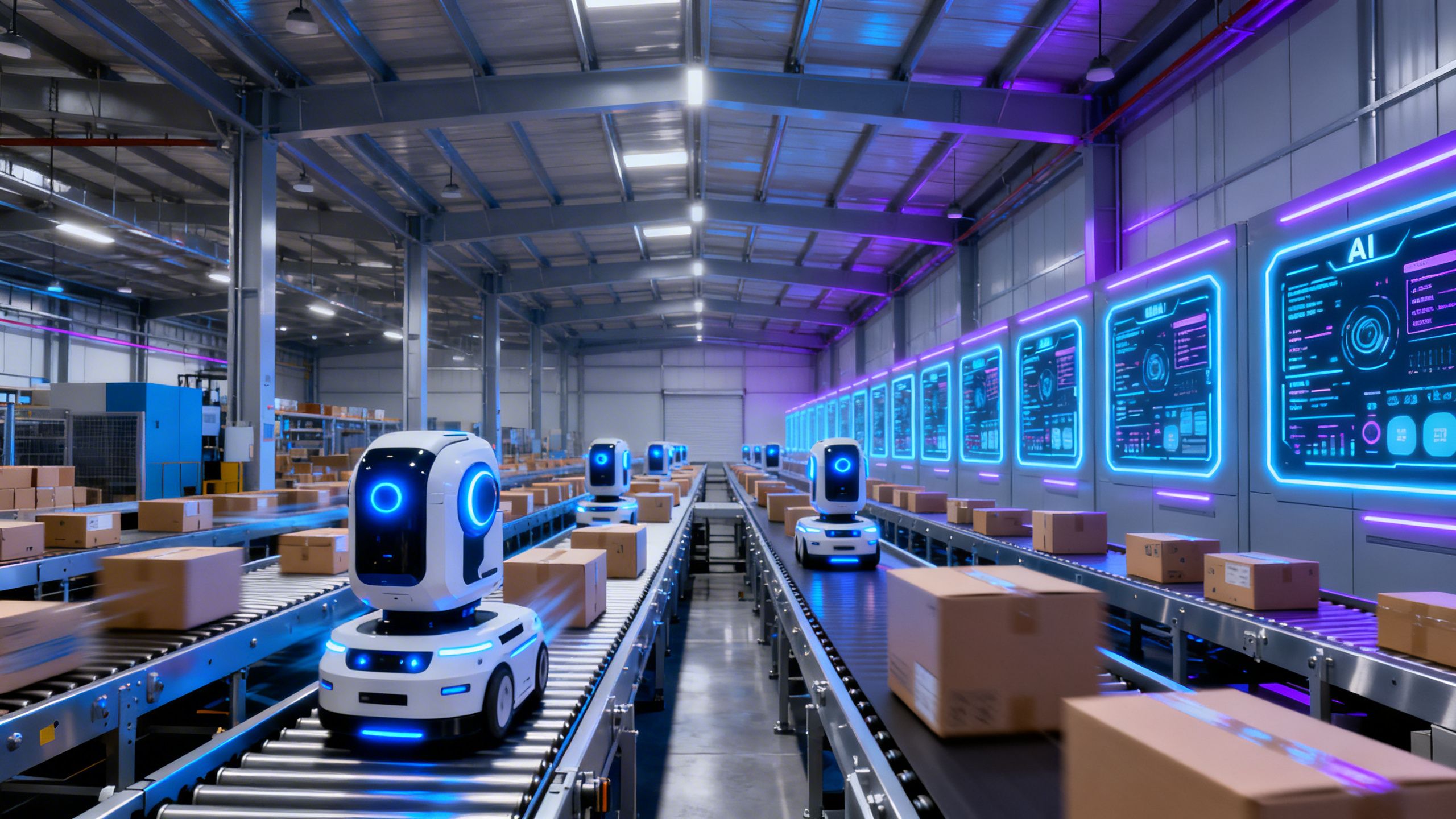
Now, imagine a warehouse where thousands of robots move in a perfectly choreographed ballet, never colliding, always taking the most efficient path. This isn't a sci-fi movie; it's happening right now in Amazon's fulfillment centers. They've built a foundation model for AI in eCommerce logistics called DeepFleet, and it’s a game-changer. This isn't just about a few cool robots; it's a fundamental shift in how physical operations are managed, and the ripples will be felt by every seller, big or small.
What is a Foundation Model for Logistics, Anyway?
Forget the jargon for a second. Think about how ChatGPT learned to write essays by reading a huge chunk of the internet. A foundation model for logistics does something similar, but instead of words, it learns from massive amounts of operational data—in this case, billions of hours of robot navigation data from Amazon's warehouses.
It’s not just a simple algorithm following pre-programmed rules. It’s a learning system that develops a deep, intuitive understanding of traffic flow, congestion, and efficiency. It can predict how thousands of robots will interact and proactively route them to avoid problems before they even happen. It’s the difference between a traffic cop reacting to a jam and a Waze-like system that sees the jam forming 20 minutes in the future and reroutes everyone automatically.
Why This Robot Revolution Matters for Your eCommerce Store
Okay, so Amazon has a million robots and a super-brain to control them. Cool story. But why should you, a seller focused on your own P&L, care? Because this technology signals a massive shift in operational efficiency.
Crushing Inefficiency: The Power of 10%
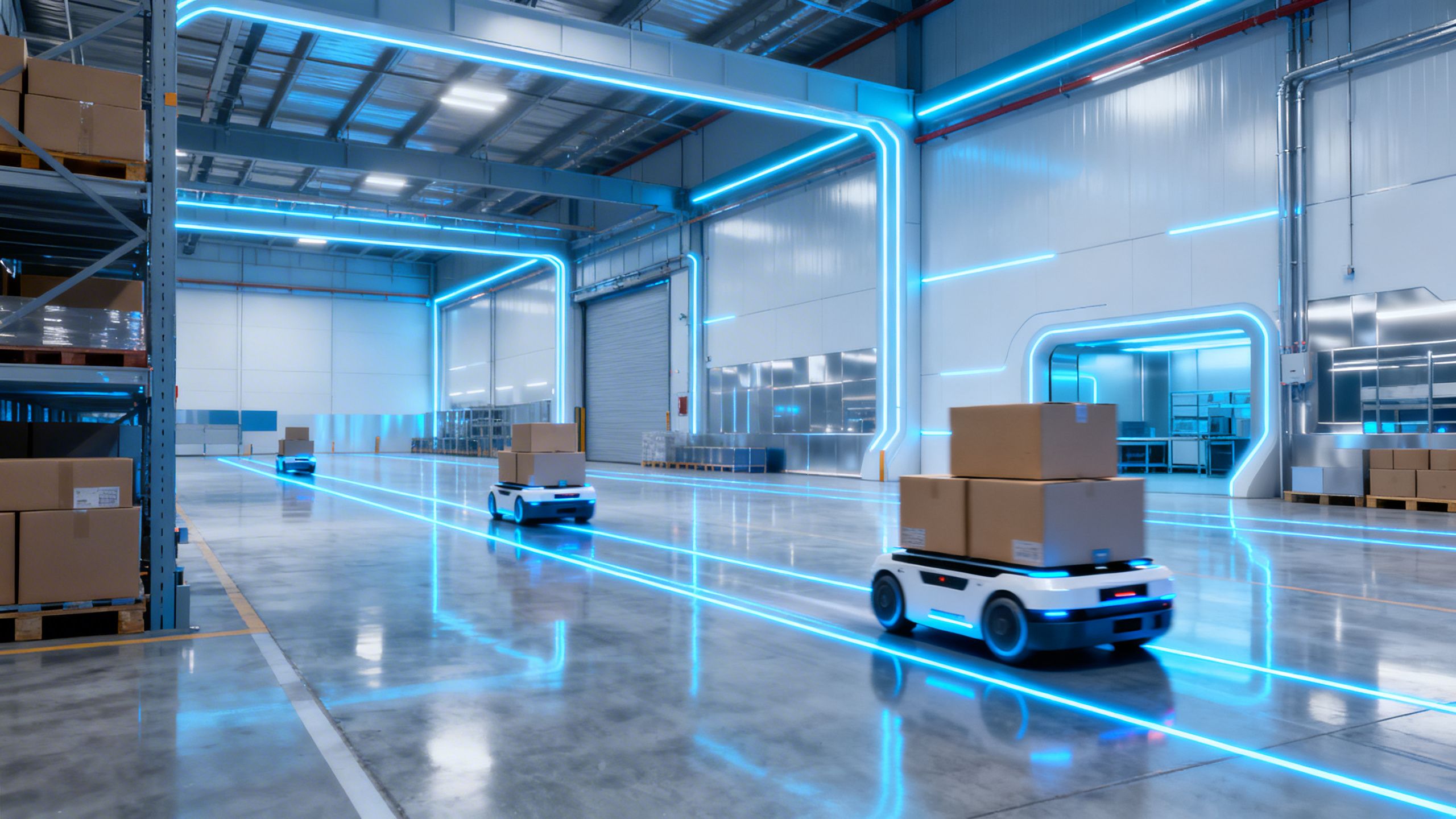
Amazon reports that DeepFleet has already increased the efficiency of its robot deployments by 10%. That might not sound like a revolutionary number, but in a game of razor-thin margins, 10% is colossal. It means 10% faster processing, 10% better use of assets, and ultimately, faster delivery to the customer at a lower cost.
“That lets us deliver packages to customers more rapidly and at lower costs.” - Amazon Science
This is the new benchmark. As this technology matures, the operational standards for everyone will rise. What was once considered “good enough” will quickly become obsolete.
Smarter Than a Simulation: Learning vs. Guessing
One of the biggest insights from Amazon's work is that simply simulating robot interactions isn't good enough. It's too slow and resource-intensive. A learned model like DeepFleet, however, can infer how traffic will play out almost instantly.
It’s pre-trained to understand the physics and flow of a warehouse. This is a critical distinction. A simulation guesses based on rules; a foundation model predicts based on deep experience. This is the core of modern AI in eCommerce logistics: moving from reactive problem-solving to predictive optimization.
Deconstructing DeepFleet: A Peek Inside Amazon's AI Brain
Amazon didn't just build one model; they experimented with several approaches to see what worked best. Understanding them gives us a fascinating look at how to tackle complex logistical problems with AI.
The Robot-Centric Model: A First-Person View
This model is like putting the AI in the driver's seat of each robot. It focuses on the “ego robot” and its immediate surroundings—the 30 nearest robots, nearby obstacles, and its destination. It’s a decentralized approach that proved to be the most effective overall, excelling at predicting a robot's position and state.
Key Tip: This mirrors how a savvy warehouse manager focuses on individual team members' tasks while being aware of their immediate environment. The principle is about empowering the individual unit with local intelligence.
The Robot-Floor Model: The All-Seeing Eye
This model takes a bird's-eye view. It creates a representation of the entire warehouse floor and a separate one for all the robots. Then, it uses a process called “cross-attention” to understand how the robots and the floor interact. While complex, it was the best at estimating the timing of events, like when a package would be dropped off.
Key Tip: This is akin to having a central dashboard that monitors all operations simultaneously. It’s about understanding the macro-level interplay between all moving parts.
The Graph-Floor Model: The Ultimate Networker
This approach treats the warehouse floor as a giant network graph, where each location is a node and possible movements are edges. It’s incredibly efficient, using far fewer parameters than the other models while still delivering strong results. It excels at understanding long-range effects and relationships across the entire space.
AI in eCommerce Logistics: Beyond the Warehouse Floor
This technology is about more than just moving robots. It's about turning raw data into a competitive advantage.
Predictive Analytics in Action: Seeing the Future
The primary goal of DeepFleet is to predict and prevent congestion. For an eCommerce seller, the equivalent is predicting stockouts, identifying slow-moving inventory before it becomes a problem, or optimizing PPC campaigns by forecasting keyword performance. The underlying principle is the same: use data to look ahead, not just in the rearview mirror.
From Data to Decisions: The Information Advantage
Amazon's success with DeepFleet is built on one thing: an unimaginable amount of data. They have billions of hours of robot navigation data. This highlights a crucial truth for all sellers: your data is your most valuable asset. Every sale, every click, every return is a data point that can be used to train a smarter business engine.
Real-World Scenarios: From Chaos to Coordination
Peak Season Panic: Preventing Gridlock Before It Starts
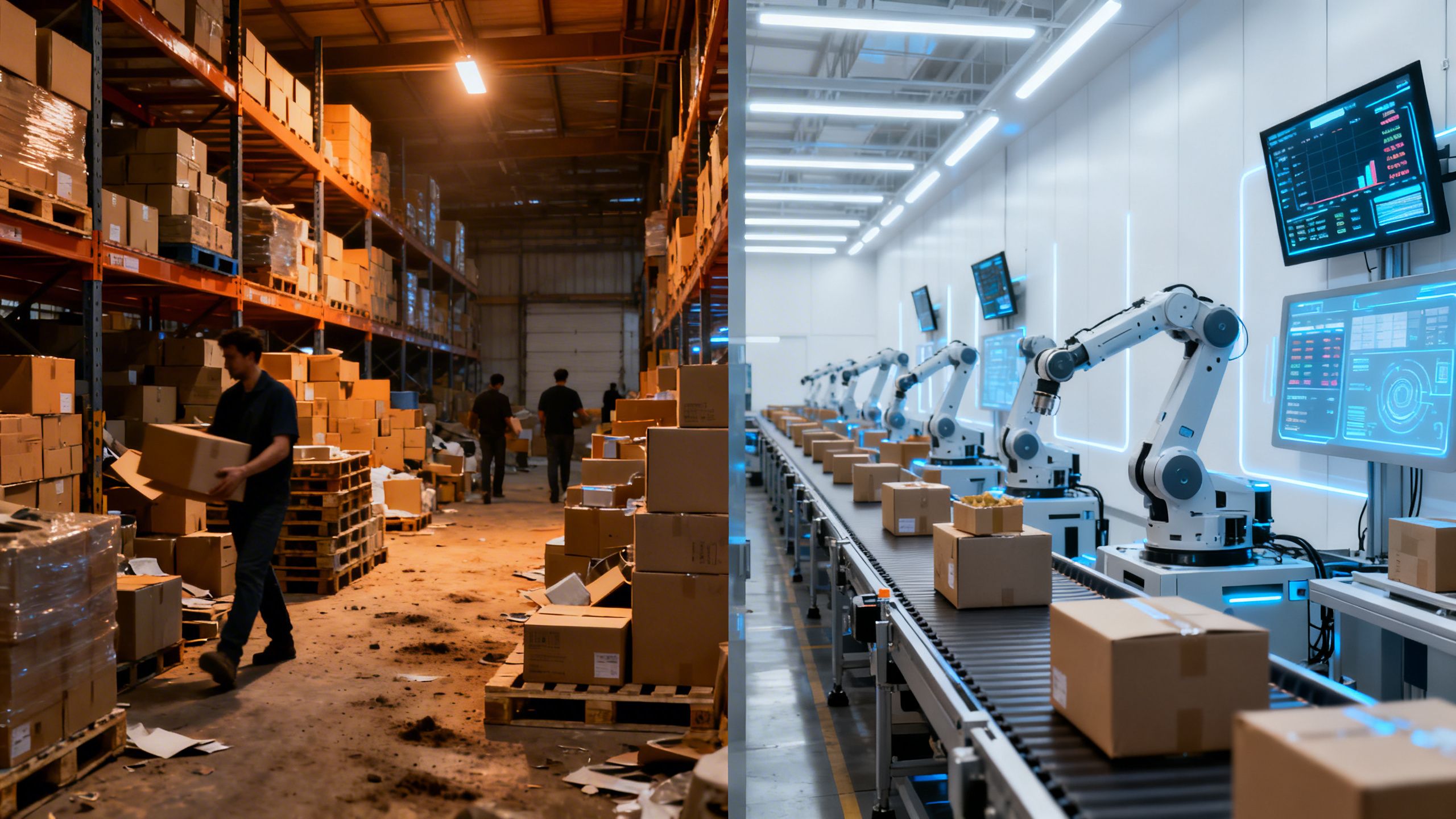
Challenge: During Black Friday, a sudden surge in orders for a specific product creates a bottleneck in one aisle of the warehouse, causing a system-wide slowdown.
AI Solution: A predictive model, having learned from past peak seasons, identifies the potential for congestion hours in advance. It automatically reroutes traffic, pre-positions popular items in more accessible locations, and adjusts task assignments to spread the load, ensuring smooth operations even under extreme pressure.
Task Juggling: Assigning the Right Robot to the Right Job
Challenge: A human operator has to manually assign tasks, often giving a simple retrieval job to a highly capable machine while a specialized task waits, leading to inefficiency.
AI Solution: The foundation model analyzes all pending tasks and all available assets. It assigns the closest, most appropriate robot to each task in real-time, optimizing for travel time, robot capability, and overall warehouse throughput. This is the essence of your new eCommerce co-pilot, an agentic AI that doesn't just report data but takes action on it.
Common Misconceptions About AI in Logistics
The "It's Only for Giants" Fallacy
It's easy to look at Amazon's million-robot fleet and think, "This has nothing to do with me." Wrong. The tools may be different, but the strategy is universal. The core idea is using data to automate and optimize. Sellers can apply this same logic to their advertising, inventory management, and pricing strategies today.
Ignoring the Data Prerequisite
Many sellers get excited about AI without realizing it's powered by data. You can't have an intelligent system without clean, abundant, and accessible data. The reason DeepFleet works is because Amazon has been meticulously collecting operational data for years. Your journey into AI starts with getting your data house in order.
Why TrackIQ Matters: Your Co-Pilot for the AI Revolution
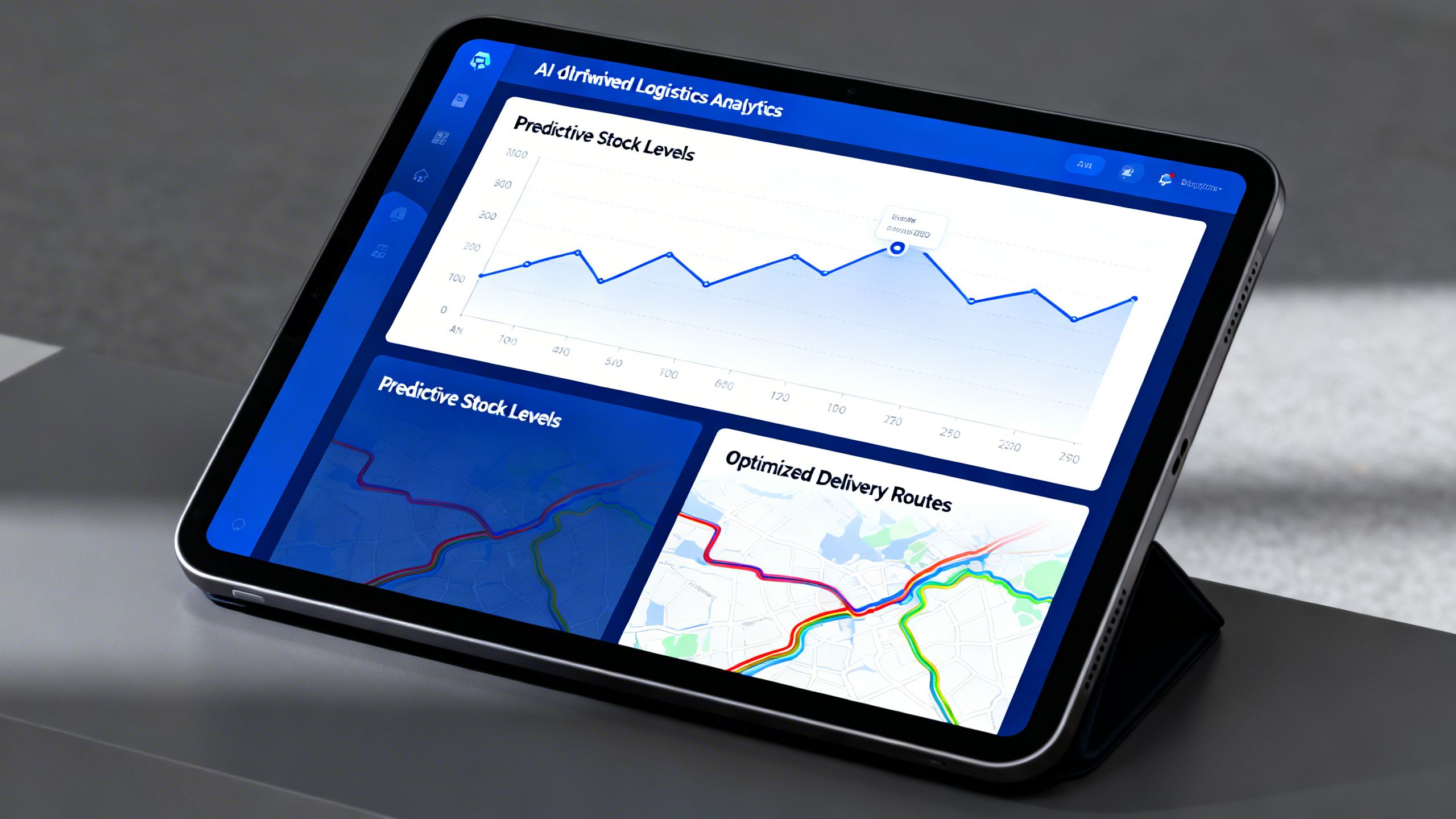
So, you don't have a million robots. You don't have a team of PhDs from Amazon Science. How can you possibly compete in this new era of AI-driven eCommerce logistics?
You start by leveraging your own data with the right tools. This is where the rubber meets the road for sellers who want to stay ahead.
This is precisely the problem TrackIQ was built to solve. While Amazon's DeepFleet manages the physical world of robots, TrackIQ acts as a similar intelligence layer for your entire Amazon business. It connects to your actual Amazon data, providing the insights and automation that were once the exclusive domain of giants.
Instead of predicting robot congestion, TrackIQ helps you predict which keywords are losing money, which products are at risk of stocking out, and where your next big growth opportunity lies. It’s about applying the same “foundation model” thinking—using vast amounts of data to find patterns and drive intelligent action—to the metrics that directly impact your P&L.
Key Takeaways for the Modern Seller
- The Efficiency Bar Has Been Raised: AI-driven optimization is the new standard. A 10% gain in efficiency, like Amazon achieved, is the kind of competitive edge that can redefine a market.
- Your Data Is Your Goldmine: Start treating your business data—sales, ads, inventory, reviews—as your most critical asset. It's the fuel for any future AI or automation you implement.
- Think Predictive, Not Reactive: Shift your mindset from reacting to problems to using data to anticipate them. Whether it's inventory, advertising, or customer service, the goal is to solve issues before they happen.
Conclusion
The age of AI in eCommerce logistics is no longer a distant future; it's here, and it's happening at a scale that's hard to comprehend. Amazon's DeepFleet is a powerful signal of where the industry is headed: towards hyper-efficient, data-driven, and automated operations. For sellers, the takeaway isn't to go out and buy a robot army. It's to embrace the underlying principle: leveraging data with intelligent tools to make faster, smarter decisions. Start by getting a handle on your data, and you'll be ready to ride the wave, not get swept away by it.
—