Amazon's AI Breakthrough: Dialogue Boost Enhances TV and Movie Sound
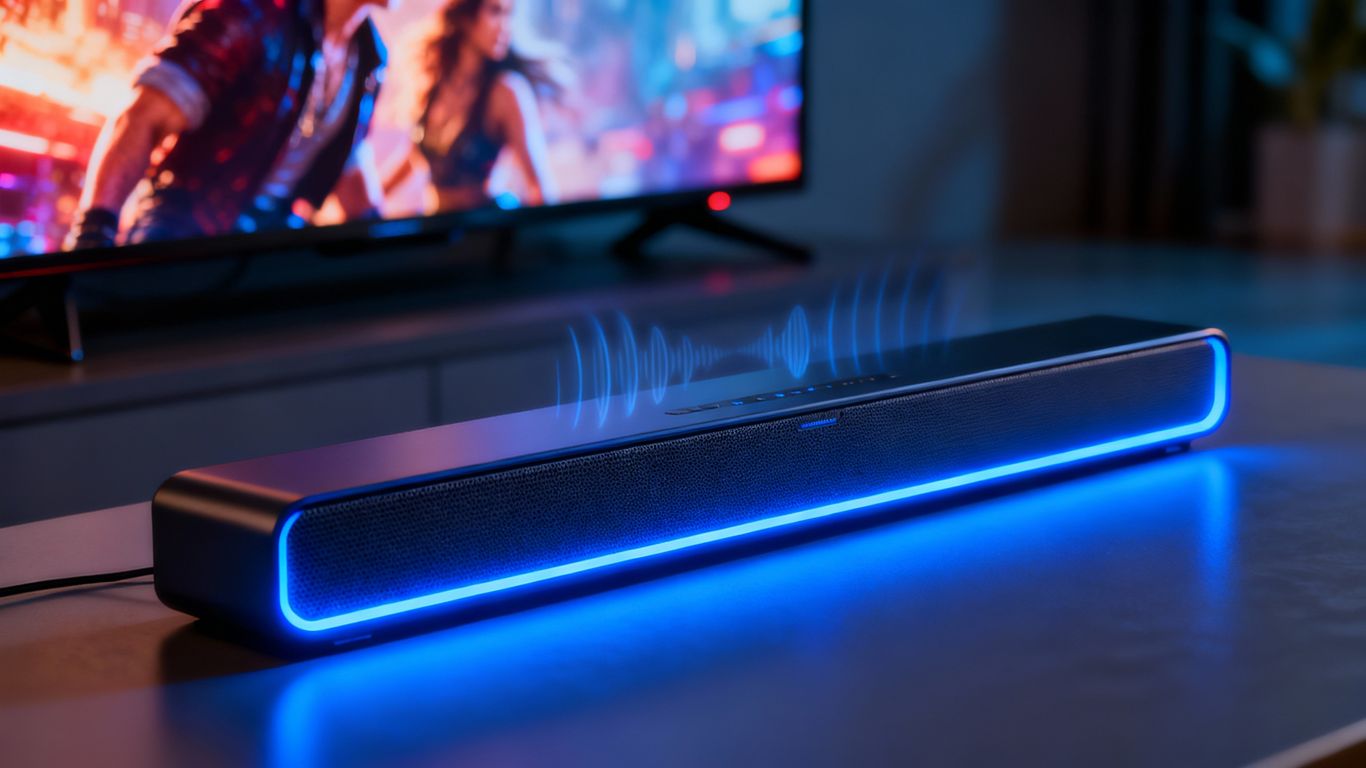
Amazon is revolutionizing the home entertainment experience with its new AI-powered Dialogue Boost technology. Available on select Echo smart speakers and Fire TV devices, this innovative feature significantly enhances the clarity of dialogue in TV shows, movies, and podcasts by adaptively suppressing background music and sound effects. This advancement promises to improve accessibility for millions, particularly those with hearing loss, ensuring that conversations are heard without the need to excessively increase volume.
Key Takeaways
- Dialogue Boost uses AI and advanced audio separation to clarify spoken words.
- The technology is now available on-device for various streaming services, not just Prime Video.
- It addresses the growing issue of hard-to-hear dialogue in modern media mixes.
- Innovations in sub-band processing and pseudo-labeling make the AI efficient and effective.
- User testing shows a strong preference for enhanced audio clarity and reduced listening effort.
Enhancing Clarity for All Viewers
For individuals experiencing hearing loss, simply turning up the volume often amplifies background noise along with dialogue, making comprehension difficult. While closed captions offer a solution, they are not universally preferred. The challenge of indistinct dialogue has been exacerbated by the complexity of modern sound systems, where mixes optimized for theaters may not translate well to home setups. Sound editors often create intricate mixes for multi-channel theater systems, which are then down-mixed for television, potentially burying dialogue amidst music and sound effects.
The Science Behind Dialogue Boost
Amazon's Dialogue Boost tackles this issue through a sophisticated sound source separation system. The process begins with an analysis stage that converts audio into a time-frequency representation. A neural network, trained on vast amounts of speech data across various conditions, then analyzes this representation in real-time to differentiate speech from other audio elements.
Two key innovations enable Dialogue Boost's on-device performance:
- Sub-band Processing: Instead of processing the entire audio spectrum at once, the system divides it into frequency sub-bands. This allows for parallel processing, significantly reducing computational load and enabling the model to run efficiently on devices like Fire TV Sticks and Echo speakers.
- Pseudo-Labeling: This training methodology uses real media content to generate training targets, improving the model's ability to handle diverse real-world audio scenarios beyond synthetic mixtures. A large model is trained on synthetic data, then used to label real data, which is then used to retrain the model. This process is followed by knowledge distillation to create a compact, efficient model.
An Improved Listening Experience
Dialogue Boost goes beyond simple volume adjustments. It intelligently identifies speech-dominant channels, isolates dialogue, emphasizes speech-critical frequencies, and remixes these elements while preserving the original artistic intent. Users can even adjust the prominence of dialogue.
Extensive testing has demonstrated the effectiveness of Dialogue Boost. Over 86% of participants preferred the clarity of enhanced audio, especially in complex soundscapes. For users with hearing loss, the feature received 100% approval, with significant reductions in listening effort reported. Customers have praised its ability to clarify whispered conversations, varied accents, and dialogue during action sequences, allowing for a more immersive experience without constant subtitle reliance. It's also a boon for late-night viewers or those sharing a space, enabling clear dialogue at comfortable listening levels.