Amazon Nova AI Challenge Returns, Empowering University Teams with Advanced AI Tools
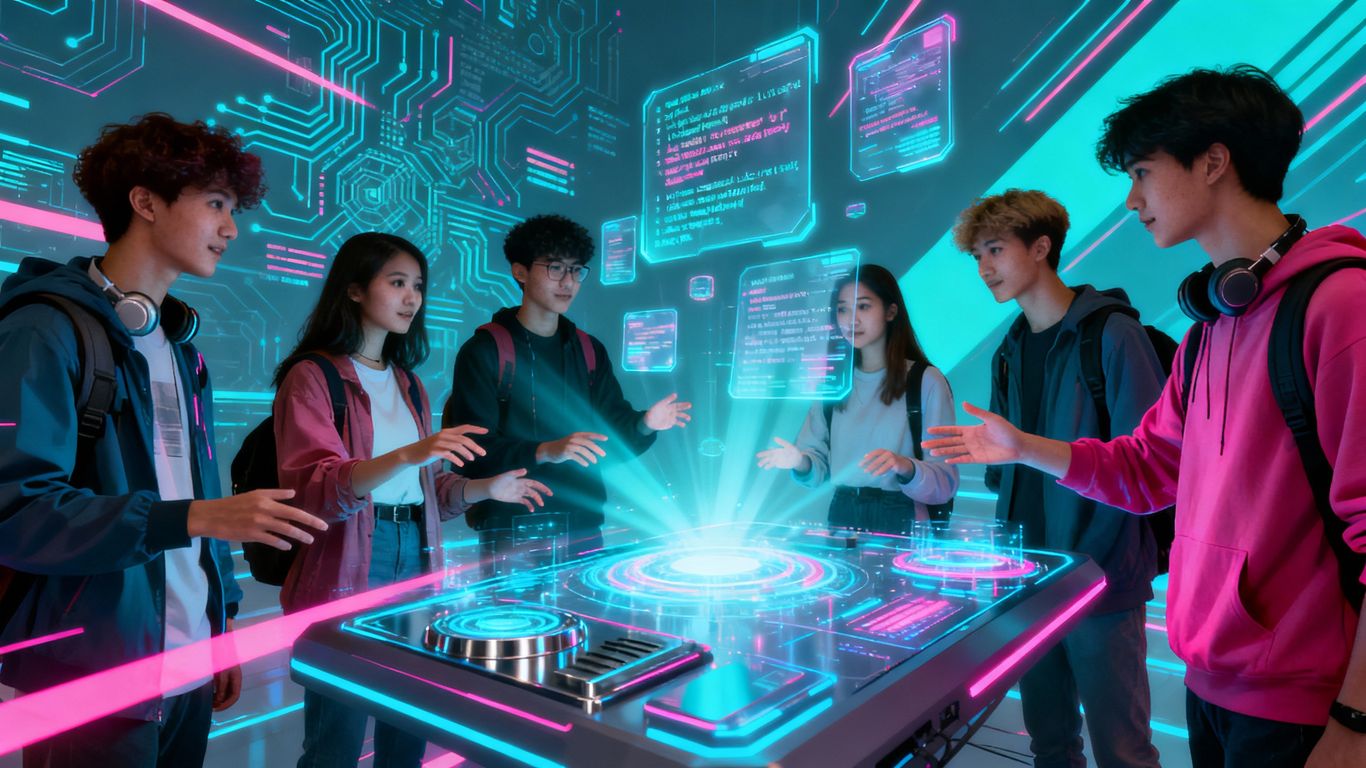
The Amazon Nova AI Challenge is back for its second year, bringing together ten selected university teams from around the globe in Seattle for an intensive bootcamp. This year's competition focuses on a critical real-world challenge: developing AI agents capable of handling complex coding tasks while prioritizing security and reliability. For the first time, participants will leverage Amazon Nova Forge, providing unprecedented access to tools, models, and computational resources previously unavailable to academic research programs.
Key Takeaways
- University teams gain access to Amazon Nova Forge for customizing AI models.
- The challenge shifts from single-task code generation to multi-step AI agent development.
- Emphasis is placed on both the utility and safety of AI agents in software development.
- A "red team" component introduces a dynamic testing and adaptation cycle.
- The competition aims to foster practical, scalable, and implementable AI solutions.
From Code Generation to Complex Agents
Building on last year's focus on secure AI-assisted software development, the 2026 challenge reflects the rapid evolution of AI in this field. "Generative AI for software development has rapidly moved from code generation to agents that plan, build, and test changes across entire codebases and user-facing applications," noted Imre Kiss, Director, Amazon Nova Software Engineering Skills. This year, teams are tasked with creating AI agents that can manage multi-step software development processes, including planning, coding, and validation across intricate projects. These agents must understand broad context within codebases and make decisions impacting product quality and system security.
Teams will be evaluated on two key metrics: utility, measuring their agent's ability to handle increasingly complex software tasks, and safety, assessing the maintenance of appropriate safeguards. This dual focus addresses the emerging security challenges as AI agents become more sophisticated. The competition format includes "red teams" tasked with identifying vulnerabilities in the AI-developed applications, creating a dynamic environment where developer teams must adapt their agents in response to discovered weaknesses.
Nova Forge: Unlocking Model Customization
A significant advancement this year is the integration of Amazon Nova Forge, a service designed for building customized AI models. Historically, academic institutions have faced limitations in accessing the necessary models, training data, and computational power for large-scale AI research. Nova Forge aims to bridge this gap by offering teams access to Nova model checkpoints at various training stages. This allows them to integrate their own data and research methods throughout the training process, resulting in a customized model, or "Novella," that combines Nova's core capabilities with the team's unique approach to secure software development.
Nova Forge provides three key capabilities for the competing teams: custom training environments for simulating real-world secure coding workflows, model compression techniques to create smaller, faster models, and built-in safety controls for implementing and evaluating security measures.
The Competing Teams and Prizes
Ten universities from five countries were selected to participate. The lineup includes two returning champions and eight new teams, divided into Model Developer teams and Red teams. Each participating team receives $250,000 in sponsorship and monthly AWS credits. The winning model developer and red teams will each receive $250,000, with second-place teams earning $100,000.
Practical Research and Future Implications
The challenge offers students invaluable experience with large-scale models and infrastructure typically beyond academic budgets. The focus is on developing solutions that are practical, easy to troubleshoot, and economically viable at scale, ensuring that innovations are directly applicable in real-world engineering scenarios. The competition culminates in September 2026 with the finals, followed by the announcement of winners in October 2026 at the Amazon Nova AI Challenge Summit. All teams will publish their research, contributing to the advancement of responsible AI development and secure AI systems.