Amazon Aurora: The Secret Database Powering 8-Figure eCommerce Stores
Quick Summary (TL;DR)
• Built for the Cloud, Perfect for eCommerce: Amazon Aurora isn't just another database. It's a cloud-native system designed for the speed and scale modern online stores demand, offering up to 5x the performance of standard MySQL.
• Say Goodbye to Black Friday Crashes: Aurora's serverless architecture automatically scales your database up and down based on traffic. You get the power you need during flash sales without paying for it during quiet periods.
• Drastic Cost Reduction: By decoupling storage and compute and optimizing for the cloud, Aurora can reduce database operational costs by up to 42%, giving you a massive ROI (some studies show over 400% in three years).
—
Ever had that heart-stopping moment on Black Friday? Your ads are firing, traffic is surging, and then… your site grinds to a halt. The culprit is often an old-school, monolithic database that just can’t handle the pressure. It’s like trying to win the Indy 500 with a station wagon engine. For years, eCommerce sellers had two bad options: overpay for a high-end commercial database or risk it with a cheaper one that couldn't scale. But what if there was a third option?
This is where Amazon Aurora enters the chat. Originally announced in 2014, it has quietly become the engine behind some of the world's most successful online stores. It promises the speed of a high-end database with the cost-effectiveness of open-source options. This guide will break down what Amazon Aurora is, why it’s a game-changer for eCommerce sellers, and how you can leverage its power to build a faster, more resilient, and more profitable business.
What Exactly is Amazon Aurora?
Think of Amazon Aurora as a complete re-imagining of the relational database, but built specifically for the cloud era. Traditional databases bundle computing power and storage together. If you need more of one, you have to scale up both, which is expensive and inefficient. Aurora’s genius was decoupling them.
This means your storage can grow independently of your computing needs. It’s a purpose-built, self-healing, and highly distributed system that eliminates the bottlenecks of legacy databases. In simple terms, it’s a high-performance engine that’s always the right size for your store, whether you have ten visitors or ten million.
“Aurora's design preserves the core transactional consistency strengths of relational databases. It innovates at the storage layer to create a database built for the cloud that can support modern workloads without sacrificing performance.” — Werner Vogels, Amazon’s CTO
Why Amazon Aurora is a Must-Have for Serious Sellers
Migrating your database sounds technical and boring, but the business impact is massive. It affects everything from user experience to your bottom line.
Blazing-Fast Speed for Higher Conversions
Every millisecond counts in eCommerce. A one-second delay in page load time can lead to a 7% reduction in conversions. Aurora is built for speed, delivering up to five times the throughput of standard MySQL and three times that of PostgreSQL. This means faster product pages, quicker search results, and a smoother checkout process—all leading to happier customers and more sales.
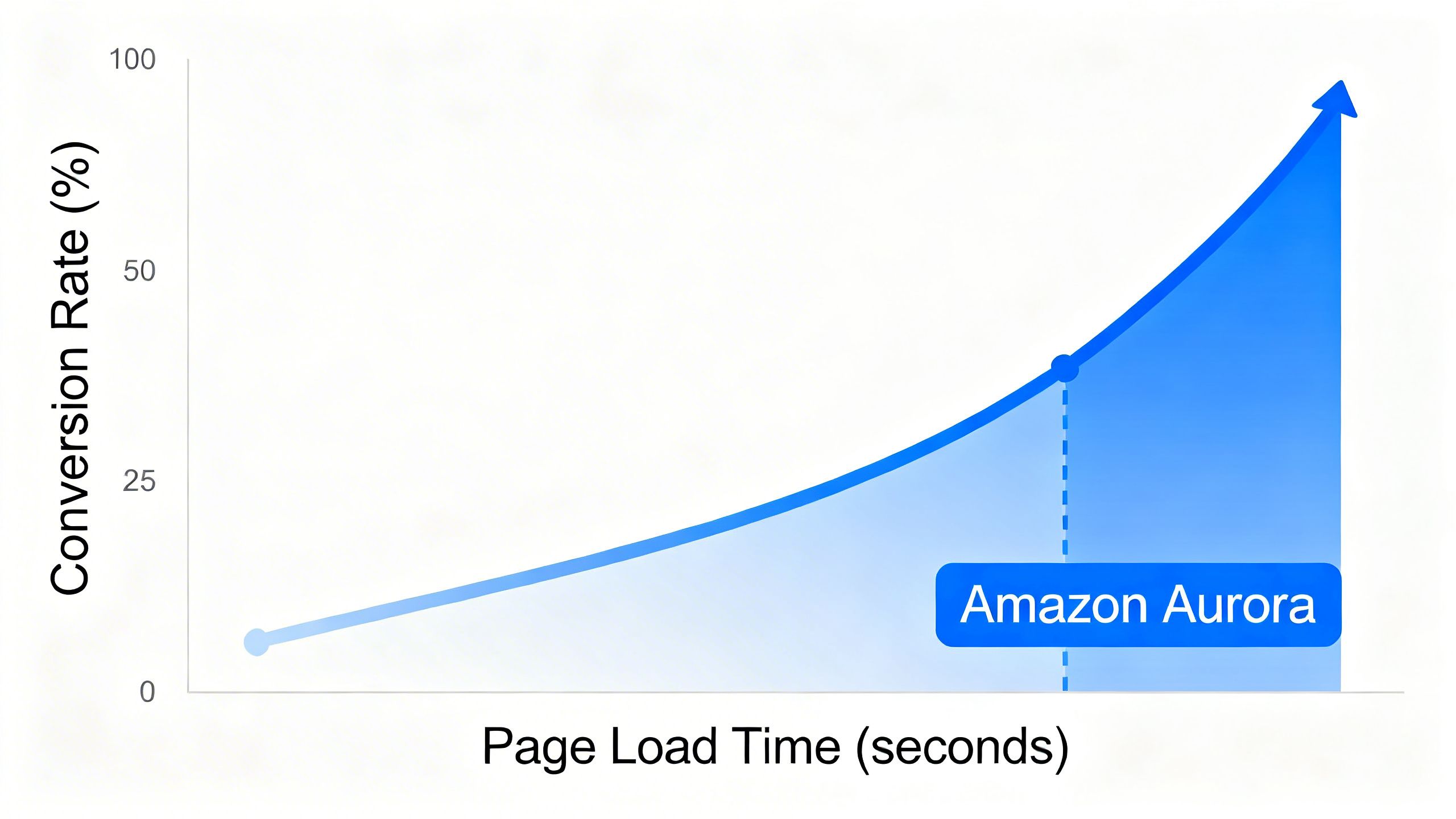
This isn't just about raw speed; it's about consistent speed. Aurora’s architecture protects your database from performance variance, ensuring your store stays fast even under heavy load.
Scalability on Demand: The End of Holiday Crashes
The biggest nightmare for an eCommerce seller is a site crash during a peak sales event. With traditional databases, you have to provision for peak traffic all the time, which is incredibly costly. Aurora Serverless changes the game. It automatically scales your compute capacity up or down based on your store's needs.
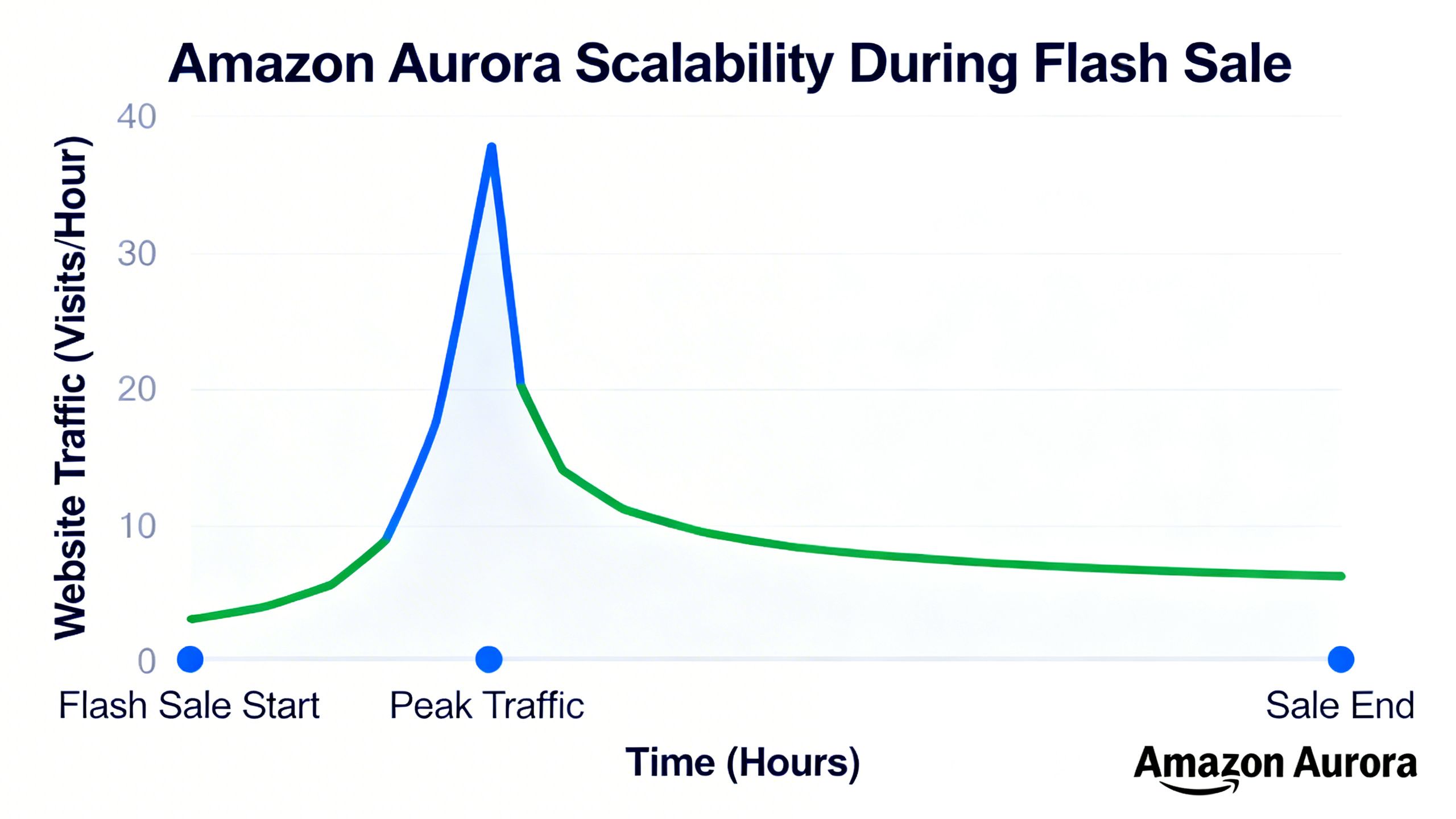
This means you can handle a massive influx from a viral TikTok post or a Black Friday rush without any manual intervention. When the traffic subsides, it scales back down, and you stop paying for the extra capacity. It’s the ultimate elastic infrastructure, giving you peace of mind and saving you a fortune.
A Seller's Quick-Start Guide to Amazon Aurora
While the migration itself is a technical task, understanding the process helps you lead the charge. Here’s a simplified roadmap.
Step 1: Assess Your Current Database Pains
Before you move, you need to know why you're moving. Are your pages loading slowly? Is your database management taking up too much time and money? Are you worried about stability during sales events? Quantify these problems. Use tools to measure your current page load times and database costs. This data will become the benchmark for your success with Amazon Aurora.
Key Tip: Your goal isn't just to move data; it's to solve a business problem. Define that problem clearly from the start. For example: "We need to reduce our checkout page load time by 50% and ensure 99.99% uptime during Q4."
Step 2: Plan the Migration Journey
Moving a live database is like performing engine surgery on a moving car. It requires careful planning. AWS provides tools like the Database Migration Service (DMS) to minimize downtime. You'll want to create a replica of your database in Aurora, test it rigorously, and then switch over during a low-traffic period. This isn't a DIY project for most; work with an experienced developer or an AWS partner.
Key Tip: Test, test, and test again. Run simulations of your peak traffic against the new Aurora instance to ensure it performs as expected. Don't wait for Black Friday to discover a problem.
Step 3: Embrace the Serverless Advantage
Once you're on Aurora, the real magic begins. Configure your database as Aurora Serverless v2. This allows it to scale capacity in fine-grained increments almost instantly. You simply set the minimum and maximum capacity you might need, and Aurora handles the rest. This frees you from the complex and stressful task of capacity planning forever.
Amazon Aurora: Real-World eCommerce Scenarios
Let's move from theory to practice. How does this actually help you sell more stuff?
The Flash Sale Survivor: Scaling from 100 to 100,000 Users in Minutes
A fashion brand launches a limited-edition sneaker drop, promoted by a major influencer. Traffic explodes from a few hundred concurrent users to over 100,000 in under five minutes. On a traditional database, the site would have instantly crashed. With Amazon Aurora Serverless, the database scales seamlessly, handling tens of thousands of transactions per second. The result: a sold-out product, happy customers, and zero downtime.
The Data-Driven Merchandiser: Unlocking Real-Time Insights
An electronics retailer wants to run hyper-personalized promotions based on real-time user behavior. Their old database was too slow to query for live analytics. After migrating to Amazon Aurora, they can now run complex queries on live transactional data without slowing down the main site. This allows them to offer a customer who just viewed a 65" TV a timely discount on a compatible soundbar, boosting AOV.
Why TrackIQ Matters: From Raw Power to Actionable Intelligence
Having a powerful database like Amazon Aurora is like having a Formula 1 engine. It gives you incredible potential, but you still need a skilled driver and a sophisticated dashboard to win the race. Your eCommerce data is the fuel, Aurora is the engine, and TrackIQ is your AI co-pilot and dashboard.
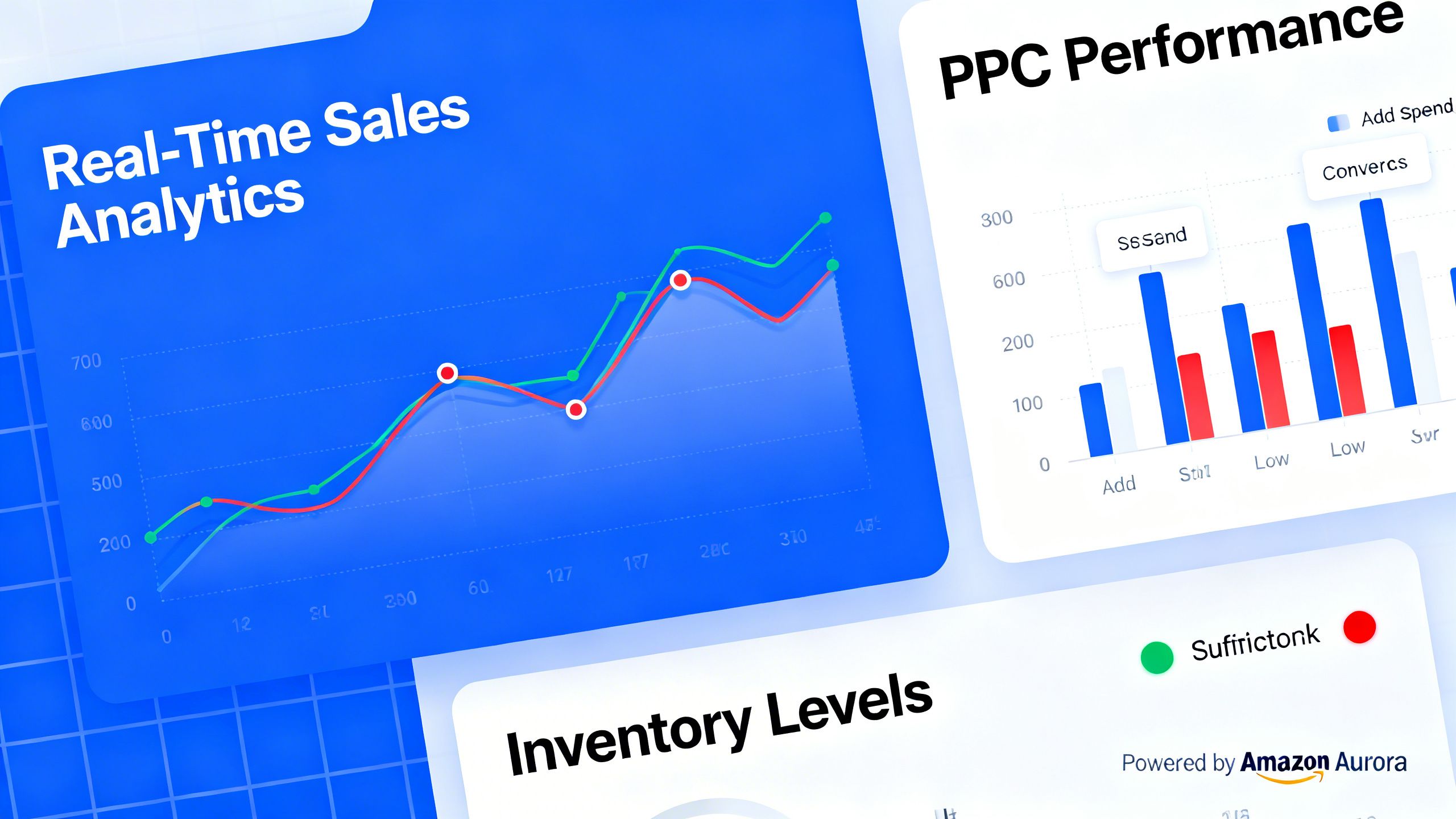
Aurora ensures your data is processed quickly and reliably, but it doesn't tell you what to do with it. That's where an analytics and automation platform comes in. TrackIQ – AI-Powered Amazon Analytics & Automation for Sellers & Agencies connects directly to your data sources, turning the raw output from your powerful database into clear, actionable insights.
- Problem: Your Amazon Aurora database processes thousands of PPC data points per hour. How do you find the winning keywords or cut the losing ones?
- Solution: TrackIQ analyzes this data in real-time, surfacing insights about ad spend, ACoS, and keyword performance. It can even automate bid adjustments, acting on the data your database provides.
Ultimately, a fast database is only half the battle. The other half is using that speed to make smarter, faster business decisions. That's the synergy between a robust backend like Aurora and an intelligent frontend like TrackIQ. You need both to dominate in today's market. In fact, many sellers are now exploring how to use agentic AI as an eCommerce co-pilot to automate these complex tasks entirely.
Common Mistakes to Avoid When Adopting Amazon Aurora
The "Lift and Shift" Trap: Moving Without Modernizing
Simply moving your old, inefficient database structure to a new platform is a common mistake. This is called a "lift and shift." While you'll see some benefits from Aurora's hardware, you'll miss out on the biggest advantages. Take the time to re-evaluate your data schema and application logic to take full advantage of a cloud-native architecture. Don't put a station wagon body on a Ferrari chassis.
Ignoring Security Best Practices
Amazon Aurora is highly secure, but it's not magic. You are still responsible for configuring it correctly. This includes setting up proper network controls (VPCs), using IAM roles for access, and encrypting data both in transit and at rest. Don't assume the defaults are enough. Follow AWS's security best practices to the letter to protect your customer data.
Advanced Plays: What's Next After Migration?
Once you're comfortable with Aurora, you can start exploring more advanced strategies. One powerful approach is integrating Aurora with Amazon Redshift for a dedicated data warehouse. This allows you to offload heavy analytical queries, ensuring your transactional database remains lightning-fast for customers while your business intelligence team can run massive reports without interference.
Another advanced play is leveraging Aurora's machine learning integration. You can invoke AI services like Amazon SageMaker directly from your database with simple SQL commands. This allows you to build features like fraud detection or product recommendations right into your application's data layer, making them incredibly fast and efficient.

Key Takeaways for eCommerce Sellers
If you're an ambitious eCommerce seller, your database is not just an IT issue—it's a core business asset. Here are the key takeaways:
- Speed is Money: A faster database directly translates to a better user experience and higher conversion rates. Amazon Aurora is purpose-built for this speed.
- Scalability is Freedom: Aurora Serverless frees you from capacity planning and the fear of site crashes. It provides the power you need, exactly when you need it.
- Data is Useless Without Insights: A powerful database is the foundation, but you need a tool like TrackIQ to translate that data into profitable actions, from optimizing PPC to managing inventory.
Conclusion
In the competitive world of eCommerce, you need every advantage you can get. While your competitors are struggling with slow, unreliable, and expensive legacy databases, you can build your business on a foundation that's designed for the future. Migrating to Amazon Aurora is more than a technical upgrade; it's a strategic business decision that impacts your sales, customer satisfaction, and bottom line.
By pairing that powerful engine with an intelligent analytics platform like TrackIQ, you're not just building a store—you're building a resilient, data-driven, and highly scalable retail machine. Stop letting your infrastructure hold you back. It's time to give your store the engine it deserves.
—