AI Agents Are Coming for Your eCommerce Stack. Are You Ready?

Quick Summary (TL;DR)
- Your New Autopilot: AI agents are autonomous programs that understand goals and take action on your behalf, like an employee who never sleeps, eats, or complains about spreadsheets.
- The eCommerce Revolution: For sellers, this means automating everything from inventory reordering and ad spend optimization to complex data analysis, freeing you up to focus on growth.
- Get Ahead or Get Left Behind: Adopting agentic AI isn't just a cool tech trend; it's becoming a fundamental competitive advantage. Early adopters will dominate their niches.
—
Ever feel like you're playing a never-ending game of whack-a-mole? You fix an inventory issue, and a PPC campaign goes haywire. You finally get your ad spend under control, and a top-selling SKU suddenly starts bleeding margin. It’s exhausting. You’re drowning in dashboards and data, spending more time managing the business than growing it. What if you could hire a brilliant, data-obsessed operations manager who works 24/7 for pennies on the dollar? That’s the promise of AI agents.
This isn't science fiction anymore. As a recent Amazon Science paper, Demystifying AI agents, put it, these systems are designed to take generative AI “out of the sandbox of the chat interface and allowing it to act directly on the world.” For eCommerce sellers and agencies, this is a seismic shift. We’re talking about systems that don’t just show you data; they act on it. This guide will break down what AI agents are, why they're a game-changer for eCommerce, and how you can start leveraging them to build a more efficient, profitable, and automated business.
What is an AI Agent?
Forget the Hollywood image of a robot butler. In the world of AI, an agent is a system that can understand a goal, create a plan, and use tools to achieve it. Think of it like this: you can ask ChatGPT for a recipe, but an AI agent can take that recipe, check your smart fridge for ingredients, add the missing items to a grocery list, and place the order for you. It runs a loop: Reasoning -> Action -> Observation. It thinks, it does, it learns, and it repeats until the job is done.
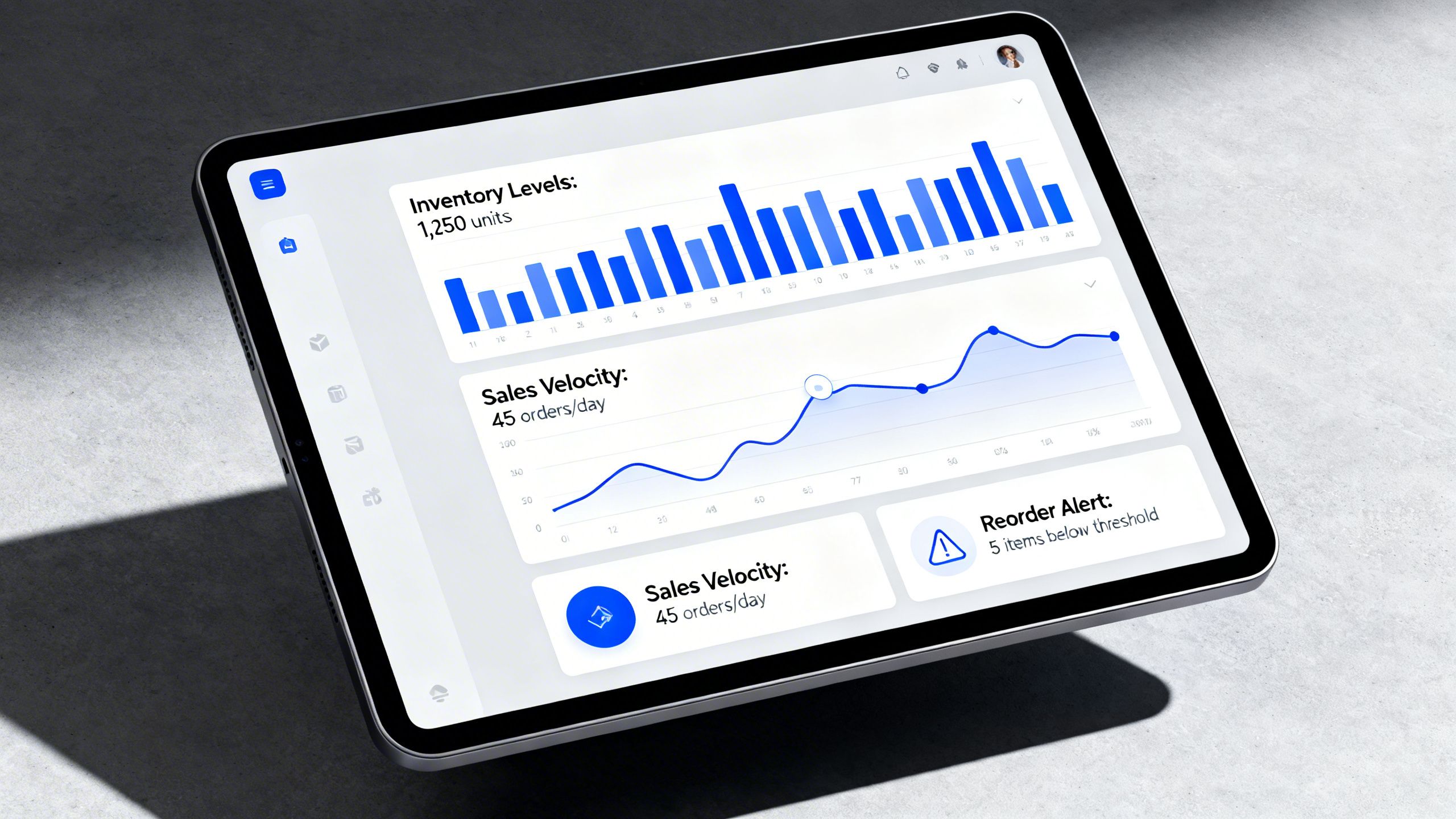
For an eCommerce brand, the tools aren't grocery apps; they're your Amazon Seller Central account, your Shopify dashboard, your Google Ads, and your inventory management software. You give it a goal like, “Prevent stockouts for my top 10 SKUs,” and the agent gets to work, continuously monitoring sales velocity, checking inventory levels, and even initiating purchase orders.
Why AI Agents Matter for Your Business
This technology moves you from being a reactive firefighter to a proactive business strategist. Instead of asking “What happened?”, you can focus on “What’s next?”.
Benefit 1: Achieve True Automation in Your Supply Chain
Your supply chain is a complex beast with a million moving parts. AI agents can act as the central nervous system. They can monitor sales trends and automatically adjust inventory forecasts, preventing costly stockouts or overstocking. Imagine an agent that notices a product is trending on TikTok, cross-references your current inventory and inbound shipments, and alerts you that you’ll sell out in 3 days instead of 30, giving you time to react.

According to a McKinsey report, companies that aggressively digitize their supply chains can expect to boost annual earnings growth by 3.2%. AI agents are the next evolution of that digitization, putting complex decision-making on autopilot.
Benefit 2: Unlock Hyper-Personalized Marketing and Sales
Customers today expect personalized experiences. AI agents can deliver this at a scale that's impossible for a human team. An agent can analyze a customer's browsing history, past purchases, and even their interactions with customer service bots to create hyper-targeted offers and product recommendations. This goes beyond simple “customers who bought this also bought…” and enters the realm of true one-to-one marketing, dramatically increasing conversion rates and customer lifetime value.
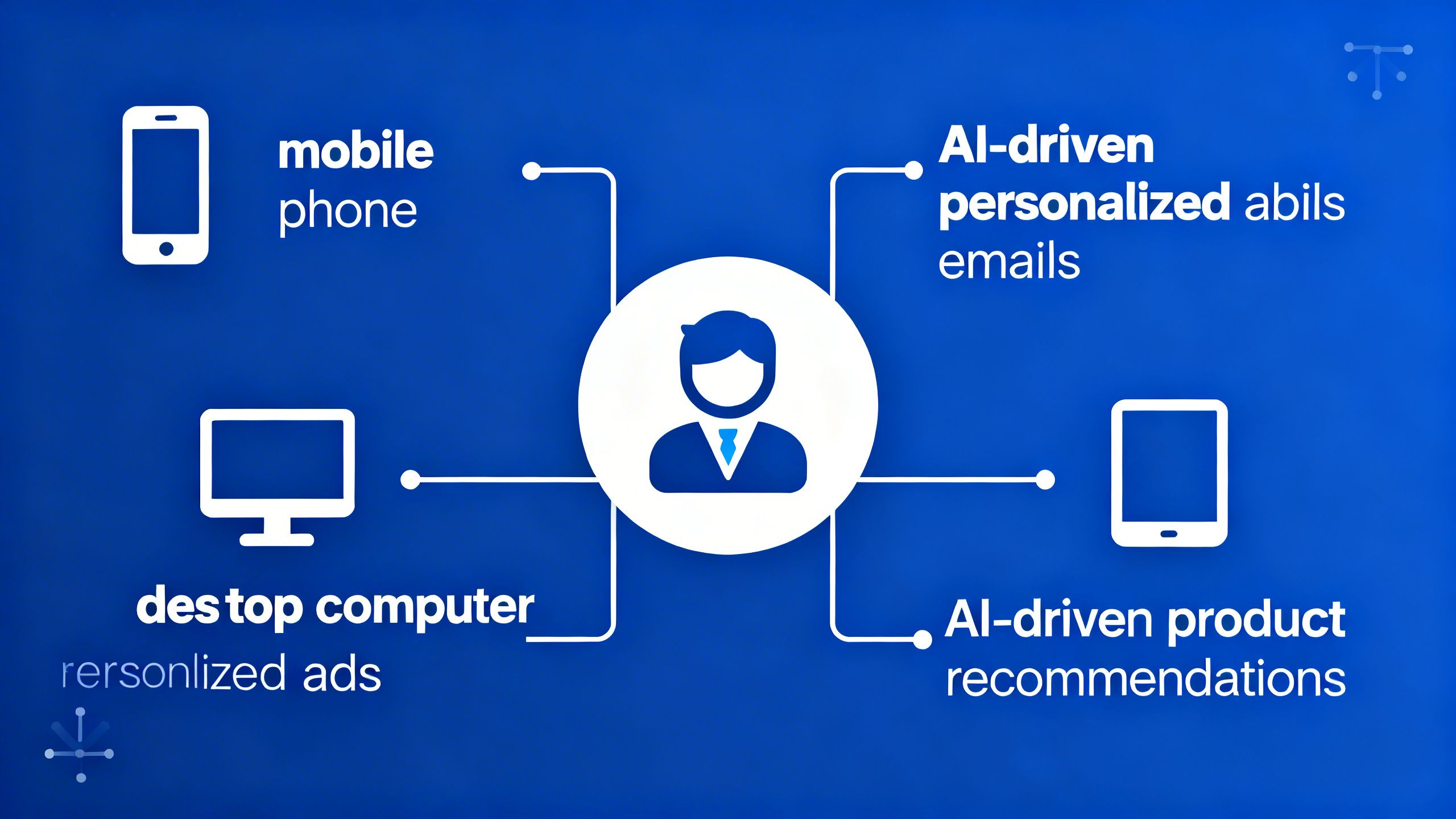
This is the core of what AI-driven forecasting tools are improving, moving from broad predictions to individualized sales strategies.
How to Leverage AI Agents: A Practical Guide
You don't need a PhD in computer science to start using AI agents. The key is to think about your business in terms of goals and tasks.
Step 1: Identify High-Impact, Repetitive Tasks
Start by auditing your own time. What are the tasks you or your team do every single day or week that are crucial but tedious? These are prime candidates for automation. Good examples include:
- Generating daily/weekly sales and performance reports.
- Monitoring ad spend against budget.
- Checking for new negative reviews or seller feedback.
- Tracking competitor pricing on key products.
Key Tip: Don't try to boil the ocean. Pick one or two high-frequency, low-creativity tasks. Your goal is to win back time and reduce the chance of human error.
Step 2: Choose Platforms with Agentic AI Capabilities
You're not building these agents from scratch. You're using tools that have them built-in. The market is shifting from static dashboards to conversational, action-oriented platforms. Look for software that allows you to ask questions in natural language and, more importantly, can take action based on your instructions. This is where the power lies.
Key Tip: When evaluating a new tool, ask them: “Can your system automatically take action based on the data, or does it just show me a report?” The former is an agent; the latter is just a dashboard.
Step 3: Define Clear Goals and Constraints
AI agents are powerful, but they aren't mind readers. You need to be specific. “Sell more stuff” is a useless command. A good command is: “For SKU-XYZ, maintain a target ACoS of 25%. If ACoS exceeds 30% for more than 48 hours, reduce the daily budget by 10% and notify me.” This gives the agent a clear goal, a constraint, and a protocol.
AI Agent Best Practices
Best Practice 1: Trust, but Verify
Especially in the beginning, you shouldn't give an AI agent the keys to the kingdom without supervision. Set up alerts and review logs. Let the agent recommend actions before you grant it full autonomy to execute them. For example, have it suggest a purchase order for you to approve with one click. As you build trust in its decision-making, you can gradually increase its level of autonomy.
Best Practice 2: Feed It Good Data
An AI agent is only as smart as the data it can access. If your inventory data is a mess or your financial records are incomplete, the agent's actions will be flawed. Ensure your core business data is clean, centralized, and accessible. The principle of “garbage in, garbage out” is amplified with autonomous systems. Connecting all your data sources is the first step to unlocking The Conversational AI Advantage.
Real-World Examples: AI Agents in Action
Example 1: The Proactive Inventory Manager
- Challenge: A seller of seasonal barbecue rubs constantly struggles with stockouts during peak summer months and overstock in the fall.
- Solution: They use an AI agent connected to their sales data and supplier lead times. The agent is tasked with “maintaining a 45-day supply of all SKUs.”
- Results: The agent monitors real-time sales velocity. It sees a spike in demand for “Smoky Hickory” rub after a holiday weekend. It calculates that at the current rate, they’ll stock out in 15 days. It automatically drafts a purchase order to the supplier for an expedited restock and flags it for the owner’s approval, preventing a multi-thousand-dollar loss in sales.
Example 2: The Margin Guardian
- Challenge: An agency managing 20 different Amazon accounts finds it impossible to manually monitor the profitability of thousands of SKUs.
- Solution: They deploy an AI agent with the goal: “Alert us if any SKU’s contribution margin drops below 15%.”
- Results: The agent continuously analyzes sales price, FBA fees, storage fees, and ad spend for every product. It detects that a rise in CPCs for one client's product has pushed its margin down to 12%. It immediately sends a Slack alert to the account manager: “Warning: SKU-ABC margin is now 12% due to a 40% increase in ad cost. Recommend pausing campaign #54321.” The agency catches the issue in hours, not weeks.
Common Mistakes to Avoid
Mistake 1: Analysis Paralysis
Don't wait for the “perfect” AI agent or the “perfect” strategy. The technology is evolving fast. The key is to start small with a simple, high-value task. Automating one daily report is a bigger win than spending six months planning to automate your entire business. The experience you gain from that small win is invaluable.
Mistake 2: Setting Unrealistic Expectations
AI agents are not magic. They will make mistakes, especially if given poor data or vague goals. Think of them as a junior employee on their first day: they need clear instructions, supervision, and feedback to learn and improve. Don't expect them to triple your business overnight. Expect them to save you 5 hours a week, then 10, then 20.
Why TrackIQ Matters: Your Gateway to Agentic AI
So, how does a busy seller or agency actually use this stuff without hiring a team of data scientists? This is where platforms like TrackIQ come in. TrackIQ is designed to be the AI agent for your Amazon operations—an OpsManager that never sleeps.
Instead of you digging through complex Seller Central reports, TrackIQ connects to your data and lets you ask plain-English questions. But it goes a step further. It doesn't just give you an answer; it provides insights and can be configured to monitor your business for you. This is the essence of an AI agent.

- Instead of manually building a report on why sales dropped, you can just ask: “Why did my sales drop yesterday compared to last Tuesday?”
- Instead of exporting data to a spreadsheet to find unprofitable products, you ask: “Which of my SKUs are bleeding margin?”
This conversational approach is the user-friendly front-end for a powerful agentic AI system working in the background. It's constantly observing your data, ready to answer your questions or alert you to problems and opportunities. It’s the practical application of everything we’ve discussed, built specifically for the complexity of the Amazon marketplace. Learning how it works reveals how this agentic layer can sit on top of your existing business to make it smarter and more efficient.
Key Takeaways
- Start Now, Start Small: Identify one repetitive task in your business and find a tool to automate it. The momentum from this first win is powerful.
- Think in Goals, Not Tasks: Shift your mindset from “I need to pull a report” to “My goal is to maintain a 25% ACoS.” Define the outcomes and let the agents handle the process.
- Embrace Conversational AI: The future of business intelligence isn't dashboards; it's dialogue. Get comfortable asking questions to your data. Platforms like TrackIQ are leading this charge.
Conclusion
AI agents represent a fundamental shift in how we run our businesses. They are the bridge between data and action, the force multiplier that allows small teams to operate with the sophistication of large corporations. For eCommerce sellers and agencies, this isn't a distant future; it's a present-day reality. The tools are here.
By embracing this technology, you can move from being a reactive problem-solver to the strategic CEO of a highly automated, efficient, and scalable operation. The question is no longer if AI agents will change eCommerce, but when you will let them change your business. Start exploring how you can optimize your operations today.
—
FORMATTING FOR GHOST CMS: Use > for blockquotes, bold for key terms, italics for emphasis, — for dividers, short paragraphs (3-4 sentences max). Target: 2,000-3,500 words. Keywords in H1, H2 headings, and naturally throughout (2-3% density).